

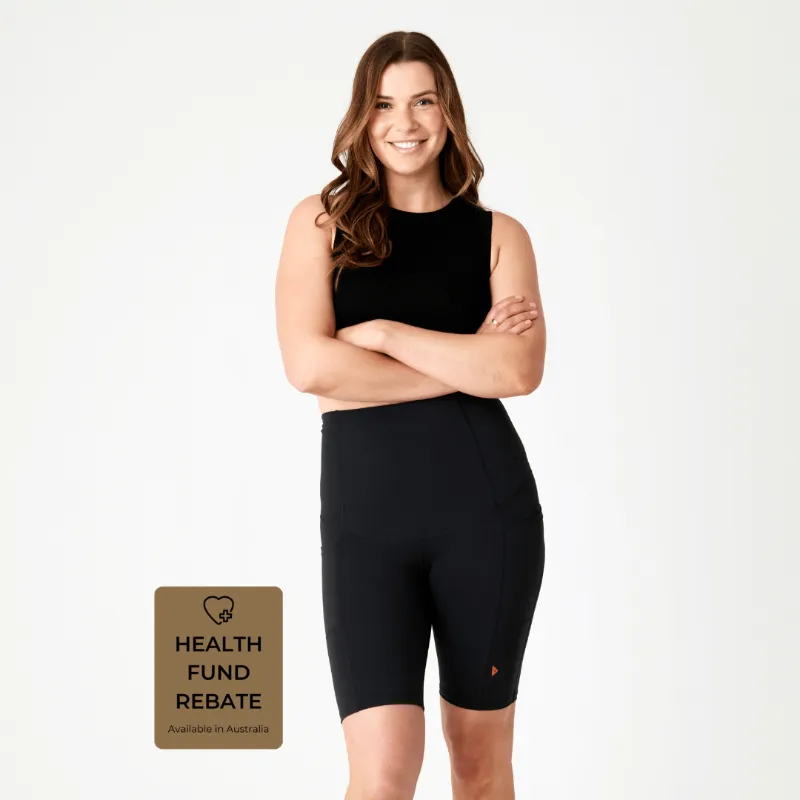
Postpartum compression shorts are one of the most practical pieces of postpartum recovery wear you can buy after a C-section, providing targeted abdominal support, swelling reduction, and light incision protection during the weeks your core is rebuilding. Most surgeons and midwives give a green light to wear them from around 24 to 48 hours post-surgery, once any wound dressings are secure. If you are weighing up whether they are worth it and which style suits your situation, this guide walks you through everything that matters.
Why Postpartum Compression Shorts Are Useful After a C-Section
A C-section is major abdominal surgery, and the recovery reflects that. Compression around the lower abdomen serves a few concrete purposes:
- Oedema management - graduated pressure encourages fluid to move out of swollen tissue and back into circulation.
- Incision comfort - a firm but gentle band across the scar reduces the sensation of pulling when you stand, walk, or sneeze.
- Core and posture support - with abdominal muscles temporarily weakened, compression acts as external scaffolding, reducing lower back strain.
- Confidence moving - many women report they feel safer walking, lifting, and picking up their newborn when the abdomen feels supported.
Compression does not replace medical wound care or physiotherapy, but as a complementary tool it makes a real, day-to-day difference to comfort and mobility.
Compression Levels Explained: What Strength Do You Need?
Compression garments are rated in millimetres of mercury (mmHg), the same scale used for blood pressure. For postpartum use, the typical choices fall into three bands:
| Compression Level | mmHg Range | Best For |
|---|---|---|
| Light / Everyday | 10 to 15 mmHg | Mild swelling, all-day comfort |
| Moderate | 15 to 20 mmHg | C-section recovery, active days |
| Firm | 20 to 30 mmHg | Prolapse support, medical recommendation |
Most people recovering from a C-section find moderate compression the sweet spot. It is firm enough to feel supportive without putting pressure on a fresh incision. If you have prolapse support needs or a healthcare provider has recommended stronger compression, check with them before sizing up.
Sizing and Fit Guide: Getting It Right
Poor fit is the most common reason compression shorts stop working or become uncomfortable. Here is how to size correctly:
- Measure your hips and waist at their widest points, not your pre-pregnancy measurements.
- Your body changes rapidly in the first few weeks postpartum, so measure at the time of purchase or choose a brand with a generous size range.
- The waistband should sit comfortably above the C-section scar, not directly on it, until the wound is fully closed and your midwife confirms it is safe to apply direct pressure.
- Shorts should feel snug but not restrictive. You should be able to take a full breath, sit down, and walk without the fabric rolling or bunching.
- If you are between sizes, size up for immediate post-surgery wear and size down once swelling reduces (usually by weeks three to four).
The postpartum shorts and maternity compression shorts on TheRY come with sizing guidance on their product pages. Check the latest sizing details and grab the code for 10% off before ordering.
Fabric and Care Instructions: What to Look For
The fabric you wear against a healing scar matters more than it does in everyday life. Key things to look for:
- Moisture-wicking fibres - perspiration against a wound creates a breeding ground for bacteria; look for polyamide, nylon, or bamboo blends that pull moisture away.
- Flat seams or seamless construction - raised seams can irritate a scar and cause pressure points.
- Four-way stretch - allows the shorts to move with you without constantly needing to be adjusted.
- Washability - you will be washing these frequently. Machine-washable on a gentle cycle is a practical must. Avoid fabric softeners, which can break down elastane fibres over time.
- Breathability - especially important if you are recovering in warmer months or running a temperature post-surgery.
Pairing Compression Shorts With Other Postpartum Recovery Wear
Compression shorts address the core and lower abdomen, but C-section recovery often involves whole-body swelling. Many women find leg swelling is a significant issue in the first week, particularly if they were on an IV drip or spent time immobile. Pairing shorts with pregnancy compression socks or maternity tights covers the full lower body and creates a more complete graduated compression system.
It is also worth noting that carrying a newborn puts repetitive strain on the wrists and hands. Carpal tunnel symptoms, common during and after pregnancy, can persist for weeks postpartum. If you are noticing tingling or weakness in your hands, wrist splints for pregnancy or a dedicated wrist brace carpal tunnel pregnancy can provide meaningful relief while your hormone levels normalise.
For anyone planning a hospital trip or early travel after a C-section, trtl travel bamboo compression socks are worth considering. The bamboo fibre is notably soft against sensitive skin, and the graduated compression reduces the DVT risk that is elevated after abdominal surgery.
Who Should Consider Postpartum Compression Shorts
They are a practical choice for a wide range of people, but especially useful if you:
- Had a planned or emergency C-section and want support for the incision area
- Experience significant abdominal or pelvic swelling post-birth
- Need to return to activity (walking, light exercise) sooner than expected
- Have been advised to look into prolapse support options by a pelvic floor physio
- Struggled with core stability, diastasis recti, or lower back pain during pregnancy
They are not a substitute for pelvic floor physiotherapy or medical follow-up, but as a wearable support worn daily, postpartum compression wear is a low-effort, high-impact addition to recovery.
Where to Buy and How to Save
TheRY stocks a focused range of postpartum and maternity compression products, including postpartum compression shorts, maternity socks, and wrist supports, all with clear sizing charts and returns information on the product pages. For current pricing across the full range, check the latest prices and discount code on the TheRY coupon page, where we keep the most up-to-date offer live.
A few practical tips before you check out:
- Order before your due date if you are planning a C-section. Having the shorts at home means you can start wearing them as soon as your midwife approves.
- Buy two pairs if your budget allows. Rotating between pairs makes daily washing much easier.
- Check the returns policy before ordering. Sizing can be tricky postpartum, so a straightforward exchange process is important.
 Shopping at TheRY? See today's verified TheRY discount code
Frequently asked questions
When can I start wearing postpartum compression shorts after a C-section?
Most healthcare providers recommend waiting 24 to 48 hours after surgery and ensuring wound dressings are secure before putting on compression shorts. Always follow your midwife or surgeon's specific advice, as it can vary depending on how the wound is healing.
Can postpartum compression shorts be worn directly over a C-section scar?
In the early days, the waistband should ideally sit above the incision rather than directly on it. Once the wound is fully closed and your healthcare provider confirms the area is safe to apply pressure, most compression shorts can sit across the scar without issue.
How do I choose the right size in postpartum compression shorts?
Measure your hips and waist at their widest postpartum measurement, not your pre-pregnancy size. Your body changes quickly in the early weeks, so if you are between sizes, size up initially and reassess once initial swelling reduces, usually around weeks three to four.
Are maternity compression shorts different from postpartum compression shorts?
Maternity compression shorts are designed to accommodate a growing bump and typically provide lift and support during pregnancy, while postpartum compression shorts focus on abdominal compression and incision support after birth. Some styles are designed to serve both purposes, so check the product description before buying.
Do I need anything else alongside compression shorts for C-section recovery?
Many women also benefit from compression socks or maternity tights to manage leg swelling, and wrist braces if carpal tunnel symptoms persist postpartum. A pelvic floor physiotherapist can advise on whether additional prolapse support options are appropriate for your situation.
How should I wash and care for compression shorts to make them last?
Machine wash on a gentle cycle in cool water and air dry rather than tumble drying. Avoid fabric softeners as they degrade the elastane fibres over time. Having two pairs to rotate between makes daily washing much more manageable.