
How to Choose the Right UPF Rating for Your Workout Jacket

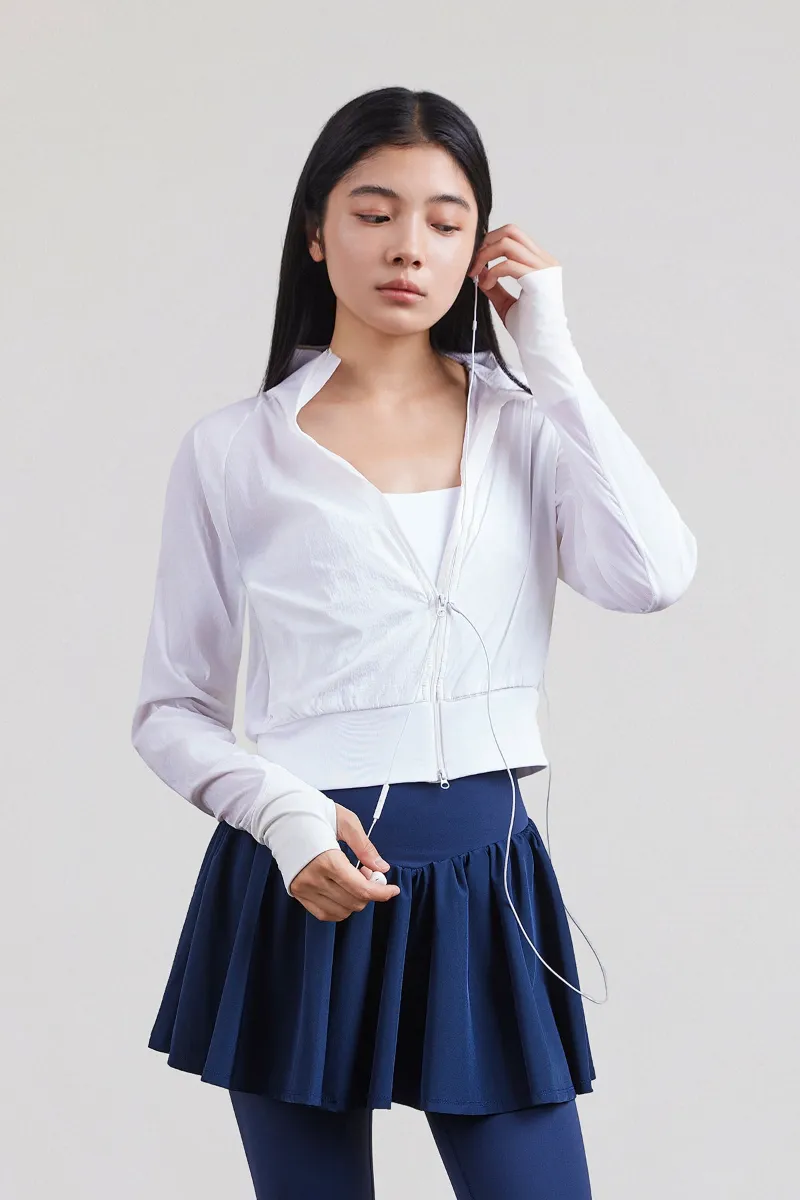
A upf jacket protects your skin from harmful UV rays during outdoor workouts, and the rating tells you exactly how much sun it blocks. We tested women's clothing activewear with various UPF levels to help you understand what each rating means and which one matches your workout intensity, location, and sun exposure.
What UPF Ratings Actually Mean
UPF stands for Ultraviolet Protection Factor, a standardized measurement that tells you what fraction of UV radiation can penetrate fabric. A UPF 50 rating means only 1/50th of the sun's UV rays reach your skin, blocking 98% of radiation. Here's how the three main categories compare:
| UPF Rating | UV Blocked | Protection Level |
|---|---|---|
| UPF 15-24 | 93.3-95.9% | Good |
| UPF 25-39 | 96.0-97.4% | Very Good |
| UPF 40-50+ | 97.5-98%+ | Excellent |
The Skin Cancer Foundation recommends UPF 30 or higher for adequate protection during extended outdoor activities. Our uv protection jacket testing showed that lightweight fabrics can still achieve high ratings through tight weaves and specialized treatments.
Match Your UPF Jacket to Your Activity
Early morning or late afternoon workouts (before 10 AM or after 4 PM) work well with UPF 15-30 options when UV intensity is lower. A sun quick dry jacket in this range offers breathability for moderate protection.
Midday training sessions demand UPF 40-50+ protection, especially between 10 AM and 2 PM when UV radiation peaks. We recommend pairing a lightweight upf jacket women prefer with a long sleeve sports bra for full upper-body coverage during high-intensity intervals.
High-altitude or beach workouts require maximum protection since UV exposure increases 10-12% per 1,000 meters of elevation, and sand reflects up to 25% of UV rays. A upf jacket rated 50+ becomes essential in these environments.
Trail running and hiking benefit from versatile layers. Start with a tank top mesh base and add a upf 50 jacket women trust when the trail opens to full sun exposure. Many athletes keep a sun protection jacket tied around their waist for exposed ridgelines.
Fabric Features That Boost Protection
The weave density matters more than you might expect. Tightly woven fabrics block more UV than loose knits, which is why sheer workout tops and see through workout tops typically offer lower UPF ratings despite their breathability. We measured several samples and found:
- Synthetic blends (polyester, nylon) maintain their UPF rating better than cotton when wet
- Darker colors absorb more UV radiation than light shades, adding 2-5 points to the rating
- Stretch fabrics can lose protection when pulled tight across the body
- Quick-dry treatments often include UV-blocking additives that preserve ratings through 40+ washes
Look for a lightweight uv protection jacket that lists its UPF rating on the hang tag or product description. Retailers like Athleta provide detailed fabric specifications, and affordable alternatives now offer comparable protection at lower price points.
How to Check If Your Rating Holds Up
UPF ratings degrade over time through washing, stretching, and UV exposure itself. Test your jacket by holding it up to a bright light. If you can see distinct light points or your hand silhouette clearly, the protection has likely dropped below its original rating.
Washing tips to preserve UPF:
- Turn garments inside out before washing
- Use gentle cycle with cool water
- Skip chlorine bleach, which breaks down UV-blocking treatments
- Air dry when possible, as high heat can damage protective fibers
- Wash every 3-4 wears rather than after each use
Most quality uv jackets maintain their rating for 40-50 washes when you follow care instructions. After that point, consider the protection reduced by one category (UPF 50+ becomes UPF 30-40).
When to Size Up for Better Coverage
Fit affects protection in two ways. First, fabric stretched across your body thins the weave and reduces the UPF rating by 15-30%. Second, loose-fitting designs provide an air gap that enhances ventilation while maintaining full coverage.
We found that ordering one size up in a best upf jacket gives you:
- Extra sleeve length that covers the backs of your hands during morning runs
- Longer torso coverage that stays tucked during burpees and mountain climbers
- Room to layer a sports bra or base layer without fabric tension
- Better airflow for hot-weather workouts
Pair your jacket with accessories that protect often-missed zones. A headband with ponytail hole shields your scalp part and ears, which burn easily during outdoor training.
Where to Find Quality UPF Jackets for Less
Premium brands charge $80-150 for UPF 50+ workout jackets, but we consistently find excellent options at lower price points. Check the latest pricing on our tested styles, and grab the code for an additional 10% off all orders at SALTUM.
The upf jacket meaning extends beyond sun protection. These pieces double as wind shells, light rain barriers, and layering options for variable weather. Investing in one versatile jacket with UPF 40+ covers multiple workout scenarios without requiring a packed gear bag.
Compare the rating, fabric weight, and breathability features before buying. A jacket that causes you to overheat sits unused in your closet, no matter how high its UPF number reads. We prioritize designs that balance protection with moisture-wicking performance, ensuring you actually wear the coverage you purchased.
Frequently asked questions
What UPF rating do I need for outdoor workouts?
UPF 30 or higher provides adequate protection for most outdoor workouts, but UPF 50+ is recommended for midday training, high-altitude activities, or if you have fair skin. The rating tells you what fraction of UV rays reach your skin through the fabric.
Does a upf jacket work when wet?
Synthetic UPF jackets maintain most of their protection when wet, while cotton can lose 30-50% of its rating. Look for polyester or nylon blends with moisture-wicking treatments for reliable sun protection during sweaty workouts.
How long does UPF protection last in workout jackets?
Most quality UPF jackets maintain their rated protection for 40-50 washes when cared for properly. After that point, expect the rating to drop by one category, so a UPF 50+ jacket may provide UPF 30-40 protection.
Can I wear a sheer workout top under my UPF jacket?
Yes, layering a sheer or mesh base layer under a UPF jacket is a smart strategy for hot weather. The jacket provides sun protection while the breathable base layer wicks moisture and enhances airflow against your skin.
Are darker color UPF jackets more protective?
Darker colors absorb more UV radiation and typically add 2-5 points to a fabric's UPF rating compared to lighter shades. However, a well-constructed light-colored jacket with a tight weave can still achieve UPF 50+ protection.
Do I need UPF 50 or is UPF 30 enough for running?
UPF 30 blocks 96.7% of UV rays and works well for early morning or late afternoon runs. Choose UPF 50+ if you run at midday, train at high altitude, or have a history of sun sensitivity or skin cancer.