
How to Choose the Right Voice Amplifier for Teachers and Presenters

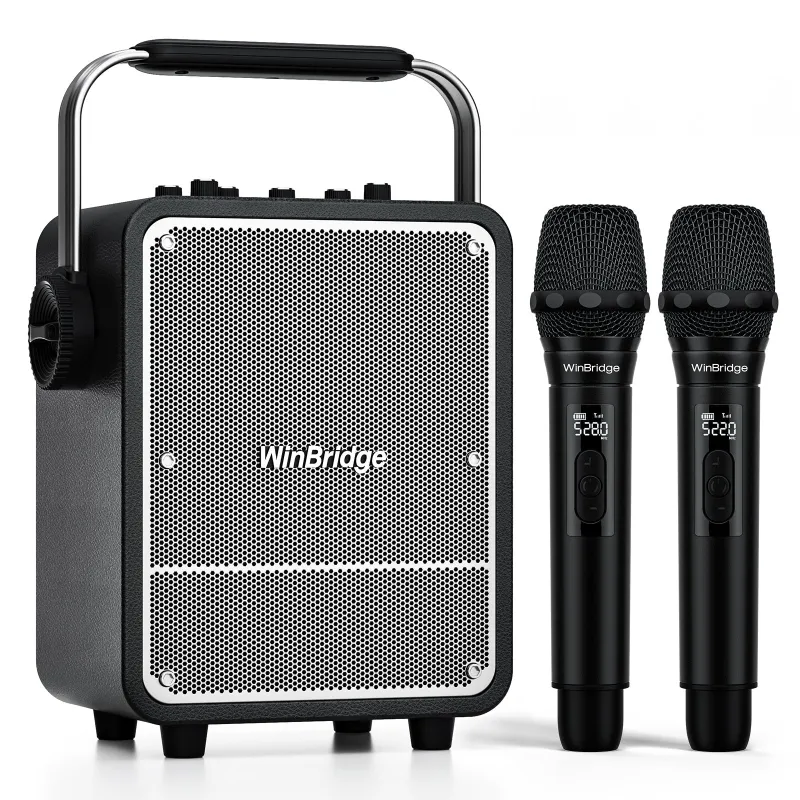
How to Choose the Right Voice Amplifier for Teachers and Presenters
A voice amplifier reduces vocal strain and ensures every student or audience member hears you clearly, whether you're teaching in a large classroom or presenting at a conference. We've tested dozens of models to help you pick the right one based on wattage, battery life, microphone style, and portability. Here's what matters most when choosing a voice amplifier for teachers and presenters.
Match Wattage to Your Room Size
The amplifier's wattage determines how much volume it can deliver and how large a space it can cover comfortably.
- 10–15 watts – Ideal for small classrooms (up to 30 students), tutoring sessions, or quiet office presentations
- 15–25 watts – Covers standard classrooms (30–50 students), outdoor teaching, or small auditoriums
- 25+ watts – Large lecture halls, gymnasiums, outdoor events, or noisy environments like workshops
The winbridge s100 pro voice amplifier delivers 25 watts with crisp clarity, making it a strong choice for larger rooms or outdoor lessons. For smaller spaces, a 15-watt model like the winbridge m800 portable voice amplifier offers plenty of volume without overwhelming the room. Check the latest price to see which model fits your budget.
Consider Battery Life and Charging Options
Teachers and presenters rarely have time to recharge between sessions, so battery runtime is critical.
- 6–8 hours – Covers a full school day or conference with minimal recharging
- 10–12 hours – Multi-day events, field trips, or back-to-back workshops
- Rechargeable lithium batteries – Faster charging and longer lifespan than older nickel-metal designs
Look for models with USB-C or fast-charging support so you can top up during lunch breaks. The Products - Voice Amplification range from WinBridge includes several options with 10+ hour batteries, perfect for all-day use.
Choose Between Wired and Wireless Microphones
Microphone style affects your mobility and setup time.
| Microphone Type | Best For | Trade-offs |
|---|---|---|
| Headset (wired) | Hands-free teaching, demonstrations, lab work | Cable can tangle; less freedom of movement |
| Headset (wireless) | Active presenters, PE teachers, outdoor lessons | Requires battery or charging; higher cost |
| Handheld | Stationary presenters, lecterns, panel discussions | Occupies one hand; less mobility |
A voice amplifier for teachers with wireless microphone gives you the most freedom to move around the classroom, write on the board, or demonstrate activities without worrying about cables. Wireless headset models pair well if you're already using a portable wireless pa system for larger venues.
Evaluate Portability and Mounting Options
How you carry and position the amplifier matters for daily comfort and setup speed.
- Clip-on belt models – Lightweight (under 200g), perfect for all-day wear, minimal bulk
- Shoulder strap units – Slightly heavier but often include larger batteries and more wattage
- Desktop/tripod models – Best for stationary setups like lecterns or conference tables
If you teach multiple classes in different rooms or move between buildings, prioritize a compact, belt-clip design. The winbridge m800 portable voice amplifier weighs just 180 grams and clips securely without bouncing during movement.
Check for Extra Features That Save Time
Modern voice amplifiers include helpful add-ons that go beyond basic amplification.
- Bluetooth or aux input – Play audio from your phone, tablet, or laptop for multimedia lessons
- Recording function – Capture lectures or presentations for absent students
- Multiple input jacks – Connect two microphones for co-teaching or panel discussions
- Tone controls – Adjust bass and treble to suit your voice and room acoustics
The best voice amplifier models balance these features without adding bulk or draining the battery faster. Grab the code for 10% off your order and compare the feature sets across WinBridge's lineup.
Who Should Use a Voice Amplifier
Voice amplifiers suit anyone who speaks for extended periods or in challenging acoustic environments.
- Classroom teachers – Protect your voice during long school days and reach students in the back row
- Tour guides – Lead groups through museums, factories, or outdoor sites without shouting
- Fitness instructors – Coach over music and ambient noise in gyms or outdoor classes
- Corporate trainers – Deliver workshops and seminars in hotel conference rooms or large offices
- Outdoor educators – Teach nature walks, field trips, or camp activities where ambient noise is high
If you frequently lose your voice by the end of the day or notice students asking you to repeat yourself, a voice amplifier can reduce strain and improve clarity immediately. Pair it with a winbridge lux01pk wireless earbuds set for private audio during breaks or planning periods.
Compare Top Models Side-by-Side
Here's how WinBridge's most popular models stack up for teachers and presenters.
| Model | Wattage | Battery Life | Microphone Type | Weight |
|---|---|---|---|---|
| WinBridge S100 Pro | 25W | 10–12 hours | Wireless headset | 220g |
| WinBridge M800 | 18W | 8–10 hours | Wired headset | 180g |
| Standard Voice Amplifier | 15W | 6–8 hours | Wired headset | 160g |
The S100 Pro offers the most power and battery life, while the M800 balances portability with solid performance for standard classrooms. Visit the WinBridge discount code page to see current pricing and bundle deals that include extra microphones or carrying cases.
Final Tips for Getting the Most from Your Amplifier
Once you've chosen a model, a few simple habits extend its lifespan and performance.
- Position the speaker away from the microphone – Prevents feedback loops and whistling
- Charge fully before first use – Conditions the battery for longer runtime
- Store in a dry, cool place – Heat and humidity degrade battery life
- Clean the microphone grille weekly – Dust and moisture reduce sound quality
- Adjust volume to 70–80% max – Reduces distortion and extends speaker life
We've found that teachers who invest in a quality voice amplifier report less vocal fatigue, fewer sick days, and better student engagement. Whether you need a compact belt-clip model for daily classroom use or a high-wattage system for large events, matching the amplifier's specs to your specific environment ensures you'll hear the difference from day one.
Frequently asked questions
What wattage voice amplifier do I need for a classroom of 40 students?
A 15 to 25-watt voice amplifier covers most classrooms with 40 students comfortably. If your room has high ceilings, poor acoustics, or ambient noise from HVAC systems, lean toward 25 watts for clearer projection.
Can I use a voice amplifier with a wireless headset microphone?
Yes, many voice amplifier models support wireless headset microphones, giving you hands-free operation and freedom to move around the classroom or stage. Check that the amplifier and microphone use compatible wireless frequencies.
How long does the battery last on a portable voice amplifier?
Most portable voice amplifiers offer 6 to 12 hours of battery life on a full charge, depending on volume level and wattage. Models with 10+ hour runtimes easily cover a full school day or conference without recharging.
Are belt-clip voice amplifiers comfortable for all-day wear?
Yes, belt-clip models under 200 grams are designed for all-day comfort and typically include padded clips or waistband attachments. Heavier models with shoulder straps distribute weight more evenly if you prefer not to clip to your belt.
Can I play music or videos through a voice amplifier?
Many modern voice amplifiers include Bluetooth or auxiliary input jacks, letting you stream audio from your phone, tablet, or laptop for multimedia lessons or background music during presentations.
Do voice amplifiers work outdoors or in noisy environments?
Yes, higher-wattage models (20 watts or more) project clearly in outdoor settings, gymnasiums, or noisy workshops. Look for amplifiers with tone controls so you can adjust bass and treble to cut through ambient noise.