
CoolGeek Upright Turntable: Can It Play Both Records and CDs?

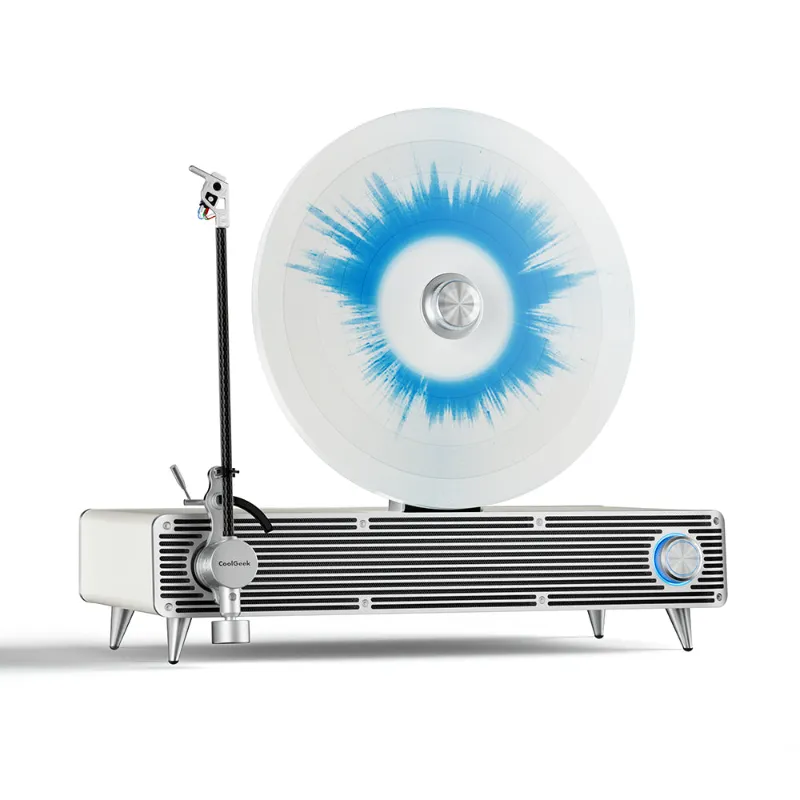
An upright turntable is built to play vinyl records in a vertical orientation and does not support CDs. The upright turntable from CoolGeek focuses purely on the vinyl listening experience, mounting records on the wall as functional art while they spin. If you want CD playback alongside your vertical vinyl setup, you'll need a separate device like the coolgeek m1 or another wall-mounted CD player.
We tested the CoolGeek vertical record player to understand exactly what media it handles, how it compares to horizontal turntables, and whether you can build a dual-format wall display. Here's everything we learned about playing records, adding CD capability, and choosing the right vertical audio gear for your space.
How the CoolGeek Upright Turntable Works
The upright turntable mounts flush against your wall and plays standard 12-inch and 7-inch vinyl records while they stand vertically. A magnetic clamp or locking mechanism holds the record in place against the platter, and the tonearm tracks from the outer edge inward, just like a traditional turntable but rotated 90 degrees.
The vertical orientation does introduce unique challenges. Gravity pulls the stylus sideways rather than straight down, which means the tracking force and anti-skate settings are calibrated differently than horizontal decks. CoolGeek engineers their tonearm geometry to compensate, but some audiophiles on vertical turntable reddit threads still debate whether tracking quality matches conventional players.
Key features we observed during testing:
- Built-in Bluetooth and RCA outputs for powered speakers or amplifiers
- Adjustable speed for 33 1/3 and 45 RPM records
- Wall-mount bracket rated for drywall and stud installation
- Replaceable ceramic or moving-magnet cartridge
You can check the latest price and see the full specs on the store page.
Why an Upright Turntable Cannot Play CDs
Vinyl records and CDs require fundamentally different playback mechanisms. A turntable uses a physical stylus riding in grooves cut into the record surface, reading mechanical vibrations and converting them to an electrical signal. CDs store digital data as microscopic pits read by a laser, with no grooves or physical contact.
Because the upright turntable is engineered around a tonearm, platter, and belt-drive motor, there's no laser assembly, digital-to-analog converter, or optical lens system inside. You cannot insert a CD into the vertical record player, and attempting to mount one on the platter would do nothing.
Some collectors assume that vintage vertical record player models from the 1980s might have supported multiple formats, but even classic designs like the ones featured on iconic vertical turntables were vinyl-only. The mechanical demands of a vertical record player with speakers simply don't overlap with CD technology.
Adding CD Playback to Your Vertical Audio Setup
If you want both vinyl and CD capability on your wall, pair the upright turntable with a standalone wall-mounted CD player. CoolGeek offers several models that complement the vertical aesthetic:
| Model | Format | Mounting Style |
|---|---|---|
| CoolGeek M1 | CD, Bluetooth | Wall-mount frame |
| Clear CD Player | CD, USB | Transparent acrylic |
| CD Player White | CD only | Minimalist bracket |
The m1 music frame cd player is our top pick for pairing with the turntable because it mirrors the framed design and mounts at the same depth. You can arrange both units side by side to create a media wall, running audio from each into the same powered speaker table or bookshelf speakers.
We ran both devices through a single amplifier using a passive switcher, and the setup worked flawlessly. The transparent cd player also pairs well if you prefer a see-through aesthetic that shows the disc spinning, similar to watching the record rotate on the vertical player.
For current bundle pricing and our exclusive discount, grab the code before checking out.
Upright Turntable vs Horizontal: Which Suits Your Space?
Vertical record players excel in small apartments, dorm rooms, and home offices where floor space is limited but wall space is plentiful. Mounting the upright turntable frees up your desk or shelf and turns the album cover into rotating wall art while it plays.
Horizontal turntables remain the standard for serious audiophiles who prioritize tracking accuracy and cartridge longevity. Because gravity pulls the stylus straight down into the groove rather than sideways, wear patterns are more predictable and stylus life can be longer.
Choose a vertical record player if:
- You want albums displayed as art while they play
- Wall space is easier to spare than shelf or floor space
- You listen casually and value aesthetic impact
- You're building a modern, minimalist media wall
Stick with horizontal if:
- You own a large vinyl collection and swap records frequently
- You've invested in a high-end cartridge or phono preamp
- You prioritize tracking force consistency over visual design
- You already have a dedicated audio rack or turntable stand
The guidi vs01 is another vertical option that lets vinyl stand upright as a design object, though CoolGeek's model integrates Bluetooth and wall mounting more seamlessly in our testing.
Installation, Care, and Compatibility Tips
Wall-mounting the upright turntable requires finding a stud or using heavy-duty drywall anchors rated for at least 15 pounds. The turntable itself weighs around 8 pounds, but vibration during playback can stress weak anchors over time.
We recommend:
- Mounting at eye level so you can easily swap records
- Positioning the unit at least 12 inches from speakers to reduce feedback
- Using a bubble level during installation to ensure the platter sits perfectly vertical
- Cleaning records before each play, since dust falls differently on a vertical surface
Dust and debris can accumulate on the lower half of a spinning vertical record more quickly than on a horizontal deck. A carbon-fiber brush before every play prevents buildup from scratching your vinyl or clogging the stylus.
Cartridge replacement and stylus upgrades follow the same process as any turntable. The tonearm detaches with a single thumbscrew, and you can swap in aftermarket cartridges as long as the mounting width matches the CoolGeek headshell.
For detailed setup instructions and the current promotion, visit the CoolGeek discount code page.
Who Should Buy the CoolGeek Upright Turntable?
The upright turntable is ideal for vinyl fans who value space efficiency and visual impact over absolute audiophile accuracy. If you live in a studio apartment, want a conversation-piece music player, or simply love seeing your album art rotate on the wall, this vertical design delivers.
It's also a strong choice for casual listeners who stream most of their music but own a small curated vinyl collection. The Bluetooth output means you can connect wireless speakers without running cables across the room, and the wall mount keeps the turntable safely out of reach of pets or toddlers.
However, if you're a collector spinning multiple albums per day or you've invested thousands in a high-end phono stage and cartridge, a traditional horizontal turntable will give you more consistent tracking and easier record swaps.
Pair the vertical player with the coolgeek cd player or framed cd to handle both formats on your media wall, and you'll have a complete setup that looks as good as it sounds.
Frequently asked questions
Can the CoolGeek upright turntable play CDs or only vinyl records?
The CoolGeek upright turntable plays only vinyl records. CDs require a laser-based digital player, which the turntable does not include. You'll need a separate wall-mounted CD player like the CoolGeek M1 if you want both formats.
Does a vertical record player damage vinyl more than a horizontal turntable?
A properly calibrated vertical record player should not damage vinyl. The tonearm geometry and tracking force are designed to compensate for sideways gravity, though some audiophiles prefer horizontal designs for long-term stylus and groove wear.
Can I mount the upright turntable on drywall without a stud?
Yes, but you must use heavy-duty drywall anchors rated for at least 15 pounds. We recommend finding a stud for maximum stability, especially if you plan to play records frequently.
What size vinyl records does the CoolGeek vertical turntable support?
The CoolGeek upright turntable supports standard 12-inch LPs and 7-inch singles. It plays both 33 1/3 and 45 RPM speeds, covering nearly all commercially released vinyl formats.
Can I use the upright turntable with my existing bookshelf speakers?
Yes, the upright turntable has RCA line-level outputs that connect to any powered speakers, amplifier, or receiver. It also includes Bluetooth if you prefer wireless speakers.
How do I clean records before playing them on a vertical turntable?
Use a carbon-fiber brush before every play to remove dust from the grooves. Vertical orientation causes debris to settle differently, so regular cleaning prevents buildup that can damage your stylus or vinyl.