

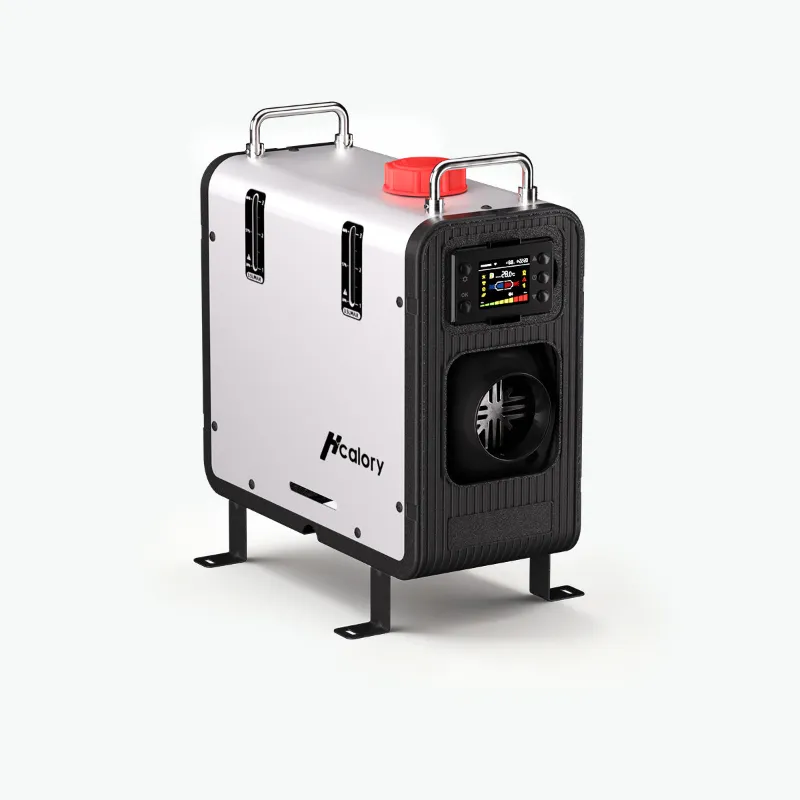
An hcalory diesel heater running overnight typically uses far less fuel than most buyers expect, because the unit only draws hard while it is bringing a cold space up to temperature and then drops to a low, steady burn. Plan on the first hour costing the most and the remaining hours costing very little, and size your tank around total run time rather than peak output. Below we break down what actually moves the number, how the metal diesel tank 10l changes your overnight maths, and how to tune the heater so it holds heat instead of wasting fuel.
What an overnight run actually costs in fuel
Diesel air heaters in the 2 kW to 5 kW class generally sit somewhere between a light trickle and roughly half a litre per hour depending on the output setting and how cold it is outside. Treat that as a planning range for the class, not a spec sheet: the exact figure for your unit is on the product listing, and it is worth reading before you buy.
- Start-up and warm-up: the heaviest fuel draw of the night. This is the heater working at high output to lift a cold cabin or van to temperature.
- Holding temperature: once the space is warm, most units settle into low or medium and burn a fraction of the warm-up rate.
- Cycling: in milder weather the heater may shut down and restart periodically, which is normal but does add a small amount of fuel per cycle.
- Shutdown: a cool-down purge, measured in minutes and negligible in fuel terms.
That is why two people with the same heater report very different overnight figures. One is heating a draughty van at -5 °C on high; the other is holding a lined cabin at 12 °C on low.
What changes your burn rate the most
Before you blame the heater, check these. In our testing the variables below move fuel use more than any setting on the controller.
- Insulation and draughts: an unlined van loses heat as fast as the heater makes it, so the unit never gets to drop to low. Window covers and a floor mat do more for fuel economy than any app setting.
- Outside temperature: the gap between inside and outside is the real workload. A 20 °C lift costs far more than a 10 °C lift.
- Thermostat mode versus fixed output: running to a target temperature lets the heater throttle back. Running flat out all night does not.
- Altitude and fuel quality: thin air and winter-blend diesel both affect combustion. Use clean, fresh diesel and keep the fuel filter in the loop.
- Ducting and airflow: kinked or over-long ducting restricts flow and forces the heater to work harder for the same result.
Tank options: 10 L tank versus a built-in tank
Most overnight questions come down to tank size. A standalone metal diesel tank 10l is the option we recommend for anyone heating away from a fuel station, because you can fill it at home, carry it upright, and swap or top it up without disturbing the heater installation.
| Setup | Best for | Overnight planning |
|---|---|---|
| Standalone 10 L metal tank | Vans, cabins, workshops, long trips | Refill between nights, carry a spare jerry can for multi-night trips |
| Heater's own small tank | Short sessions, occasional use | Topping up before each run becomes routine |
| Vehicle fuel pickup | Permanent camper installs | No refilling, but installation and safety checks matter more |
A metal tank also resists the swelling and cracking that plastic tanks develop after a few winters of cold-and-warm cycles. If you are still deciding between setups, our diesel heater buying guide notes and current pricing are on the store page.
Which Hcalory unit suits an overnight run
The two units buyers ask about most are the standard hcalory diesel heater and the hcalory toolbox max diesel heater. Both are all-in-one diesel air heaters with integrated tanks, so the difference for overnight use is mostly about footprint, tank capacity and how you control them.
- Standard hcalory diesel heater: the simpler route for a van, tent, garage or small cabin. Fewer parts to mount, easy to move between vehicles.
- Hcalory Toolbox Max diesel heater: built into a rugged case with storage for the accessories, which suits people who pack the heater away after every trip.
- Both: app control, the same diesel air-heater principle, and the same need for a proper exhaust route and combustion-air supply.
Check the individual listing for rated consumption and tank capacity rather than assuming the two are identical. Ratings differ by model, and that figure is the one that should drive your overnight fuel plan.
App setup and pairing for smarter fuel use
The calory app is the easiest way to stop wasting fuel, because it lets you set a target temperature instead of guessing at a dial position. Pair the heater once at home, not in a dark field.
- Power the heater and put it into pairing mode as described in the manual.
- Enable Bluetooth on your phone and open the app.
- Pair the unit, then name it so you can tell multiple heaters apart.
- Set a target temperature and a low-output floor so the heater idles rather than cycling off entirely.
- Test a full overnight run at home before you rely on it on a trip.
If pairing fails, power-cycle both the heater and the phone's Bluetooth, and keep the phone within a couple of metres during setup. App screens and pairing steps change between versions, so follow the in-app prompts over any guide, including this one.
Installation basics and safety before you sleep
Fuel economy is a comfort question; safety is not. Never run a diesel heater in a sealed space without correct exhaust routing.
- Route the exhaust outside, away from windows, doors and any air intake.
- Keep the combustion-air intake clear and never draw it from inside the sleeping space.
- Mount the heater on a solid, level surface and keep the fuel line away from heat sources.
- Do not refuel a hot or running heater.
- Fit a carbon monoxide alarm in any enclosed sleeping area. This is non-negotiable.
- Check the fuel line, filter and connections before each season, and clean or replace the filter as the manual specifies.
Routine maintenance pays for itself in fuel too: a sooted combustion chamber and a clogged filter both make the heater work harder for the same heat.
Winter add-ons that pair with a diesel heater
A heater warms the air; it does not clear your glass. That is where the car window defroster and the 12v windshield defroster come in for morning starts and cold commutes.
- Car window defroster: for clearing fogged or frosted glass quickly without idling the engine for ten minutes.
- 12v windshield defroster: plugs into the accessory socket, so it works in vans, trucks and older vehicles without a dedicated demist circuit.
- Together with the heater: run the diesel heater while you load the vehicle, then use the defroster on the glass. Warm air plus direct glass heat clears far faster than either alone.
Before you order, check the defroster's plug type and current draw against your vehicle's socket, and confirm the heater's footprint fits where you plan to mount it. Fit and compatibility checks up front save a return later.
Grab our current 8% off code and check live pricing on the Hcalory discount page before you buy, and verify the code at checkout before you pay. Standard shipping and returns terms are listed there too.
 Shopping at Hcalory? See today's verified Hcalory discount code
Frequently asked questions
How much diesel does an hcalory diesel heater use in one night?
It depends on output setting, outside temperature and how well the space is insulated. The first warm-up hour draws the most, then the heater settles into a low burn for the rest of the night. Check your model's rated consumption on its product listing for the number to plan around.
Is a 10 L tank enough for overnight use?
For most vans, cabins and workshops a 10 L tank comfortably covers a night on low or medium, with fuel left over. Multi-night trips off-grid are where you should carry a spare can or plan a refill stop.
Will the Calory App reduce fuel consumption?
Running to a target temperature instead of a fixed high output lets the heater throttle back once the space is warm, which is the single biggest saving most users see. Pair it at home and test a full night before relying on it.
Can I leave a diesel heater running while I sleep?
Only with the exhaust routed outside, a clear combustion-air supply and a working carbon monoxide alarm in the space. Never run one in a sealed area or with the exhaust near a window or intake.
What is the difference between the standard and Toolbox Max Hcalory heaters?
Both are integrated-tank diesel air heaters with app control. The Toolbox Max is built into a rugged case with accessory storage, which suits people who pack the unit away after each trip. Compare rated consumption and tank capacity on each listing.
Do I need a window defroster if I already have a diesel heater?
Yes, for glass. A diesel heater warms the air inside the vehicle, while a car window defroster or 12v windshield defroster clears fog and frost directly off the glass. Together they clear a cold vehicle much faster.