

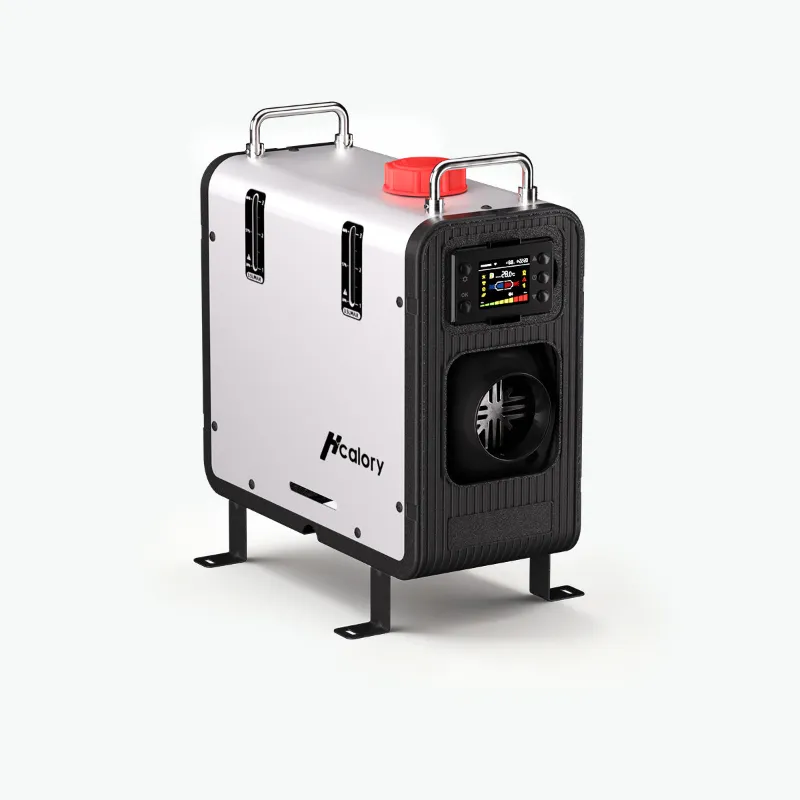
You can install a hcalory diesel heater in a van without cutting a hole in the roof by routing the exhaust and combustion air intake down through the floor, then keeping the fuel supply and controller inside the cabin. No roof penetration means no new leak point, no ceiling headliner to drop, and nothing to reseal before winter. The trade-off is that you have to plan the underfloor exit carefully, which is exactly what this guide covers.
What you need before you start
Plan the whole install on paper first. Most failed installs are layout problems, not product problems.
- The heater unit itself. Our test van uses the hcalory diesel heater as the baseline single-outlet kit, and the hcalory toolbox max diesel heater when we want everything housed in one case with less loose wiring.
- A fuel tank you can live with. Options are the kit tank or a metal diesel tank 10l if you want something studier for a permanent build.
- Exhaust tubing, combustion air intake, clamps, and a floor-mounting plate or turret.
- A wiring run to the leisure battery with an inline fuse, plus a controller cable.
- Hole saw, sealant rated for automotive use, and a CO alarm as a non-negotiable safety item.
Do a fit and compatibility check before ordering anything. Measure the depth under your floor, check where the chassis rails and fuel lines run, and confirm the heater body clears your seat base or wheel arch. If you are not sure which kit size suits your van, the diesel heater buying guide on our store page walks through the range, and you can grab the code while you decide.
The no-roof-hole layout: where everything goes
The trick is separating the two air paths. The heater burns air and pushes out exhaust, and both must leave the vehicle. Heated air, by contrast, stays inside and recirculates.
- Mount the heater low and central, usually under a seat base, in a cabinet, or in a rear bench void. Low mounting keeps the exhaust run short and gives the warm air a natural rise.
- Exit combustion air and exhaust straight down through the floor. One hole, sealed properly, is far less risky than a roof penetration.
- Terminate the exhaust away from doors, windows, and any awning space, angled slightly down and rearward so water cannot track in.
- Keep the intake air separate from the exhaust outlet. They should not share the same pocket of still air under the van.
- Run ducting to where you actually sit. Feet-level and cab-directed outlets feel warmer than a ceiling vent blowing down.
| Mount position | Roof hole needed | Best for | Watch out for |
|---|---|---|---|
| Underfloor, floor exit | No | Camper conversions, permanent builds | Ground clearance and exhaust angle |
| Under seat, floor exit | No | Day vans, minivans | Heat build-up near upholstery |
| Toolbox-style unit on a bracket | No | Rentals, seasonal installs | Securing the case against movement |
| Roof-mounted kit | Yes | Full conversions with fixed interiors | Sealing, headliner, resale |
Step-by-step: installing your hcalory diesel heater
Work in this order and you will not have to undo anything.
- Dry-fit everything first. Place the unit, run the tubing loose, and check every bend before you drill.
- Mount the unit to a solid surface. Use metal, not thin ply alone. Vibration is what kills cheap installs.
- Drill the floor exit once. Measure twice, and keep the hole clear of fuel lines, wiring looms, and brake pipes.
- Fit the mounting plate or turret, seal it with automotive sealant, and let it cure fully.
- Tighten clamps properly on the exhaust and intake, then route both clear of moving suspension parts.
- Wire to the leisure battery through a fuse, with the controller cable run away from the exhaust side.
- Prime the fuel line and start the heater outdoors first so any initial burn-off smell clears before you sleep in the van.
Budget a full day for a first install. Most of that time is measuring and sealing, not bolting.
Fuel tank options: 10 litre metal tank vs the kit tank
Where you put the fuel decides how you live with the heater. An internal tank is the simplest no-roof-hole solution, but it needs to be vented, secured, and filled without spilling inside the van.
- Kit tank, inside the cabin: cheapest, easy to top up from a can, fine for weekend use.
- Metal diesel tank 10l: more robust for a permanent build, better for mounting in a cabinet or external locker, and easier to strap down securely.
- Vehicle fuel tank tap: the neatest option, but it needs a proper standpipe and is best left to a shop.
Whichever you choose, mark the tank so you never confuse it with water containers, and check the level before every cold night. Our related walkthrough on fuel tank options covers pickups and venting in more detail if you plan a long-term build.
Calory app setup and pairing
Once the heater runs on the controller, pair the calory app so you can preheat the van before you climb in. App setup and pairing follows a simple sequence: power the heater, open the app, let it scan for the controller, then confirm the pairing prompt. Keep the phone close during the first attempt and make sure the controller has a clean power supply.
Two practical habits:
- Set a preheat schedule 20 to 30 minutes before you finish work, not an hour, so you are not burning fuel for an empty van.
- Test the schedule at home before you rely on it at a campsite with weak signal.
Safety checks: exhaust, combustion air, and CO
This is the part that matters more than any installation shortcut.
- Fit a carbon monoxide alarm inside the living space. No exceptions.
- Check the exhaust joint after the first hour of running, then again after the first week. Heat cycling loosens clamps.
- Never let the exhaust outlet sit in a pocket of still air under the van or point at an open window or door.
- Do not block the combustion air intake with stored gear or bedding.
- Turn the heater off before refuelling, and never fill the tank from inside a sealed cabin.
Routine maintenance tips and the defroster pairing
Routine maintenance keeps a diesel heater reliable: run it on full heat for 20 minutes once a month to burn off carbon, check the intake and exhaust for mud and road spray, and inspect the fuel line for hardening. At the start of each winter, replace the filter and clean the glow plug area if starting gets lazy.
For the cold-morning side of van life, our car window defroster and the 12v windshield defroster pair well with a heater. Common window defroster use cases:
- Clearing condensation from the windscreen on a damp morning before you drive.
- Keeping the cab glass clear when the heater is ducted to the living area instead of the front.
- Defrosting a lightly iced screen while the diesel heater warms the cabin.
A 12v windshield defroster draws from the same leisure battery as the heater, so check your budget of amps before running both hard on a cold morning.
Who this no-roof-hole setup suits
This approach suits van owners who want heat without permanent bodywork: renters, seasonal campers, resale-conscious converters, and anyone with a finished headliner they do not want to touch. It also suits toolbox-style builds where the unit is bolted to a bracket and can be removed at the end of the season.
It is less ideal if you want ducted heat from the ceiling, or if your van has no safe route to the floor. In that case, pay a fitter to do a professional roof or floor turret rather than improvising.
Before you buy, verify the current offer, check shipping and delivery times, and read the returns and refund policy in full. Our store page shows how to verify a code at checkout, and you can check the latest price before ordering.
 Shopping at Hcalory? See today's verified Hcalory discount code
Frequently asked questions
Can I install a hcalory diesel heater without drilling the roof?
Yes. Route the exhaust and combustion air intake down through the floor and keep the heater body, fuel tank, and controller inside the van. You only need one well-sealed floor penetration instead of a roof hole.
Where should the exhaust outlet sit under the van?
Point it rearward and slightly downward, away from doors, windows, awnings, and any spot where exhaust could pool in still air. Keep it clear of suspension travel and moving parts.
Is the Hcalory Toolbox Max diesel heater easier to install?
It usually is, because the main components are housed in one case rather than spread across separate brackets and wiring runs. You still need a solid, vibration-free mount and the same floor exit and sealing work.
Do I need the Calory app to run the heater?
No, the controller works on its own. The Calory app adds remote control and scheduling, which is useful for preheating the van before you get in.
Should I use the kit tank or a metal diesel tank 10l?
Use the kit tank for occasional weekend use and a metal diesel tank 10l for a permanent build where you want something sturdier to strap down. Either way, secure it and refuel outside the sealed cabin.
Can I use a 12v windshield defroster alongside a diesel heater?
Yes, and they solve different problems: the heater warms the cabin while a 12v windshield defroster clears the glass. Both draw from your leisure battery, so check your power budget before running them together.