
How to Froth Matcha Without Clumps: Manual vs Electric Whisks

How to Froth Matcha Without Clumps: Manual vs Electric Whisks
A matcha frother electric matcha whisk breaks up powder into smooth, foam-topped tea in 15 to 30 seconds, while a bamboo chasen requires 60 to 90 seconds of wrist work but delivers traditional ceremonial froth. Both eliminate clumps when you sift the powder first and add water at the right temperature. We tested manual and electric options to show you which tool fits your routine, budget, and texture goals.
Why Matcha Clumps and How Whisking Fixes It
Matcha powder clumps because the fine particles carry a static charge and absorb moisture from air. When you pour water directly onto unsifted powder, the outer layer hydrates and traps dry powder inside. Whisking shears those clumps apart and suspends the particles in water, creating the signature jade-green foam.
Manual bamboo whisks use 80 to 120 fine tines that cut through clumps as you move the whisk in a W or zigzag motion. The chasen's prongs flex to aerate the tea, building microfoam on the surface. Technique matters: you need a loose wrist, consistent speed, and about 90 seconds of effort for traditional froth.
Electric frothers spin a coil or whisk head at 3,000 to 10,000 RPM, shredding clumps and aerating liquid in one step. A matcha tea frother typically runs for 15 to 30 seconds and requires no learning curve. The trade-off is texture: electric tools produce larger, airier bubbles compared to the fine, dense foam a bamboo whisk creates.
Key steps to prevent clumps with either tool:
- Sift 1 to 2 grams of matcha through a fine-mesh strainer before adding water
- Heat water to 70 to 80°C (158 to 176°F), never boiling
- Add 60 to 80 ml of water first, whisk to a paste, then dilute to your preferred strength
- Tilt your bowl or cup at a slight angle to keep the whisk submerged
Manual Bamboo Whisk: Technique and Results
A traditional chasen is carved from a single piece of bamboo, split into 80, 100, or 120 tines. The higher the tine count, the finer the foam. We recommend 100-tine whisks for home use because they balance durability and performance.
How to use a bamboo whisk:
- Sift matcha into a wide, shallow bowl (chawan)
- Add 60 ml of 75°C water
- Hold the whisk vertically and move your wrist in a rapid W or M motion, not circular
- Whisk for 60 to 90 seconds until the surface is covered in fine, even bubbles
- Lift the whisk slowly to avoid breaking the foam
Pros:
- Produces dense, velvety microfoam preferred in traditional tea ceremony
- No batteries or charging required
- Costs $10 to $25 for a quality chasen
- Quiet and meditative to use
Cons:
- Requires 60 to 90 seconds of continuous wrist motion
- Tines break over time (expect to replace every 6 to 12 months with daily use)
- Learning curve for beginners; inconsistent results until you master the motion
- Must store on a whisk holder to dry properly and prevent mold
If you value ritual and have the time, a bamboo whisk delivers the texture matcha was designed for. For a modern shortcut, check the latest price on electric options that match 80% of the quality in a fraction of the time.
Electric Matcha Frother: Speed and Convenience
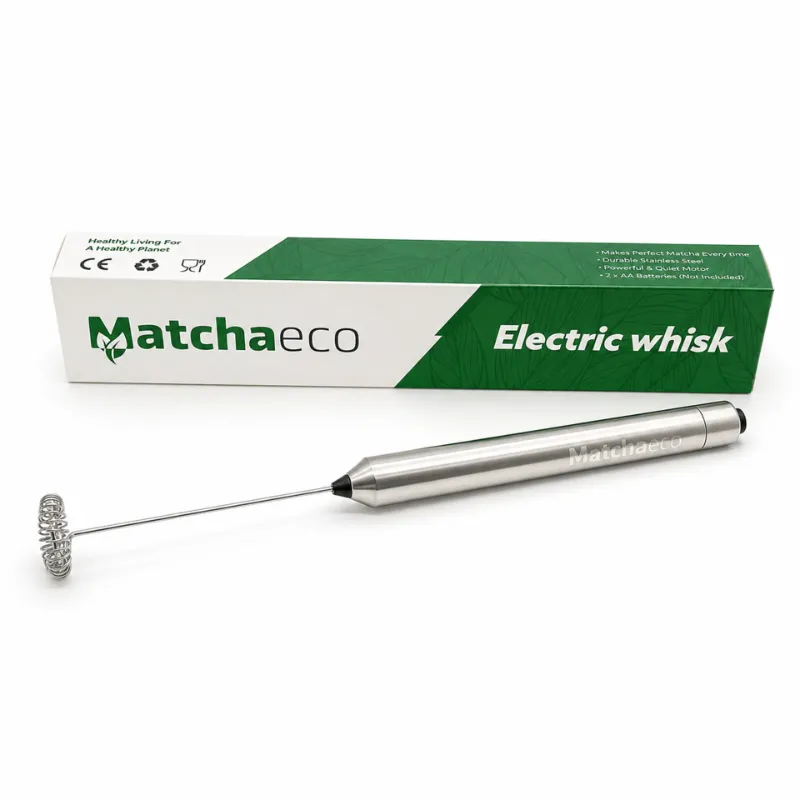
An electric milk frother for matcha uses a battery-powered motor to spin a coil or small whisk head at high speed. Most handheld models run on two AA or AAA batteries and last 30 to 60 uses per charge. Rechargeable USB models are also available.
How to use an electric frother:
- Sift matcha into a cup or bowl
- Add 60 to 80 ml of 75°C water
- Insert the frother head at an angle, turn it on, and move it in slow circles for 15 to 30 seconds
- Lift the frother slowly once foam forms
Pros:
- Froths matcha in 15 to 30 seconds with no wrist effort
- Consistent results every time, no technique required
- Works for matcha lattes, dalgona coffee, and hot chocolate
- Portable and easy to clean (rinse under running water)
Cons:
- Produces larger, airier bubbles than a bamboo whisk
- Requires batteries or recharging
- Slightly louder than manual whisking
- Lower-quality motors can stall in thick matcha paste
A matcha frother is the best choice for busy mornings, travel, or anyone making matcha lattes with milk. The texture is smooth and clump-free, though purists will notice the foam is less dense than traditional chasen froth. You can grab the code for 5% off Matchaeco's electric frother options.
Side-by-Side Comparison: Manual vs Electric
| Feature | Bamboo Whisk | Electric Frother |
|---|---|---|
| Froth time | 60 to 90 seconds | 15 to 30 seconds |
| Foam texture | Fine, dense microfoam | Airy, larger bubbles |
| Learning curve | Moderate (requires wrist technique) | None (press button, move in circles) |
| Cost | $10 to $25 | $12 to $35 |
| Maintenance | Store on holder, replace every 6-12 months | Rinse after use, replace batteries |
Both tools eliminate clumps when you sift the powder and use water at the right temperature. Your choice depends on whether you prioritize traditional texture or speed. For ceremonial-grade matcha served straight, a bamboo whisk honors the tea's heritage. For daily lattes or culinary-grade matcha, a milk frother for matcha saves time without sacrificing smoothness.
Choosing the Right Tool for Your Matcha Routine
Pick a bamboo whisk if you:
- Drink ceremonial-grade matcha straight (usucha or koicha)
- Enjoy the meditative ritual of traditional preparation
- Want the finest, densest foam texture
- Prefer a one-time purchase with no batteries
Pick an electric frother if you:
- Make matcha lattes with milk or plant-based alternatives
- Prepare matcha daily and value speed
- Travel frequently or make tea at work
- Use the frother for other drinks (coffee, hot chocolate)
Hybrid approach: Many matcha enthusiasts keep both. Use a bamboo whisk for weekend ceremonial tea and an electric milk frother for matcha for weekday lattes. This gives you flexibility without compromise.
If you are still deciding, start with an electric frother. The low learning curve and multi-use capability make it the safer first investment. You can always add a bamboo whisk later once you have refined your matcha preferences. For more context on how each tool performs in real-world tests, see this comparison from Eyes and Hour or Three Leaf Tea's breakdown.
Cleaning and Care Tips for Both Tools
Proper maintenance extends the life of any matcha whisk and prevents off-flavors from dried residue.
For bamboo whisks:
- Rinse immediately after use under warm (not hot) water
- Gently squeeze the tines to release trapped powder
- Store upright on a whisk holder (kusenaoshi) to maintain the curved shape
- Never put in the dishwasher or soak for more than 60 seconds
- Replace when tines break or the tips fray (typically every 6 to 12 months)
For electric frothers:
- Rinse the whisk head under running water immediately after use
- Wipe the shaft with a damp cloth (do not submerge the motor housing)
- Dry completely before storing to prevent corrosion
- Replace batteries when the motor slows or stalls
- Descale monthly if you use hard water (soak the head in 1:1 vinegar and water for 10 minutes)
A matcha milk frother typically lasts 1 to 3 years with daily use, while a bamboo whisk lasts 6 to 12 months. Both are affordable to replace, so factor replacement cost into your decision.
Where to Buy and Save on Matcha Frothers
Matchaeco stocks both manual and electric frother options designed for matcha preparation. We have tested their range and confirmed consistent performance across price points. You can browse the full selection and grab the code for 5% off all orders, including matcha frother electric matcha whisk models and traditional bamboo whisks.
For more recommendations on electric models, Basil Carmel's guide highlights top-rated picks based on motor power, battery life, and foam quality. Pair your frother with ceremonial or culinary-grade matcha depending on whether you drink it straight or blend it into lattes.
Frequently asked questions
Can I use a regular milk frother for matcha tea?
Yes, most handheld milk frothers work well for matcha. Look for models with a coil or small whisk head that can handle thick liquid. Avoid frothers designed only for cold foam, as they may stall in matcha paste.
How long does it take to froth matcha with an electric whisk?
An electric matcha frother typically froths matcha in 15 to 30 seconds. Move the frother in slow circles and keep the head submerged to prevent splashing. Traditional bamboo whisks take 60 to 90 seconds.
Why is my matcha still clumpy after whisking?
Clumps usually mean you skipped sifting the powder or used water that is too hot or too cold. Sift matcha through a fine-mesh strainer before whisking and keep water between 70 and 80°C for best results.
Do bamboo whisks produce better foam than electric frothers?
Bamboo whisks create finer, denser microfoam preferred in traditional tea ceremony. Electric frothers produce airier, larger bubbles but still deliver smooth, clump-free matcha in less time.
How often should I replace a bamboo matcha whisk?
Replace a bamboo whisk every 6 to 12 months with daily use, or when tines break and fray. Proper care, like rinsing immediately after use and storing on a whisk holder, extends its lifespan.
Can I make matcha lattes with a traditional bamboo whisk?
Yes, but it requires more effort. Whisk the matcha with a small amount of water first to create a smooth paste, then add steamed milk. An electric milk frother for matcha is faster and easier for lattes.