
What Height Cat Tower Do I Need for Multiple Cats?

What Height Cat Tower Do I Need for Multiple Cats?
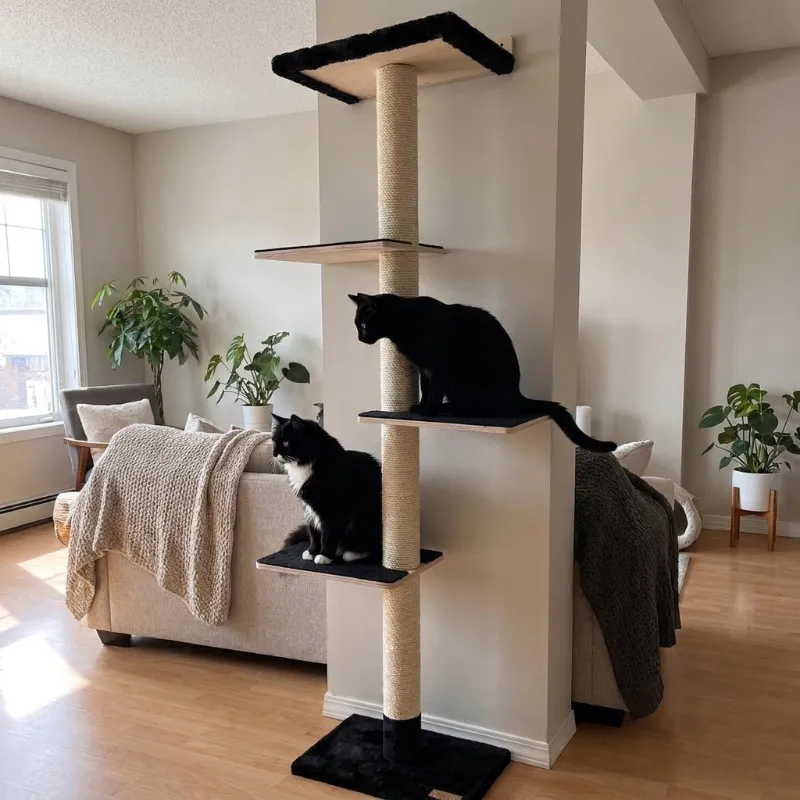
A 72 inch cat tower provides enough vertical territory for multiple cats to share space comfortably without conflict. For households with two to four cats, this height offers separate perches at different levels so each cat can claim their own zone while satisfying their instinct to climb and survey their environment.
Why Vertical Space Matters for Multi-Cat Households
Cats are territorial by nature, and when multiple cats share the same home, vertical space becomes critical real estate. A tall tower lets cats establish hierarchy without aggression. The dominant cat typically claims the highest perch, while others settle into mid-level platforms. This vertical layering reduces tension and gives every cat a safe retreat.
Towers in the 70 to 72 inch range hit the sweet spot for most homes. They're tall enough to create distinct zones but stable enough to remain secure when multiple cats are climbing or playing. If you have higher ceilings or more than four cats, you might consider a 7 foot tall cat tree (84 inches) or even a 90 inch cat tree, though these require more floor space and reinforcement.
When browsing options, check the latest pricing and our discount code to save on quality towers that handle the wear of multiple cats.
How Many Cats Can a 72 Inch Tower Support?
The answer depends on perch count and weight capacity, not just height. Look for towers with at least one perch or platform per cat, plus one extra. For three cats, that means four usable spots. A well-designed 72 inch cat tree with hammock adds an extra lounging surface without taking up vertical perch space.
Check these features for multi-cat compatibility:
- Weight capacity of at least 50 to 60 pounds total
- Multiple entry and exit routes so cats don't trap each other
- Wide bases (24 inches or more) to prevent tipping
- Reinforced posts wrapped in sisal or carpet for durability
- Variety of perch sizes so cats of different body types can share
If your cats are particularly active or large breeds like Maine Coons, consider an xxl cat tower with thicker posts and platforms rated for heavier use. Pair it with a black cat furniture piece if you want a cohesive look across your space.
Comparing Tower Heights for Different Household Sizes
| Tower Height | Best For | Key Benefits |
|---|---|---|
| 50-60 inches | 1-2 cats, small spaces | Stable, fits under standard ceilings, easy to assemble |
| 72 inches | 2-4 cats, average rooms | Multiple levels, satisfies climbing instinct, balanced footprint |
| 84-90 inches | 4+ cats, high ceilings | Maximum vertical territory, dramatic statement piece, requires anchoring |
A cat tower 70 inch to 72 inch height works in most living rooms and doesn't overwhelm the space. Taller models like an 84 inch cat tree need ceiling clearance of at least 8 feet and may require wall anchors for safety.
Supplementing Your Tower with Wall-Mounted Options
Even the best tower has limits. If you have more than four cats or want to maximize your vertical real estate, combine your floor tower with wall-mounted solutions. A wall cat scratcher or corner cat scratcher adds climbing and scratching surfaces without consuming floor space.
Wall-mounted pieces work especially well in narrow hallways or above furniture. A cat wall scratcher near a window creates a sunny perch, while a wall corner cat scratcher turns dead space into a climbing route. For senior cats or kittens, add pet stairs cat steps to help them reach higher platforms safely.
These modular additions let you expand as your household grows or as your cats' preferences change. Grab our code to save on wall-mounted options that integrate with freestanding towers.
Material and Stability Considerations
A 72 inch tower for multiple cats must handle constant use, jumping, and scratching. Prioritize these materials:
- Solid wood or engineered wood posts over cardboard tubes
- Sisal rope (not sisal fabric) for scratching posts, minimum 3.5 inches diameter
- Plush or faux fur on perches for comfort and grip
- Heavy particle board or plywood platforms, at least 0.6 inches thick
Avoid towers with lightweight hollow posts or thin platforms. They wobble under the weight of multiple cats and fail within months. If you already own a sturdy black cat condo, you can extend its life by adding satellite pieces like cat corners nearby to distribute traffic.
Test stability before your cats do. Push the top platform firmly from different angles. If it sways more than an inch, the base is too narrow or the assembly is loose. Tighten all bolts and consider placing the tower against a wall or anchoring it for extra security.
Setup and Placement Tips for Multi-Cat Towers
Location matters as much as height. Place your 72 inch tower near a window so cats can watch outdoor activity, or in a high-traffic room where they feel part of the household. Avoid corners that trap cats or isolated rooms where they won't use it.
Space the tower at least two feet from furniture to prevent cats from using your bookshelf as a springboard. If you have kittens or senior cats, ensure the lowest perch is 12 inches or less from the floor for easy access.
Introduce the tower gradually. Sprinkle catnip on the platforms and use treats to reward exploration. If one cat monopolizes the top, place a second tower or wall-mounted perch elsewhere to ease competition. We've tested dozens of configurations, and households with multiple tall structures see less conflict than those with one massive tower.
For ongoing savings on replacement parts or additional towers, visit our Noba Animal discount page for the latest offers.
Who Should Choose a 72 Inch Cat Tower?
This height suits:
- Multi-cat households with two to four cats of average size
- Active young cats who love climbing and jumping
- Homes with 8-foot ceilings and moderate floor space
- Owners seeking a balance between vertical territory and room aesthetics
If you have only one cat or limited ceiling height, a 50 to 60 inch model may suffice. If you have five or more cats or breeds that demand extreme vertical space, explore taller options or combine a 72 inch tower with wall-mounted systems.
The right tower reduces stress, curbs destructive scratching, and gives every cat a place to call their own. Measure your space, count your cats, and choose a tower built to last through years of daily climbs.
Frequently asked questions
How tall should a cat tower be for three cats?
A 72 inch cat tower is ideal for three cats, offering at least four separate perches so each cat can claim their own level. Look for models with multiple platforms and a wide base for stability.
Do I need to anchor a 72 inch cat tower to the wall?
Most 72 inch towers with a wide base (24 inches or more) remain stable without anchoring if assembled correctly. However, if your cats are large breeds or exceptionally active, wall anchors add extra security and prevent tipping.
Can I add wall scratchers to supplement a tall cat tower?
Yes, wall-mounted scratchers and perches are excellent supplements. They expand vertical territory without taking floor space, and they help distribute traffic if you have more than four cats.
What is the weight limit for a 72 inch multi-cat tower?
Look for towers rated for at least 50 to 60 pounds total capacity. This accommodates two to four average-sized cats using the tower simultaneously. Check the manufacturer specs for exact limits.
Is a 90 inch cat tree better than a 72 inch for multiple cats?
A 90 inch tree offers more vertical territory but requires high ceilings and often needs wall anchoring. For most homes with two to four cats, a 72 inch tower provides enough levels without the extra footprint or stability concerns.
How do I stop one cat from hogging the top perch?
Add a second tall tower or wall-mounted perch in another area so each cat has access to a high vantage point. Cats naturally share space better when there are multiple high perches available.