
How Long Do BLUETTI Power Stations Last Before the Battery Degrades?

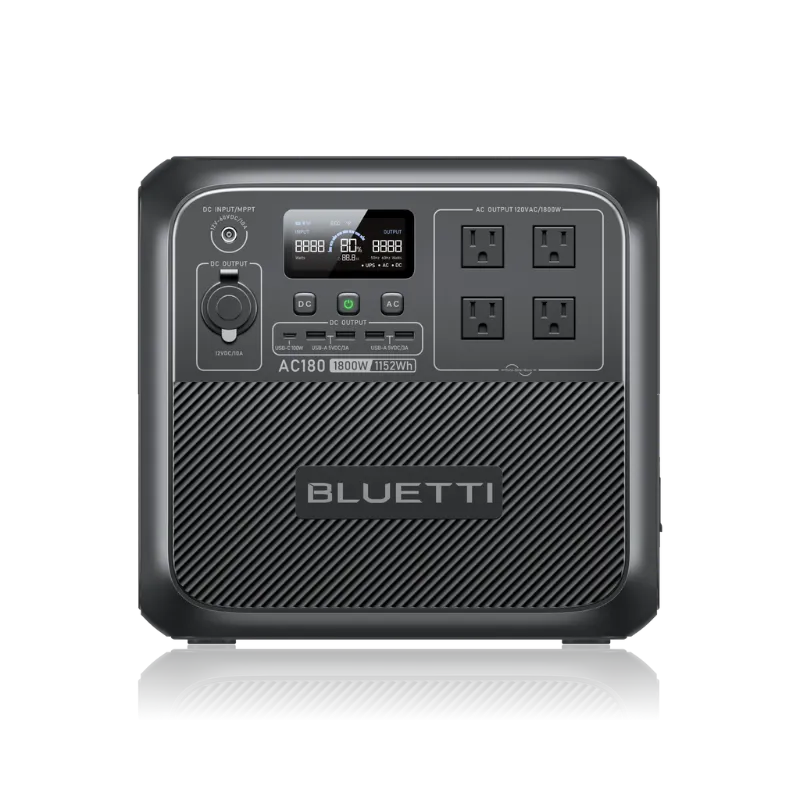
# How Long Do BLUETTI Power Stations Last Before the Battery Degrades?
If you're shopping for a power battery power solution for camping, emergencies, or off-grid living, one of the first questions you should ask is: how long will the battery actually last? A power station is an investment, and battery degradation is the single biggest factor that determines its real-world lifespan. In this guide, we'll break down exactly how long BLUETTI power stations last, what causes battery degradation, and which models offer the best long-term value.
The Short Answer: 10+ Years for Most Modern BLUETTI Units
Most modern BLUETTI power stations use LiFePO4 (lithium iron phosphate) battery cells, rated for 3,000 to 6,000+ charge cycles before dropping to 80% of original capacity. In practical terms:
- 6,000-cycle models: 10–15+ years of regular use
- 3,000-cycle models: 8–10 years of regular use
- Occasional/backup use: 15–20 years is realistic
To put that in perspective, a unit charged once a week would take over 115 years to hit 6,000 cycles. Even daily charging means well over a decade of dependable service.
A great example is the bluetti power station lineup, which has largely shifted to LiFePO4 chemistry across its current range — a big reason these units hold their capacity far longer than older lithium-ion power stations.
Understanding Charge Cycles and Degradation
A charge cycle means using 100% of the battery's capacity — but not necessarily in one session. Draining from 100% to 50%, recharging, then draining to 50% again equals one full cycle.
Here's what degradation looks like over time:
| Cycles Used | Remaining Capacity (typical) |
|---|---|
| 0 | 100% |
| 1,500 | ~95% |
| 3,000 | ~80–85% |
| 6,000 | ~80% |
| 6,000+ | Gradually declining below 80% |
The key point: "end of life" doesn't mean the battery dies. At 80% capacity, a bluetti elite 200 v2 with 2,073Wh still delivers around 1,650Wh per charge — plenty for most camping and backup needs. Even a bluetti elite 100 v2 at 80% still runs a laptop, lights, and a mini fridge comfortably.
Why LiFePO4 Outlasts Other Battery Types
Older power stations (and many budget models) use NMC lithium-ion cells rated for just 500–800 cycles. LiFePO4 chemistry — used in BLUETTI's current lineup — offers:
- 3–6x the cycle life of traditional lithium-ion
- Superior thermal stability — far less prone to overheating
- Minimal capacity fade in the first several thousand cycles
- No memory effect, so partial charging causes no harm
That's why the bluetti elite 300 portable power station and the expandable apex 300 are built for years of heavy cycling — they're designed around cells that simply don't wear out quickly.
7 Factors That Affect How Fast Your Battery Degrades
1. Depth of Discharge
Regularly draining to 0% accelerates wear. Keeping cycles between 20% and 80% dramatically extends lifespan. Most BLUETTI units let you set a charge limit in the app for exactly this reason.
2. Extreme Temperatures
Heat is the #1 battery killer. Avoid charging in direct sunlight or leaving the unit in a hot car. LiFePO4 handles cold better than other chemistries, but charging below freezing should still be avoided. Units like the bluetti solar generator systems include battery management systems (BMS) that protect cells automatically.
3. Charge Speed
Fast charging generates heat. BLUETTI's AC+T charging is fine occasionally, but for daily longevity, moderate charging speeds are gentler on cells.
4. Storage Charge Level
If storing for months, keep the battery at 50–60%, not full or empty. Top it up every 3–6 months.
5. Charging Environment
Always charge in a dry, ventilated space. Solar charging through bluetti solar panels is gentle and efficient — a 100 w solar panel keeps a mid-size unit topped up all day without stressing the battery.
6. Storage Conditions
Store in a cool, dry place. A garage or closet beats a hot attic or damp basement every time.
7. Passive Drain
Even idle, the inverter and display draw small amounts of power. Fully depleting a unit left unused for months can damage cells — another reason to check on stored units periodically.
Model-by-Model Battery Lifespan Guide
BLUETTI Elite Series (Newest Technology)
The Elite series represents BLUETTI's latest generation of cells and power electronics:
- bluetti elite 100 v2 — 1,024Wh LiFePO4 battery rated for thousands of cycles. Ideal for daily use, van life, and as a backup for essentials. Its compact size makes it the everyday workhorse of the range.
- bluetti elite 200 v2 — 2,073Wh with higher output for heavier appliances. With a larger battery, cycle-based degradation matters even more — and Elite cells are rated to hold up through years of daily cycling.
- bluetti elite 300 portable power station — The big battery option for whole-campsite power or serious home backup. Even after thousands of cycles, remaining capacity still covers refrigerators, CPAP machines, and power tools.
Apex 300 — Built for the Long Haul
The apex 300 is BLUETTI's expandable, high-capacity platform. It's engineered for frequent, heavy cycling — think home backup and off-grid cabins. With modular expansion, you add capacity as needed rather than replacing the whole unit, which further stretches its useful life.
Other Notable Options
- rocky mountain power and el paso electric models — solid power station options for regional buyers looking for reliable, long-lasting storage.
- power battery power — a dependable power station pick for general-purpose charging and backup.
- portable camping generators — camping-focused units where LiFePO4 longevity really pays off, since camp use typically involves frequent partial cycles that are very easy on the battery.
How Solar Charging Affects Battery Lifespan
Pairing your power station with solar is one of the best things you can do for battery longevity:
- Slower, gentler charging — solar input tops the battery up gradually instead of hammering it at max AC speed.
- Shallow cycling — you can keep the battery in the healthy 20–80% window instead of full drain/recharge cycles.
- Free, clean power — no grid costs while your battery ages gracefully.
A 100 w solar panel is a perfect match for the Elite 100 V2, while larger arrays of bluetti solar panels suit the Elite 200 V2, Elite 300, and Apex 300.
Real-World Lifespan Estimates by Use Case
| Use Case | Cycles/Year | Estimated Lifespan to 80% |
|---|---|---|
| Daily use / van life | ~365 | 8–15+ years |
| Weekend camping | ~50–100 | 20+ years |
| Emergency backup only | ~5–20 | Effectively 15–20+ years |
| Off-grid primary power | ~365+ | 8–12 years |
In other words, for most buyers, the battery will outlast the practical life of the electronics around it. A bluetti power station bought today will very likely still be running a decade from now.
Tips to Maximize Your BLUETTI Battery Lifespan
- Avoid full drains — recharge before hitting 0%.
- Set a charge limit to ~80–90% for daily use.
- Store at 50–60% charge in a cool, dry place.
- Keep it out of extreme heat — never charge in direct sun.
- Top up stored units every 3–6 months.
- Use solar where possible for gentle charging.
- Update firmware — BMS improvements often include battery-care optimizations.
Warranty Backing
BLUETTI typically backs its power stations with 4–5 year warranties on many models — a strong signal of confidence in battery longevity. A warranty that long only makes sense if the cells genuinely last well beyond it, which aligns with the LiFePO4 cycle ratings above.
Should You Worry About Degradation?
For almost every user, the honest answer is no. Modern LiFePO4-based units — like the bluetti elite 100 v2, bluetti elite 200 v2, and apex 300 — are rated for a decade or more of regular use. The battery will usually outlive your other gadgets, your camping gear, and quite possibly your interest in upgrading.
If you're ready to buy, current pricing and promo offers are available on the BLUETTI discount code page — including 5% OFF all orders — so check there before checkout to lock in the best deal on your long-lasting power battery power setup.
Bottom Line
BLUETTI power stations with LiFePO4 batteries last 10–15+ years of regular use before dropping to 80% capacity — and much longer for occasional users. Degradation is gradual and gentle, not a sudden failure. Choose the capacity that fits your needs, treat the battery well with the tips above, add solar charging, and your power station will serve you reliably for well over a decade.
Frequently asked questions
How long do BLUETTI power stations last before the battery degrades?
Most modern BLUETTI power stations use LiFePO4 batteries rated for 3,000–6,000+ charge cycles before dropping to 80% capacity. With regular use that's roughly 10–15+ years; with occasional backup use, 15–20 years is realistic.
What happens when a BLUETTI battery reaches the end of its cycle rating?
No. At 'end of life' (80% capacity) the battery still works — it just holds less. For example, a 2,073Wh unit at 80% still delivers about 1,650Wh per charge, enough for most camping and backup needs.
How long is the BLUETTI warranty on power stations?
Most current BLUETTI models are backed by 4–5 year warranties on many units, reflecting confidence in the LiFePO4 battery longevity.
How can I make my BLUETTI battery last longer?
Avoid full drains, keep cycles between 20–80%, store at 50–60% charge in a cool dry place, avoid charging in extreme heat, top up stored units every 3–6 months, and use solar charging for gentler top-ups.
Is LiFePO4 better than lithium-ion for power stations?
BLUETTI uses LiFePO4 cells rated for 3,000–6,000+ cycles — roughly 3–6x the lifespan of the 500–800 cycle lithium-ion (NMC) cells found in many older or budget power stations, plus better thermal stability.
Does solar charging help battery lifespan?
Yes. Solar charging is gentler on the battery, encourages shallow cycling in the healthy 20–80% range, and reduces wear compared to fast AC charging. Even a single 100W panel can maintain a mid-size unit throughout the day.