
Mandala Coasters Diamond Painting: What to Expect Before You Start

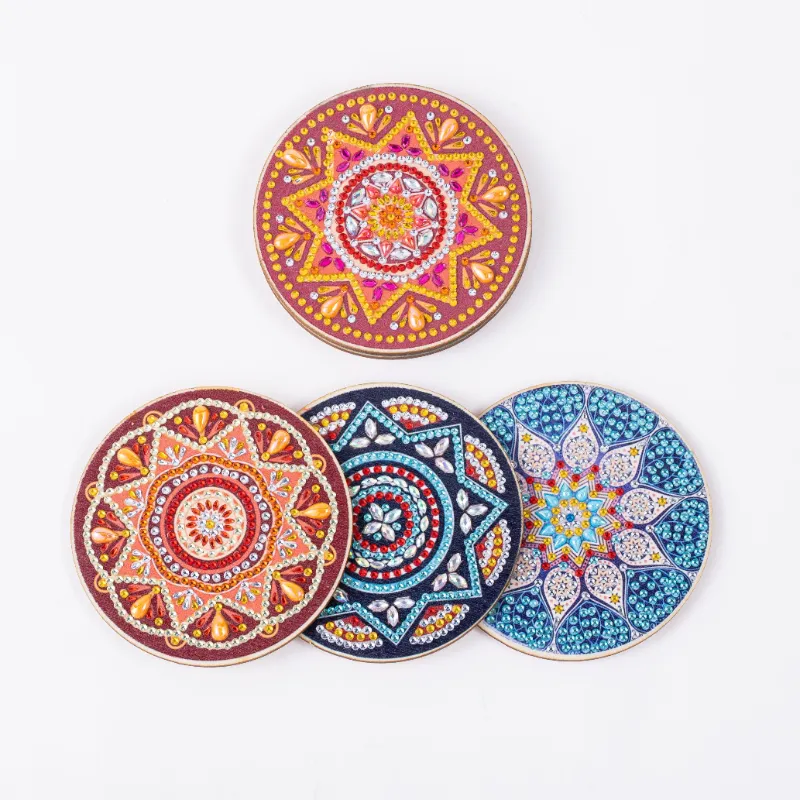
A good diamond painting pen is the single most important tool you'll reach for when working on mandala coasters, and knowing what to expect before you start saves a lot of frustration. Mandala coaster sets are one of the more satisfying beginner projects because the designs are compact, the symmetry makes mistakes easy to spot early, and you end up with something genuinely useful. Here's a practical walkthrough of everything worth knowing before you open the box.
What Comes in a Mandala Coasters Kit
Most mandala coasters sets ship as a bundle of small canvases, usually four to six individual coaster-sized pieces, each printed with a numbered adhesive surface. Expect to find:
- Pre-printed adhesive canvases (typically round, 10–15 cm across)
- A tray for sorting drills
- A wax pad and stylus tip
- Resin diamond drills, sorted by color code
- A basic applicator pen
The included pen is functional, but many crafters swap it out quickly. The stylus tip can feel imprecise on a small canvas where each cell is only a millimeter or two wide. Upgrading to a dedicated diamond painting pen with a fine tip makes the process noticeably cleaner, especially around the curved edges that mandala designs are full of.
Choosing the Right Diamond Painting Pen for Small Canvases
Coaster-scale work puts a premium on control. The two main options are a standard stylus pen and an electric diamond painting pen, which vibrates to help drills seat faster across large fills.
| Tool | Best for | Control level | Speed |
|---|---|---|---|
| Standard diamond painting pen | Small, detailed areas | High | Moderate |
| Electric diamond painting pen | Large flat sections | Moderate | Fast |
| Multi-tip applicator | Filling repetitive patterns | Moderate | Fast |
For mandala coasters specifically, a standard painting diamond pen wins on control. The designs have a lot of color transitions and tight curves. An electric pen is better suited to a larger canvas like a sunflower diamond art kit where you have wide blocks of a single color to fill quickly. You can always use both: the electric pen for the background fill and your precise stylus for the border details.
Setting Up Your Workspace
Diamond dotting on a small coaster canvas rewards a little upfront organization.
- Work under bright, directed light. A daylight LED lamp reduces eye strain and helps you distinguish similar drill colors like pale gold and pale yellow.
- Pour one color at a time into the sorting tray and reseal the bag before opening the next. Coaster sets use a lot of closely matched shades.
- Keep the protective film mostly on. Peel back only a small section of the adhesive at a time. The exposed surface picks up dust fast.
- Wax your pen before each session. Press the tip into the wax pad four or five times. This is what lets the drill stick to the pen long enough to place it without dropping.
- Work from the center of each coaster outward. Mandala patterns are symmetrical, and centering your first drills prevents the whole design from drifting off-axis.
If you want to explore diamond dotting beyond the coaster format, the same setup principles apply to any canvas size.
The Diamond Dotting Process, Step by Step
- Identify the color code in your chart and locate the matching drill bag.
- Pour a small amount into the tray and shake gently to face the drills dome-side up.
- Press your diamond painting pen tip lightly into the wax pad.
- Touch the tip to the top of a drill. It will cling to the wax.
- Press the drill onto the matching symbol on the canvas until it clicks into the adhesive.
- Repeat, re-waxing the tip every 10 to 15 drills.
The coaster canvas is small enough that you can complete one color across an entire piece in a single sitting. Finishing one coaster before moving to the next keeps your momentum up and makes the project feel achievable.
Common Beginner Mistakes (and How to Avoid Them)
Even simple diament art projects have a few pitfalls worth knowing about in advance.
- Mixing up similar drill colors. Label your tray sections with the color code number before pouring. Mandala palettes often include four or five shades of the same hue.
- Pressing too hard. The adhesive does the holding work. A light press is enough. Pressing hard can tilt the drill or crack it.
- Leaving gaps. Scan each completed section at an angle under your lamp. Gaps catch the light and are much easier to see that way.
- Peeling too much protective film. Once the adhesive is exposed, it starts collecting lint. Small sections only.
- Skipping the wax. A dry tip drops drills constantly. Rewax more often than you think you need to.
Displaying and Protecting Your Finished Coasters
Once your mandala coasters are complete, seal them before use. A thin layer of mod podge or dedicated diamond art sealer locks the drills in place and protects against the light condensation a coaster will inevitably face. Let it cure fully before using them as functional coasters, usually 24 hours.
If you want to display a set rather than use them, frame diamond art frames designed for round or small canvases work well and protect the surface without sealing. It's a clean way to turn the set into wall art instead.
You can grab the current discount code before you order to take 10% off sitewide, which adds up quickly if you're buying a pen, a coaster kit, and a frame together.
Who This Project Suits
Mandala coaster kits are genuinely well-suited to:
- First-time diamond dotters who want a contained project with a fast payoff
- Experienced crafters who want a low-commitment palette cleanser between larger canvases
- Gift-givers looking for a complete, functional craft kit
- Kids and teens with adult supervision for the small parts
If you find the small scale frustrating rather than satisfying, a larger format like a sunflower diamond art or a full dot painting artist canvas might suit your pace better. More cells per color means less tray-swapping and a more meditative rhythm.
Check the latest prices and the current offer before you decide which kit to start with.
Frequently asked questions
What diamond painting pen tip size works best for mandala coasters?
A single-drill stylus tip gives the most control on small coaster canvases. Multi-tip heads are useful for large flat areas but can be awkward around the tight curves and fine detail in mandala designs.
Do I need an electric diamond painting pen for coaster kits?
Not really. An electric pen speeds up large, single-color fills, but coaster-scale mandala designs have too many color transitions for it to offer a big advantage. A standard diamond painting pen gives better precision for this format.
Can I use mandala coasters as functional drinkware after finishing them?
Yes, but seal them first with a diamond art sealer or mod podge. This locks the drills in place and protects the surface from condensation. Allow at least 24 hours of curing time before use.
How do I stop drills from falling off the applicator pen?
Press the tip into the wax pad before each session and re-wax every 10 to 15 drills. A fresh wax coat is what holds the drill on the tip long enough to place it accurately.
Are mandala coaster kits good for beginners?
They're one of the better beginner options because the canvas is small, the project finishes quickly, and the symmetrical mandala pattern makes it easy to spot placement errors early.
What is the difference between diamond dotting and regular diamond painting?
They're the same technique. Diamond dotting is just another common name for placing resin drills onto an adhesive canvas. The tools, including the pen and wax pad, are identical.