

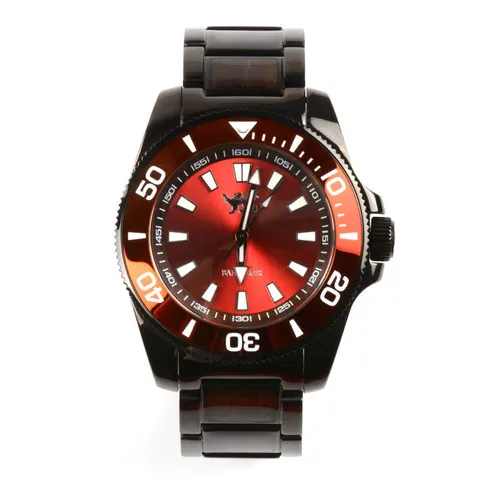
A bennisson watch that runs slow is almost always telling you one of three things: the battery is fading, the movement has been magnetized, or the crown and hands need attention. Most of those problems have a fix you can do at home in a few minutes, and only a handful need a watchmaker. Below is how we diagnose a slow watch in our own test bench, what each cause looks like, and when to stop tinkering and use your warranty instead.
Start here: is the watch losing seconds or minutes?
Diagnosis begins with measuring the loss properly. Set the watch against a reliable time source, note the exact offset, and check again after 24 hours.
- Losing a few seconds a day: normal for a mechanical movement. Leave it alone.
- Losing one to five minutes a day: usually magnetization or a low battery in a quartz model.
- Losing time in random jumps, or stopping overnight: a mechanical fault or a hand colliding with the crystal.
- Stopped entirely, or the second hand ticking in two-second hops: battery, plain and simple.
Write the number down before you change anything. It makes a warranty conversation much easier later, and it stops you from "fixing" a watch that was never broken.
Cause 1: a dying battery in a quartz model
Quartz watches are the most common slow runners we see, and a weak cell is usually the reason. As voltage drops, the stepper motor still moves the hands but with less torque and less accuracy, so the watch drifts. Some quartz movements give you a warning by ticking once every two seconds instead of once per second.
Fix: have the battery replaced by a jeweler or watchmaker rather than prying the caseback yourself. Caseback gaskets are easy to pinch, and a pinched gasket turns a battery swap into a water-resistance problem. Ask for a fresh gasket and a pressure check while the case is open.
If the watch is a bennisson watch you bought recently and it is already drifting, check the paperwork before you pay for anything. Battery service is often covered under the first year. Check the current offer and terms on the store page before booking a repair.
Cause 2: magnetization, the invisible time thief
A magnetized watch runs fast far more often than slow, but it can go either way, and it is the single most overlooked cause of odd timing. The usual suspects are phone speakers, tablet cases with magnetic clasps, laptop lids, headphones, and airport scanners.
Signs to look for:
- The watch gains or loses the same amount every single day, not erratically.
- A mechanical movement suddenly changes rate after you start carrying a new bag or wearing a new strap with magnetic hardware.
- The watch runs perfectly on the desk and badly on your wrist.
Fix: a watchmaker can demagnetize a watch in under a minute with a demagnetizer, usually for very little money. Cheap demagnetizers exist online, but they are easy to misuse on a good movement, so we would rather hand over a benjamin banneker watches model to someone who does it weekly.
Cause 3: mechanical versus quartz movements behave differently
Before you chase a fault, know what you own. The two movement types have completely different tolerance ranges, and a lot of "slow watch" complaints are just people expecting quartz accuracy from a mechanical gear train.
| Movement | Typical accuracy | Care needs | Best for |
|---|---|---|---|
| Quartz | Within a few seconds a month | Battery every few years | Daily wear, gym, travel |
| Mechanical / automatic | Tens of seconds a day either way | Service every several years | Collectors, dress wear |
If your watch has a sweeping second hand, it is likely mechanical, and losing a few seconds a day is not a defect. If it ticks once per second, it is quartz, and it should not drift by minutes. That single observation saves a lot of unnecessary repair bills.
Cause 4: the watch has never been serviced
Mechanical watches need oil, and oil degrades. Once the lubricant dries or thickens, friction rises, amplitude falls, and the watch loses time, especially in the first hours after you put it on. A watch that has sat in a drawer for years will often run slow until it has been properly cleaned and lubricated.
- Service interval for a mechanical watch in regular use: roughly every four to seven years.
- Watch worn occasionally: service on condition, not on the calendar.
- Watch that has been stored for a decade: budget for a service before you judge its accuracy.
The bigger 48mm cases have more mass in the case and crystal, which does not affect rate directly, but the visual scale makes small hand misalignments more obvious. If your 48mm watch looks like the minute hand is sitting slightly off the marker, that is an alignment issue, not a timing issue, and it is a quick fix for a watchmaker.
Cause 5: impact, water, and the set crown
Two physical problems also show up as slow running.
- A partly pulled crown. On a mechanical watch, the crown has a winding position and a setting position. Leave it between the two and the movement can drag. Push it fully home before you blame the watch.
- A knock or a drop. Impact can bend a pivot, shift a pallet, or move a hand until it catches the crystal or another hand. If the watch stops at the same time every day, this is the likely cause.
- Moisture. Fogging under the crystal, a cloudy dial, or a slow drift after swimming points to water ingress. Stop wearing it, do not run the crown, and get it dried professionally the same week.
Watch care and maintenance that prevents slow running
A little routine maintenance stops most of these issues before they start.
- Store the watch away from speakers, magnetic clasps, and wireless chargers.
- Rinse a water-resistant case with fresh water after salt water or heavy sweat, then dry it.
- Wipe the caseback and strap weekly. Grit around the caseback is what chews gaskets.
- Rotate a mechanical watch onto a winder or wear it a couple of times a week to keep oil moving.
- Keep the box and papers. Warranty and repair coverage almost always asks for proof of purchase.
Straps matter more than people expect. A heavy leather band that holds moisture against the caseback accelerates corrosion, while a steel bracelet or a vented rubber strap keeps the case drier. Swapping bands seasonally is cheap insurance, and it changes the look of the watch more than anything else you can do.
Warranty, repair, and returns: what to do next
Once you have a measured rate, a movement type, and a rough cause, the decision becomes simple.
- Quartz, slow by minutes: battery service. Cheap, fast, done locally.
- Mechanical, slow by seconds: nothing to fix. Adjust your expectations.
- Sudden change after a magnet or a drop: professional diagnosis, usually covered if the watch is new.
- Repeated failures or water ingress: claim warranty rather than paying for a repair.
Check your coverage before you approve any work, since unauthorized repairs can void it. Our guide to warranty and repair coverage, plus shipping and delivery options, covers what the store handles and how returns and exchanges work if the fault is on arrival. If you are still choosing a model and want to know what fits your wrist, our sizing notes and brand background will help you decide between the standard case and the larger 48mm watch before you buy.
When to stop and send it in
Send the watch for service if it stops more than once a week, if the crystal fogs, if the crown feels gritty, or if the rate changes by more than a couple of minutes a day. Those are not user-serviceable problems, and poking at a movement with household tools turns a cheap fix into a new movement. For everything else, start with the battery, then the magnet, then the crown, in that order. That sequence resolves the majority of slow-running complaints we test, and it costs almost nothing to run through.
 Shopping at Benjamin Banneker Watches And Clocks? See today's verified Benjamin Banneker Watches And Clocks discount code
Frequently asked questions
How accurate should a bennisson watch be?
Quartz models should hold within a few seconds a month. Mechanical models can lose or gain tens of seconds a day, which is normal for a gear train and not a fault. Measure the daily loss before assuming something is wrong.
Can a magnet make my watch run slow?
Yes. Magnetized watches usually run fast, but they can drift either way. Keep the watch away from speaker magnets, magnetic clasps, and wireless chargers, and ask a watchmaker to demagnetize it if the rate changed suddenly.
Do I need to replace the battery myself on a 48mm watch?
No. Let a jeweler or watchmaker open the case so the gasket can be reseated and pressure tested. Pry marks and pinched gaskets are the most common causes of water damage after a DIY battery swap.
How often does a mechanical Benjamin Banneker watch need servicing?
Roughly every four to seven years of regular wear. A watch that sat unused for years may need a service sooner, because dried lubricant creates friction and causes time loss.
Will a repair void my warranty and repair coverage?
Work done by an unauthorized repairer can void coverage. Check the store terms and keep your receipt before approving any service, especially in the first year.
My watch stops at the same time every day. What causes that?
Usually a hand catching the crystal or another hand after a knock, or an impact that shifted a component. That needs a watchmaker rather than a home fix.