

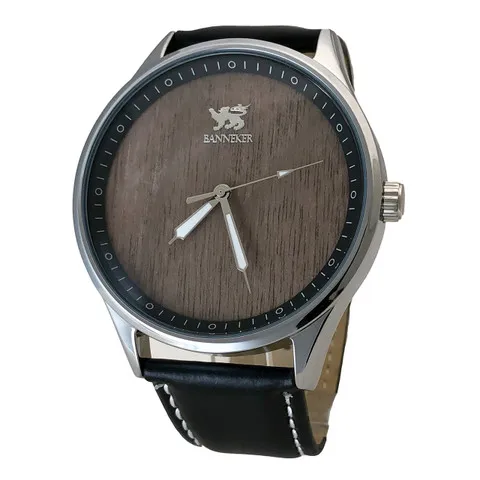
A 48mm watch can fit a smaller wrist well, as long as the lug-to-lug length sits within your wrist width and the strap tapers enough to stop the case from swimming. Case diameter gets all the attention, but on a 6 to 7 inch wrist the measurement that actually decides comfort is the distance from lug tip to lug tip. This guide walks through measuring your wrist, checking the numbers before you buy, and choosing straps that make a big case read smaller, using the Bennisson watch and the benjamin banneker watches lineup as real examples.
Why 48mm Is Bigger Than It Sounds
Watch sizing is not linear. Going from 40mm to 48mm increases the case diameter by 20 percent, but the surface area of the dial grows by roughly 44 percent. On the wrist that translates into a watch that dominates the visual field.
Most mainstream men's watches sit between 38mm and 42mm. So a 48mm watch is genuinely in oversized territory, closer to a pilot or field instrument than a dress piece.
That is not a problem. Oversized cases are a deliberate style, and plenty of people with narrow wrists wear them happily. The catch is that oversized cases punish bad fit harder than mid-size cases do. A 40mm watch that is slightly loose still looks fine. A 48mm watch that overhangs the wrist looks like it is wearing you.
Step One: Measure Your Wrist Properly
Wrap a soft tape measure snugly around your wrist bone, just below the wrist joint, where the watch will actually sit. Do not measure over a shirt cuff. If you do not have a tape, wrap a strip of paper, mark it, and lay it against a ruler.
Then measure your wrist width, flat across the top of your wrist from one side to the other. This second number is the one people skip, and it is the one that matters most.
- Wrist circumference tells you what strap length you need.
- Wrist width (flat top) tells you the maximum lug-to-lug the case can be before it overhangs.
- As a rough rule, keep lug-to-lug at or under your wrist width. Slightly over is acceptable on a strap. Well over looks off.
Most adults fall between 6 and 7.5 inches in circumference, with a flat-top width of roughly 50 to 60mm. That means many people can technically wear a 48mm case, provided the lugs are short and curved.
Step Two: Read the Lug-to-Lug, Not Just the Diameter
Two 48mm cases can wear completely differently. A watch with short, downward-curving lugs might measure 52mm lug to lug. A watch with long, straight lugs on the same 48mm case might hit 58mm.
When you look at a product page, hunt for three numbers:
- Case diameter (the 48mm figure)
- Lug-to-lug length
- Lug width, which determines which straps fit
If the listing does not publish lug-to-lug, look for real photos on a wrist, or ask the seller. For the 48mm watch in the Benjamin Banneker range, the store page is the place to confirm current specifications and dimensions before ordering, along with any live offer.
Step Three: Match the Case to Your Wrist Shape
Wrist shape changes the math. A rounder, fleshier wrist hides a large case better than a flat, bony one of the same circumference, because the case has more surface to sit on without the lugs poking into open air.
- Round wrists: you can usually go larger than the numbers suggest. A 48mm case often sits flush.
- Flat wrists: the case tends to perch on top, so lug curvature matters more than diameter.
- Bony wrists: watch for the crown digging into the back of your hand. A case with a recessed or protected crown helps.
If you are between sizes, err toward the case that fits your wrist width and accept the larger diameter. A big case that sits flat beats a mid-size case with lugs that overhang.
Step Four: Use the Strap to Shrink the Watch
Strap choice is the most underrated sizing tool. The same 48mm case can look enormous on a wide, stiff band and perfectly reasonable on a tapered strap.
- Tapered leather straps that narrow toward the buckle visually pull the eye inward and make the case read smaller.
- NATO and single-pass nylon add height under the case, which lifts it off the wrist. Good for clearance, bad for slimming the look.
- Thick rubber or silicone with wide shoulders makes an oversized case look even bigger.
- Curved-end straps hug the case and cut the gap at the lugs, which is the single biggest visual fix on a small wrist.
The Bennisson watch and the Benjamin Banneker pieces generally work with standard lug widths, so aftermarket straps are easy to source. Measure your lug width once and you can swap bands freely for years.
Step Five: Check Strap Length and Buckle Position
On a smaller wrist, an oversized case often comes with an oversized strap. The result is a long tail of leather flopping past the buckle, or a buckle that sits off-centre.
Aim for a buckle that lands roughly in the middle of the underside of your wrist, and a tail that tucks under a keeper rather than hanging free. If the stock strap runs long, that is a $20 fix with an aftermarket band, not a reason to return the watch.
If the stock strap genuinely does not work, check the store's returns and exchanges policy before you wear it outdoors. Most retailers require unworn condition with tags attached.
Quartz or Mechanical: Does the Movement Affect Fit?
Movement type affects case thickness more than diameter, and thickness is what makes an oversized watch feel heavy.
- Quartz movements are typically thinner and lighter, which suits a large case on a small wrist because the watch sits lower and balances better.
- Mechanical and automatic movements add height for the rotor and mainspring, so a 48mm mechanical watch can feel top-heavy.
If you are new to the difference, the store's own product descriptions explain which movement each model uses. For a first oversized watch on a narrow wrist, a slimmer quartz case is the lower-risk choice.
Who a 48mm Case Actually Suits
A large case works best for people who want the watch to be the statement, not an accessory. That includes:
- Anyone with a wrist width at or above roughly 55mm who likes bold proportions
- Wearers who prefer field, pilot, or utility styling over dress watches
- People who swap straps often and want a case that anchors a wide band
- Anyone layering the watch with casual, chunky clothing rather than slim tailoring
It suits you less if you wear mostly dress shirts with tight cuffs, or if you want the watch to disappear under a sleeve.
Before You Buy: Discounts, Shipping and Aftercare
Two practical checks save time. First, confirm the current price and any running promotion on the Benjamin Banneker store page rather than trusting a number in a review. Second, read the warranty and repair coverage so you know what happens if a lug spring bar fails or the crystal scratches.
When you are ready, grab the code and apply it at checkout, then verify the total dropped before you pay. Shipping and delivery options are usually listed at checkout by region, so check the estimated arrival window against any date you need the watch by.
For care, keep the case away from perfume and chlorine, wipe leather straps dry after sweaty wear, and have the gaskets checked periodically if you swim in it. A well-kept oversized case will outlast several straps.
Sizing a 48mm watch is mostly arithmetic plus one good strap decision. Measure your wrist width, compare it to the lug-to-lug figure, pick a tapered band, and the case will look intentional rather than borrowed.
 Shopping at Benjamin Banneker Watches And Clocks? See today's verified Benjamin Banneker Watches And Clocks discount code
Frequently asked questions
Can a 48mm watch fit a 6.5 inch wrist?
Usually yes, provided the lug-to-lug length is close to your flat wrist width. Measure across the top of your wrist, and favour a case with short, downward-curving lugs plus a tapered strap.
Is lug-to-lug more important than case diameter?
For comfort and proportion, yes. Diameter sets the visual size, but lug-to-lug decides whether the case overhangs your wrist, which is what makes an oversized watch look wrong.
What strap makes a large case look smaller?
A tapered leather strap or a curved-end strap that narrows toward the buckle. Avoid thick, wide rubber bands, which add bulk at the lugs and make the case read even larger.
Do the Benjamin Banneker watches come in different case sizes?
The range includes multiple models, so check each product page for the exact case diameter and lug width before ordering. The store listing is the reliable source for current specifications.
How do I check a discount code before paying?
Add the watch to your cart, enter the code at checkout, and confirm the order total drops before you submit payment. If the total does not change, the code may be region-limited or expired.
Will a heavy mechanical movement feel worse on a small wrist?
It can. Mechanical movements add case thickness, so a large mechanical case sits higher and can feel top-heavy. A slimmer quartz movement usually balances better on a narrow wrist.