

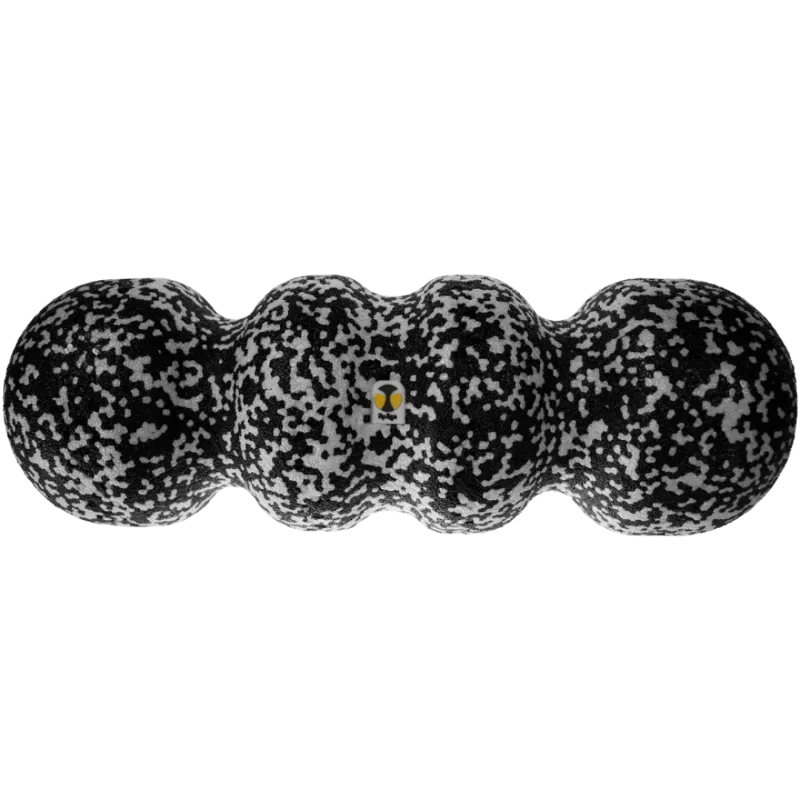
The rollga foam roller outperforms traditional flat rollers for most users by targeting muscles more precisely without crushing sensitive tissue. Its contoured, multi-zone surface hugs the body's natural curves, while a standard soft foam roller rolls flat across everything. If you have been wondering which design is actually worth your money, this guide breaks it down clearly.
What Makes the Rollga Foam Roller Different
Traditional foam rollers are essentially smooth or grid-patterned cylinders. They apply even pressure across a wide surface, which is fine for general warm-ups but can compress nerves and bony prominences uncomfortably.
The rollga foam roller uses a patented contoured shape with ridges and valleys that:
- Straddle the spine so vertebrae sit in the channel rather than taking direct pressure
- Target trigger points in the glutes, IT band, calves, and shoulders more accurately
- Reduce bruising sensation that beginners often report with firm flat rollers
For foam rolling for beginners, this matters a lot. Less pain on first use means people actually stick with the habit.
Rollga vs. Soft Foam Rollers: A Direct Comparison
The soft foam roller vs firm foam roller debate is common, but the Rollga design adds a third variable: shape. Here is how the main options compare across the factors buyers care about most.
| Feature | Rollga Foam Roller | Soft Foam Rollers | Firm Flat Roller |
|---|---|---|---|
| Spinal safety | High (channel design) | Medium | Low |
| Trigger point accuracy | High | Low | Medium |
| Beginner comfort | High | High | Low |
| Portability | Medium | Medium | Medium |
| Best use case | Full-body, back pain | General warm-up | Deep tissue legs |
If your main goal is a foam roller for back pain, the contoured shape is a meaningful advantage over any flat option.
Who Actually Benefits Most from the Rollga Design
Not every roller suits every body or goal. Here is a quick breakdown:
- Desk workers with upper back tightness get the most immediate relief because the channel lets the thoracic spine decompress without nerve compression
- Runners and cyclists dealing with IT band or quad tightness benefit from the ridged zones that mimic targeted thumb pressure
- Beginners who gave up on flat rollers due to discomfort often find the Rollga design approachable
- Athletes combining tools can pair rolling with a percussion massager for deeper muscle recovery before or after foam work
- Mobility-focused users who already use a small yoga ball or mini stability ball for activation work find the roller complements those tools well
If you fall into one of those groups, check the latest price and grab a code before you buy.
Pairing the Rollga with Other Recovery Tools
A foam roller alone covers a lot of ground, but combining it with complementary tools gets you further, faster.
For muscle recovery after hard training:
The rolling motion loosens fascial tissue, but a percussion massage gun drives deeper into muscle bellies. Many users roll first to warm the tissue, then use a percussion gun on specific knots for 30 to 60 seconds.
For core and stability work:
A mini exercise ball or small fitness ball used before rolling activates stabilizing muscles so the foam work is more effective. This is a common protocol in physical therapy settings.
For spine and neck work:
A rolling peanut is purpose-built for cervical and lumbar spine work where even the Rollga's channel is too wide. It is a smart add-on for anyone with chronic neck tension.
How to Use a Rollga Foam Roller Correctly
Poor technique is the main reason people say foam rolling "doesn't work." These fundamentals apply whether you are new or experienced:
- Move slowly — 1 inch per second, not fast sweeping strokes
- Pause on tender spots for 20 to 30 seconds rather than rolling back and forth rapidly
- Breathe through discomfort — shallow breathing signals the nervous system to guard the tissue
- Keep sessions short — 5 to 10 minutes is enough; longer is not better
- Roll before and after workouts — pre-workout rolling improves range of motion; post-workout rolling supports recovery
- Use the channel for your spine — never roll directly on a vertebra with a flat surface roller
Caring for Your Foam Roller
Foam rollers are low-maintenance but they do degrade if ignored.
- Wipe down after use with a damp cloth and mild soap; avoid harsh solvents that break down foam
- Store away from direct sunlight and heat which cause the foam to compress permanently over time
- Check for flat spots every few months; a roller that has lost its shape delivers uneven pressure
- Do not stand on it unless the product is specifically rated for that load
The soft foam rollers in Rollga's lineup use quality-grade foam that holds its shape longer than budget options, but proper storage still extends lifespan significantly.
Where to Buy and How to Save
Rollga products ship directly from their store. If you are ready to pick one up, grab the current discount code at our coupon page for 15% off your order. The savings apply sitewide, so it is worth stacking a roller with a secondary recovery tool like a percussion massager gun in a single order to get the most out of it.
 Shopping at Rollga? See today's verified Rollga discount code
Frequently asked questions
Is the rollga foam roller worth it compared to a cheaper flat roller?
For most people, yes. The contoured channel design protects the spine and targets trigger points more accurately than flat rollers, which matters especially if you are using it for back pain or are new to foam rolling. The price difference is justified if you will actually use it consistently.
Can beginners use a Rollga roller, or is it only for advanced athletes?
Beginners tend to find the Rollga design more comfortable than firm flat rollers because the ridges and valleys reduce direct pressure on bones and nerves. It is one of the more beginner-friendly options on the market for that reason.
How does a soft foam roller differ from the Rollga in terms of pressure?
A soft foam roller delivers gentler, wider-surface pressure and is good for general warm-up or very sensitive muscles. The Rollga applies more focused pressure through its contoured zones, making it better for trigger point work while still being safer on the spine than a firm flat cylinder.
Should I use a percussion massage gun alongside a foam roller?
Many athletes and therapists recommend rolling first to loosen the fascia, then using a percussion massage gun on specific tight spots for deeper relief. The two tools work on different tissue layers and complement each other well.
What is Rollga's return policy if the roller does not work for me?
Return and shipping policies can change, so check the official Rollga store page for the most current details before purchasing.
Can I use a mini stability ball or small yoga ball with my foam rolling routine?
Yes, a mini stability ball or small yoga ball is a great complement to foam rolling. Use the ball for activation and core stability exercises before rolling to prime the muscles, or use it for targeted pressure on smaller areas like the feet or hips.