

Which one should you add to your recovery routine?
A soft foam roller is the better first buy for most people because it works on large, sensitive areas like the back, quads, and calves without bruising you, while a rolling peanut is the specialist tool for the spine and glutes. If you already own a roller, the peanut is the upgrade that reaches what a flat surface cannot.
Both are inexpensive, both take up little floor space, and both are useless if you pick the wrong firmness or the wrong shape for your body. Here is how we think about the choice at The Planet Deals, based on what actually gets used week after week rather than what looks good in a product photo.
Soft foam roller vs rolling peanut: what each one does
The two tools share a job, which is applying pressure to soft tissue, but they apply it in different shapes.
- Soft foam roller: a single cylinder with a forgiving, compressible surface. Best for broad contact: upper back, lats, quads, hamstrings, calves, and the outside of the hip.
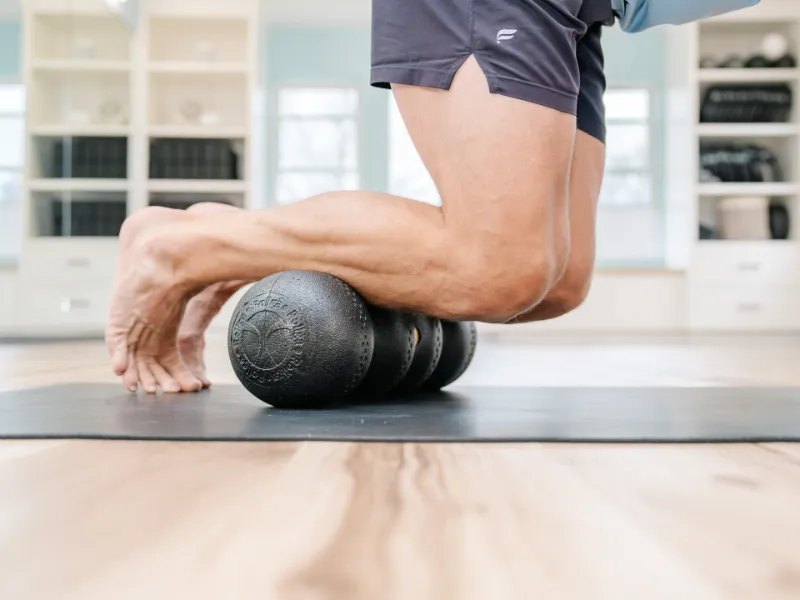
- Rolling peanut: two linked lobes with a channel down the middle. That gap is the point. It lets your spine or a tendon sit clear while the lobes press either side of it.
- Percussion massager: a powered device that does the work for you. Useful when you want pressure without lying on the floor, or when you are targeting a specific muscle belly rather than a whole region.
A simple way to think about it: the roller covers area, the peanut covers a line, and a percussion massage gun covers a point. Most recovery setups eventually include two of the three.
Which suits your problem? A quick match-up
| Situation | Better pick | Why |
|---|---|---|
| Stiff upper back, rounded shoulders | Soft foam roller | Wide surface spreads pressure across the thoracic area |
| Lower back tightness near the spine | Rolling peanut | Channel keeps direct pressure off the vertebrae |
| Tight glutes or piriformis | Rolling peanut | Lobes work one side at a time |
| Sore quads or calves after running | Soft foam roller | Covers the length of the muscle quickly |
| New to foam rolling | Soft foam roller | Softer surface makes it easier to stay relaxed |
If you are brand new to this, our advice is boring but correct: start with the roller. Foam rolling for beginners fails for one reason, and it is not technique. It is that a hard tool hurts, so people stop using it. A softer surface keeps the habit alive long enough to matter.
Why firmness matters more than shape
Most buyers obsess over shape and ignore density, which is backwards. A firm roller on a tight lower back feels like a fight. A soft one lets you breathe, which is what allows the muscle to actually release.
This is the whole argument behind the soft foam roller approach: the material gives a little under load, so pressure builds gradually instead of all at once. Medically, you are not "breaking up" anything. You are nudging the nervous system toward letting go, and that only happens when you are not bracing against pain.
If you have been rolling for a while and want more bite, a firmer roller has its place, especially on the quads and calves where the tissue tolerates load well. Soft foam roller vs firm foam roller is not really a debate. It is a progression. Most people should start soft and stay there on the back, and can go firmer on the legs.
Where a rolling peanut earns its place
The rolling peanut is the one tool people buy last and reach for most once they have it. The split design means you can lie back onto it along the spine and let the lobes sit in the muscle either side, which is far more comfortable than a flat cylinder pressing straight down on bone.
Where we use one:
- Along the thoracic spine to open up a stiff mid back
- Under each glute, working one cheek at a time
- Along the shins and forearms, where a wide roller is awkward
- On the IT band area at low pressure, never aggressively
If back tension is your main complaint, a rolling peanut plus five minutes on the floor most evenings beats an expensive chair. For everything else, the cylinder stays the workhorse.
The small ball and the mini stability ball
There is a third category people forget, and it is the cheapest fix in the drawer. A small yoga ball or mini exercise ball gets into places neither roller can: the hip crease, the arch of the foot, the area just inside the shoulder blade.
- Use a mini stability ball against a wall for shoulder blade release, leaning in and rolling slowly.
- Use a small fitness ball under the foot for plantar discomfort while you sit at a desk.
- Use a small fitness ball for mini stability ball exercises, like single-leg balances, to build foot and ankle control.
One warning: these are small and easy to lose, and they are also easy to over-inflate. Firmer is not better here. A mini stability ball with a little give deforms to your shape, which is exactly what you want against a hip.
Care, storage, and what to check before you buy
A few practical notes that save returns:
- Check the surface. A textured or nubbed roller is not automatically better, and on a soft roller texture can feel scratchy on bare skin.
- Match length to use. Short rollers pack well for travel, longer ones let you lie across them for back work.
- Clean it. Wipe after use, especially if you roll bare skin. Foam holds sweat.
- Store upright. Rollers left under furniture can take a permanent flat spot.
- Read the terms. Check the Rollga return policy and shipping details before you commit, so you know what happens if the density is wrong for you.
On pressure: if you are holding your breath or clenching your jaw, you are pressing too hard or using too firm a tool. Back off, move slowly, and spend 30 to 60 seconds on a spot rather than sawing back and forth.
Do you need a roller, a peanut, or a device?
Our honest ranking for a first recovery purchase:
- A soft foam roller, because it covers the most body area safely
- A rolling peanut, because it unlocks the spine and glutes
- A small ball, because it reaches the small stuff
- A percussion massager, because it is convenient but not a substitute for the floor work
That said, if you know you will not lie on the floor, skip straight to a powered tool. A percussion massager or a percussion gun is easier to use while watching TV, and consistency beats theory. The percussion massage gun benefits people notice most are practical rather than dramatic: easier warm-ups, less post-training stiffness, and a routine that actually happens.
You can combine them. Two minutes with a percussion massager gun on the quads to take the edge off, then a slow pass on a soft foam rollers for the calves, then a minute per glute on the peanut. That is a full session in under ten minutes.
If you want the all-in-one option, the rollga foam roller is the one most often recommended to us by people who roll daily, and the soft foam roller remains the safest entry point for a stiff back. For current pricing, check the latest price on the store page, and grab the code before you order to see whether the current 15% offer applies to your cart.
Common mistakes worth avoiding
- Rolling directly on the lower back with a flat roller. Use the peanut, or skip it and work the glutes instead.
- Rolling a fresh injury. If it is swollen or bruised, leave it alone.
- Chasing pain. Discomfort is fine, sharp pain is not.
- Rolling for 20 minutes. Short, frequent sessions work better than long ones.
- Buying three tools at once. Buy one, use it for a month, then decide what is missing.
Start soft, start small, and buy the second tool once you know what your body keeps asking for.
 Shopping at Rollga? See today's verified Rollga discount code
Frequently asked questions
Is a soft foam roller better than a firm one for back pain?
For most people, yes. A softer surface lets you relax into the pressure instead of bracing, which is what allows the muscles either side of the spine to let go. A firm roller has its place on the legs, where tissue tolerates load better.
Can a rolling peanut replace a foam roller?
Not entirely. The peanut is excellent along the spine, under each glute, and on the shins and forearms, but a cylinder covers large areas like the quads and calves much faster. Most regular rollers end up owning both.
How often should I use a soft foam roller?
Short and frequent beats long and rare. A few minutes most days is enough for general tightness, and 30 to 60 seconds per spot is a reasonable guide. Stop if you find yourself holding your breath.
What are mini stability ball exercises good for?
Balance and control work, plus targeted pressure on small areas. Against a wall it releases the shoulder blade, under the foot it eases the arch, and single-leg balances build ankle and foot strength.
Do I need a percussion massager as well as a roller?
Only if you know you will not lie on the floor consistently. A percussion massager is easier to use while sitting, so it suits people who never quite get around to a floor routine. It complements a roller rather than replacing it.
Where can I check the discount before ordering?
Our store page carries the current Rollga offer along with shipping and return details, so you can confirm what applies to your order before checkout.