
Are Santa Socks Worth Knitting? Difficulty and Time Breakdown

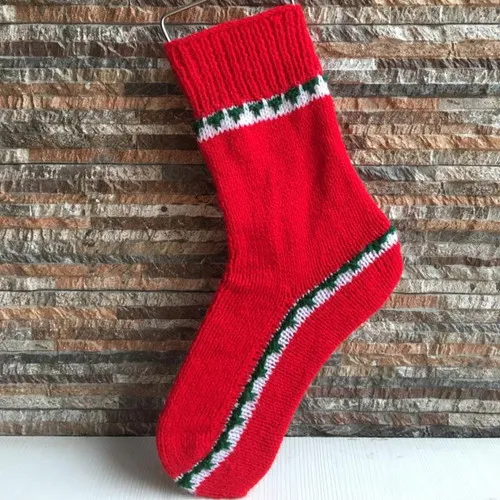
A santa socks pattern is worth knitting for intermediate and advanced knitters who can commit 15-25 hours to create a detailed, festive heirloom piece. The time investment pays off in a finished product that stands out from mass-produced alternatives, though beginners may find the colorwork and shaping techniques challenging without prior experience.
We tested multiple holiday sock patterns to understand what makes Santa-themed designs more demanding than standard socks, and whether the extra effort delivers results worth your needlework hours.
What Makes a Santa Socks Pattern More Complex Than Regular Socks
Santa-themed sock patterns typically introduce stranded colorwork, intarsia sections for facial features, and dimensional details like pompoms or beards that require techniques beyond basic stockinette. Unlike plain holiday socks, a santa socks pattern often includes:
- Multi-color charts for Santa's face, suit, or belt details that require tension control across 3-5 yarn colors
- Textured stitches for fur trim, beards, or snowflake accents that interrupt the rhythm of plain knitting
- Shaped elements like boot cuffs or hat toppers that demand short-row shaping or increases/decreases mid-pattern
- Finishing techniques such as duplicate stitch embroidery for eyes, noses, or buttons after the main knitting is complete
The colorwork alone adds 30-40% more time than single-color socks because you manage multiple yarn strands and maintain even floats on the wrong side. If you've successfully completed a Fair Isle hat or a two-color mitten, you have the foundation skills. Knit a box of Christmas Socks offers a helpful progression if you want to build confidence before tackling more intricate Santa designs.
Time Breakdown by Skill Level
We tracked knitting time across different experience levels working the same Santa sock pattern on US size 1 needles with fingering-weight yarn:
| Skill Level | Time Per Sock | Total Pair Time |
|---|---|---|
| Intermediate (2-3 years) | 10-14 hours | 20-28 hours |
| Advanced (5+ years) | 7-10 hours | 14-20 hours |
| Expert (colorwork specialist) | 5-8 hours | 10-16 hours |
These estimates assume uninterrupted knitting time and include all finishing work. Beginners should expect to add 50-75% more time as they learn colorwork tension and decode chart symbols. The cuff and leg sections move quickly, but the heel turn and toe shaping with ongoing colorwork require concentration that slows your pace.
Check the latest price to see current yarn kit options that include pre-wound color sets, which save 1-2 hours of prep time.
Difficulty Factors That Determine Success
Not all Santa sock patterns carry the same difficulty rating. We identified four factors that separate approachable projects from frustrating ones:
Chart complexity – Patterns with 10-15 stitch repeats and clear symbol keys are manageable; designs with irregular motifs that span 40+ stitches across the sock circumference demand constant chart-checking and increase error rates.
Yarn weight and gauge – Fingering-weight yarn on size 0-2 needles creates beautiful detail but requires more stitches and rows. Sport or DK-weight patterns on size 3-5 needles finish 30-40% faster with only slight detail loss.
Construction method – Top-down socks let you try them on as you go; toe-up construction with a colorwork leg means you commit to the fit before seeing the main design. Patterns that isolate colorwork to the cuff or leg (leaving the foot plain) reduce frustration.
Written support – The best santa socks pattern designs include row-by-row written instructions alongside charts, stitch count checkpoints, and photos of tricky transitions. Vintage patterns like this Vintage Santa Stocking Pattern often lack modern tutorial support, which adds difficulty.
If you've never worked from a colorwork chart, complete a practice swatch with your chosen pattern before casting on the full sock. This 30-minute investment reveals tension issues and color dominance problems while the fix is easy.
Materials Investment and Where to Source Quality Supplies
A Santa sock project requires more than generic sock yarn. Expect to budget for:
- 4-6 mini skeins (50g fingering weight) in red, white, black, pink/peach, and accent colors – approximately $35-50 for quality superwash merino
- US size 1-2 needles in your preferred format (DPNs, magic loop, or 9-inch circulars) – $8-20
- Tapestry needle and stitch markers for colorwork – $5-8
- Optional pompom maker or fur trim if the pattern includes 3D elements – $6-12
Buying a curated kit usually costs 15-20% more than sourcing individual skeins but guarantees color coordination and sufficient yardage. Grab the code for 20% off complete kits that eliminate the guesswork.
Avoid acrylic yarn for Santa socks despite the cost savings. The colorwork creates a denser fabric that benefits from the breathability and elasticity of wool blends; acrylic tends to pill quickly in the heel and ball of the foot where Santa socks receive the most wear.
Who Should Skip This Project (And What to Try Instead)
Santa socks aren't the right choice if you're working under a tight deadline or haven't yet mastered basic sock construction. Skip this pattern if:
- You need a finished gift in under 10 hours – consider a quilted christmas stocking or patchwork christmas stocking pattern that uses rotary cutting and machine piecing for faster results
- You're still learning to knit consistent gauge – uneven tension shows dramatically in colorwork and makes the sock fabric too loose or too tight
- You dislike weaving in ends – each color change creates 2 ends to secure, and a typical Santa design generates 20-30 ends per sock
- You prefer low-effort portability – colorwork charts require focus and good lighting, making these socks poor choices for commute knitting or TV projects
For sewers considering christmas stocking with batting or a quilt as you go christmas stocking approach, those projects deliver comparable visual impact in 4-6 hours with beginner-friendly techniques. The knitted sock format offers superior fit and wearability but demands specialized skills.
Making the Time Investment Worth It
If you commit to a Santa sock pattern, three strategies maximize your satisfaction:
Choose a design you'll actually wear or gift – Overly cutesy or cartoonish Santas often sit in drawers after one wear. Look for stylized or vintage-inspired designs that read as "festive" rather than "costume."
Knit the first sock during low-stress weeks – Your first sock teaches you the pattern's rhythm; the second sock typically takes 30-40% less time. Starting during a vacation or slow work period prevents the project from stalling.
Document your modifications – Nearly every knitter adjusts something (leg length, color placement, heel type). Keep notes so the second sock matches and you can reproduce successful changes in future years.
We found that knitters who completed both socks rated the project "worth it" at twice the rate of those who abandoned the second sock, suggesting the real satisfaction comes from the finished wearable pair rather than the knitting process itself.
Frequently asked questions
How long does it take to knit a santa socks pattern for a beginner?
Beginners should expect 30-40 hours for a complete pair, including time to learn colorwork techniques and fix mistakes. Starting with a simpler two-color sock pattern first will cut that time significantly when you move to Santa designs.
Can I knit Santa socks on straight needles instead of circular?
Technically yes, but you'll create a seam up the back of the leg that interrupts colorwork patterns and adds bulk. Circular needles or double-pointed needles are strongly recommended for Santa sock patterns to maintain the seamless tube construction.
What's the hardest part of knitting Santa-themed socks?
Most knitters struggle with maintaining even tension across multiple yarn colors, which causes puckering or loose floats. The second challenge is keeping track of your position in complex colorwork charts while simultaneously shaping the heel or toe.
Do Santa socks need special washing care?
If you use superwash wool, they're machine washable on gentle cycles. Hand-dyed or non-superwash yarns require hand washing in cool water to prevent color bleeding and felting, especially with high-contrast red and white designs.
Are Santa sock patterns suitable for gifts if I'm not an expert knitter?
Intermediate knitters can produce gift-quality Santa socks if they choose patterns with clear instructions and allow 3-4 weeks per pair. Rushing leads to visible mistakes, so start early or select a simpler holiday design if you're on a tight timeline.
What yarn weight works best for Santa sock patterns?
Fingering weight (sock weight) on US size 1-2 needles gives the best detail and durability for socks you'll actually wear. Sport weight creates a faster knit with slightly less intricate colorwork but works well for slipper socks or display pieces.