
Snoot Light vs Flashlight Gobo: Which Lighting Modifier Should You Use?

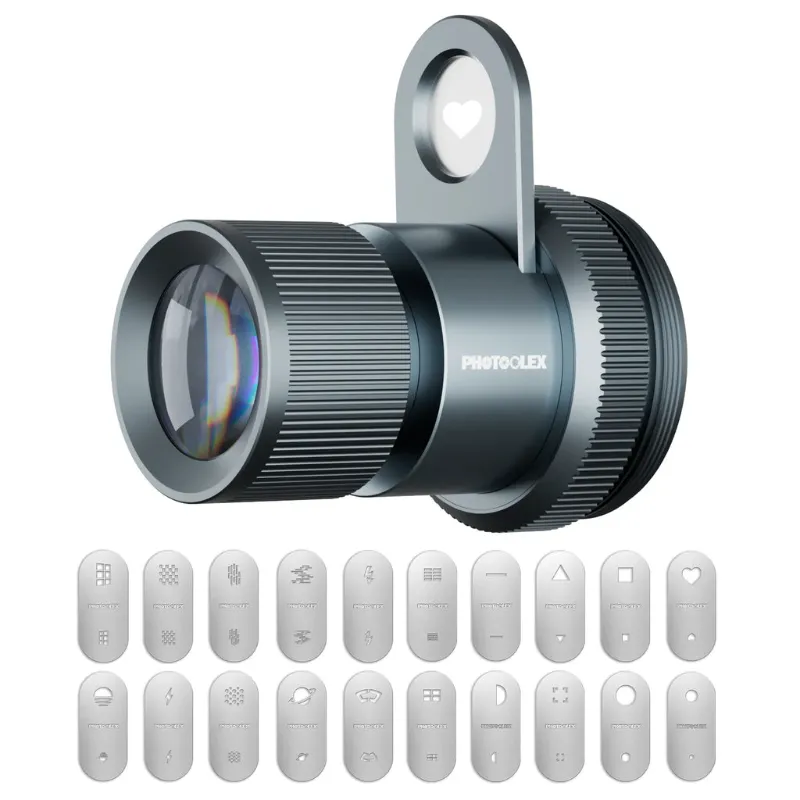
A snoot light narrows your beam into a focused circle, while a flashlight gobo shapes light with pattern cutouts—each modifier serves distinct creative goals. We tested both on portrait and product setups to show you when each tool delivers the control you need.
What Is a Snoot Light and How Does It Work
A snoot light for photography is a tubular attachment that funnels light into a tight, circular beam. You mount it directly onto your strobe or photography flashlight to eliminate spill and create dramatic spotlighting effects on hair, backdrops, or accent areas.
The longer and narrower the snoot, the tighter your beam. Most snoots use a Bowens mount snoot standard or magnetic rings for quick attachment. We recommend the snoot light from Photoolex for its collapsible design and universal fit—grab the code to save 12% on your order.
Snoots excel at:
- Hair lights and rim lighting in portraiture
- Isolating small product details without backdrop contamination
- Creating dramatic vignettes and spotlight effects
- Adding depth when you need controlled contrast
Optical snoots, like the SAGA Optical Snoot with Light Guide, add focusing lenses for even sharper edges, though they cost significantly more than fabric or metal tube designs.
What Is a Flashlight Gobo and When to Use It
A flashlight gobo is a stencil or pattern holder that slides onto your light source to project shapes, textures, or shadows. Think window blinds, geometric grids, or foliage patterns cast onto your subject or background.
Gobos work best when you want:
- Patterned backgrounds that mimic natural or architectural light
- Creative shadow play across faces or products
- Simulated environments (venetian blinds, tree branches, cityscapes)
- Dynamic texture without physical set pieces
You position the gobo between your light and subject, then adjust distance to sharpen or soften the projection. A photography flashlight with adjustable zoom gives you the most flexibility for gobo work, since beam width directly controls pattern scale.
Gobos add storytelling texture, while snoots add precision and isolation—they rarely compete for the same creative slot.
Snoot Light vs Flashlight Gobo: Side-by-Side Comparison
| Feature | Snoot Light | Flashlight Gobo |
|---|---|---|
| Primary function | Focuses beam into a tight circle | Projects patterns and shapes |
| Beam control | Narrow spotlight, eliminates spill | Adds texture, maintains broader coverage |
| Best for | Hair lights, accent lighting, rim light | Background effects, mood lighting, storytelling |
| Setup speed | Under 30 seconds (magnetic or Bowens mount) | 1-2 minutes (align pattern, adjust distance) |
Snoots give you surgical control over where light lands. Gobos give you creative atmosphere. We often use both in the same portrait setup: a snoot for the hair light and a gobo on the background to simulate window light.
Which Lighting Modifier Should You Choose
Choose a snoot light when you need to isolate a small area—think hair highlights, product accents, or dramatic edge lighting. Snoots are faster to set up and require no pattern alignment, making them ideal for high-volume sessions or on-location work where time is tight.
Choose a flashlight gobo when your concept demands environmental texture or storytelling shadow. Gobos shine in editorial, fashion, and cinematic portraits where mood and context matter more than pure technical precision.
For most photographers, a snoot is the more versatile first purchase. You'll use it on nearly every portrait and product shoot, while gobos remain situational. Check the latest price on the Photoolex snoot light to start building your modifier kit.
If you shoot on location with battery-powered strobes or video lights, pair your modifiers with reliable power. The insta360 ultra rechargeable battery for x5 and x5 battery keep your Insta360 gear running through extended sessions, while the dji osmo battery charger handles your gimbal power. The 6-in-1 fast charging lanyard cable consolidates your charging setup when you're moving between locations.
Combining Snoots and Gobos for Advanced Lighting
We layer both modifiers in complex setups to control beam and texture independently. A common three-light portrait rig uses:
- Key light with softbox (main illumination)
- Hair light with snoot (tight circle on crown and shoulders)
- Background light with gobo (venetian blind pattern on backdrop)
This combination gives you clean separation, dimensional highlights, and environmental context without competing effects. The snoot keeps hair detail crisp, while the gobo adds narrative texture behind your subject.
You can also stack a gobo in front of a snooted light for patterned spotlights, though this requires precise alignment and stronger output to compensate for double light loss. We reserve that technique for editorial work where the effect justifies the extra setup time.
Profoto lighting systems offer dedicated snoot and gobo accessories with click-lock mounts, but budget-conscious shooters get excellent results with universal Bowens mount snoot attachments and DIY gobos cut from black foamcore.
Caring for Your Lighting Modifiers
Fabric and silicone snoots collapse for transport but can crease. Store them rolled or flat, and wipe interiors with a dry microfiber cloth to remove dust that scatters light.
Metal snoots dent easily, so pad them during transport. Check Bowens mount tabs for wear—loose fittings cause alignment drift and light leaks.
Gobos scratch and warp with heat. Keep metal gobos at least 12 inches from hot tungsten sources, and store them flat between sheets of cardboard. DIY foamcore gobos are disposable, so cut fresh patterns as needed rather than repairing scorched edges.
Magnetic snoot rings lose grip over time. Clean contact surfaces with isopropyl alcohol every few months to maintain hold, and replace weakened magnets before a snoot drops mid-session.
Both modifiers travel well in padded lighting bags. We keep snoots and gobos in labeled pouches inside our main case so they're instantly accessible when a creative idea hits on set. For current deals on modifiers and accessories, visit our Photoolex discount code page before your next gear order.
Frequently asked questions
Can I use a snoot light on a speedlight or only on studio strobes?
You can use a snoot light on both speedlights and studio strobes. Look for magnetic snoot rings or universal adapters that fit your flash head diameter. Speedlight snoots are typically smaller and lighter than Bowens mount versions designed for monolights.
Do I need a special flashlight to use a gobo?
Any flashlight or strobe works with a gobo, but adjustable-zoom models give you better control over pattern sharpness and size. The gobo slides onto the light head or mounts in a holder in front of the lens.
Which modifier is better for portrait photography?
A snoot light is better for most portrait work because it adds precise hair and rim lights that create separation and dimension. Flashlight gobos are secondary tools for adding mood or background texture in editorial portraits.
Can I make my own gobo patterns at home?
Yes, you can cut custom gobo patterns from black foamcore, thin metal sheets, or heat-resistant cardboard. Trace your design, cut it with a craft knife, and mount it in a gobo holder or tape it to your light modifier.
How far should I place a snoot from my subject?
Place your snooted light 3 to 6 feet from your subject for hair and rim lighting. Closer placement tightens the beam circle, while moving farther softens the edge and widens coverage slightly.
Are Bowens mount snoots compatible with all strobe brands?
Bowens mount snoots fit most third-party strobes that use the Bowens S-type mount, including Godox, Flashpoint, and Neewer. Profoto, Elinchrom, and other proprietary systems require brand-specific adapters or native snoots.