

A solar heater for greenhouse that stops keeping up on cold nights is usually failing for one of three reasons: the heater draws more than the battery bank can deliver overnight, the panels stop replacing that energy by mid-afternoon in winter, or the heat is escaping faster than any heater can add it. Work through those three in order and you will find the weak link fast.
Below is the troubleshooting order we use when a reader tells us their greenhouse is still dropping to freezing at 4 a.m. despite having a solar heater for greenhouse and a charged station.
Run the Load Math Before You Blame the Heater
Most "the heater is broken" calls turn out to be a sizing problem. A greenhouse heater runs for hours, not minutes, and cold nights are the longest run of the year.
- Add up watt-hours, not watts. Multiply the heater's running wattage by the hours it actually runs overnight. A thermostat that cycles the heater on for part of each hour cuts that number down, so measure it rather than guess.
- Count the fan. Many greenhouse heaters run a circulation fan continuously even when the element is off. That constant draw is what empties a small station by morning.
- Leave headroom. Never plan to run a battery bank flat. Lithium stations dislike being pushed to zero night after night, and you lose the buffer that carries you through a cloudy stretch.
- Check the surge. Compressor and fan motors pull a spike at startup. If your station's inverter output is close to the heater's rating, the surge can trip it and shut the whole thing down silently.
If the math says your station is marginal, step up rather than run it at the edge. The bluetti ac200p portable power station is the unit most readers land on when a greenhouse heater plus a fan has to run through a full winter night, and the bluetti elite 1800w portable power station covers smaller single-element setups where someone is home to swap things around. Our full breakdown of the AC200P's behaviour in cold weather is worth reading before you commit: BLUETTI AC200P review.
Why a Solar Greenhouse Heater Dies at 3 A.M. (Battery Depth and Expansion)
If your station is fine at 10 p.m. and dead by 3 a.m., the issue is capacity, not the heater. Two fixes exist and you should price both.
- Buy more battery, not more heater. The cheapest repair is stacking capacity. The bluetti b300k adds runtime to a compatible station so a single charge stretches across two or three nights of grey weather. It is also the piece that makes an existing setup genuinely off-grid rather than fair-weather.
- Pre-charge before the cold snap. Charge everything to full while there is sun or grid power, then let the battery carry the greenhouse through the front. A storm front usually gives you a day of warning.
The BLUETTI B300K expansion battery route is the one we recommend for anyone who already owns a compatible station, because you keep the inverter you paid for and just extend the tank.
Charge Path Problems: Winter Sun, DC to DC, and Off-Grid Solar
Panels are the second failure point, and winter exposes every weakness in the charge path.
- Angle and clear the panels. A low winter sun behind a fence line or under snow loses most of a day's yield. Tilt steeply toward the sun and brush them off, even a thin crust.
- Shorten your cable runs. Long, thin cables on a low-voltage panel array drop voltage you cannot afford in December. Thicker cable and a shorter run can add real harvest.
- Check the controller setting. Confirm the station is actually accepting charge from the panel rather than sitting on a low input limit you set months ago.
- Use the vehicle. On a run into town, a dc to dc battery charger tops the bank from the alternator and turns a dead week into a recovered one. That matters more in Canada, where parked vehicles and greenhouses are often far apart, so plan your DC to DC battery charger Canada setup around a single cable you can leave in place.
For a larger property with a dedicated panel array, an off grid solar power Canada setup built around a proper bluetti rv solar system or the bluetti apex 300 + b500k + solarx 4k bundle gives you the roof-mount and storage combination that survives a real winter rather than a mild one. Both are worth checking against the current offer: see what's on.
Placement, Thermostat, and Heat Loss Fixes
You can double perceived heater performance without buying anything.
- Move the sensor off the floor. A thermostat sitting in cold air near the door reads low and runs the heater constantly. Shield it, raise it to plant height, and keep it out of direct sun so it does not shut off early.
- Seal before you heat. Gaps at the door frame, vents left open, and single-layer glazing cost more heat than most small heaters can replace. Bubble wrap on glazing and a taped door seal are the cheapest wins in the hobby greenhouse.
- Use thermal mass. Water barrels or dark containers release heat slowly through the coldest hours and reduce the heater's duty cycle.
- Aim the heat, don't flood the room. A fan pushing warm air along the floor beats a heater radiating straight up into the ridge.
Which Setup Fits Which Greenhouse
| Setup | Best Fit | What to Watch |
|---|---|---|
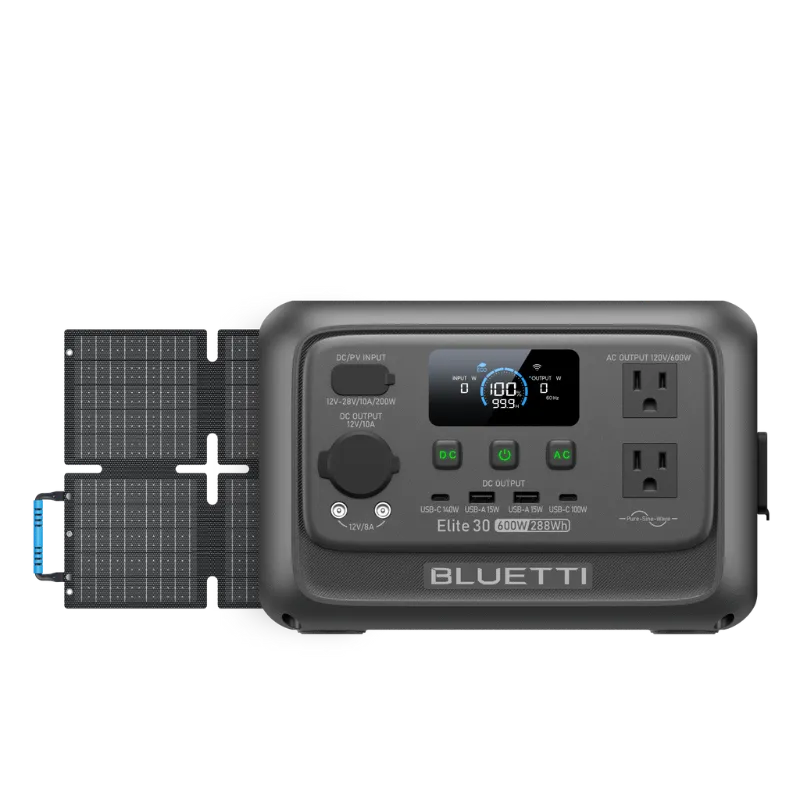
| bluetti elite 30v2 or bleuetti 300 Portable | Cold frames, small seedling shelves, frost protection only | Short runtime with a heater running; fine for a heat mat and fan |
| banish 30v2 or Elite portable power station range | Hobby greenhouse, one small heater, thermostat cycling | Confirm the surge rating against your heater before winter |
| bluetti ac200p portable power station plus bluetti b300k | Full-size hobby greenhouse through a Canadian winter | Plan panel input for short winter days |
| Apex bundle or RV solar system | Polytunnel, nursery, off-grid property with a fixed array | Needs roof or ground mount and a permanent cable run |
Two notes on the small units: the BLUETTI Elite portable power station range is genuinely useful for frost protection and germination heat, and the bluetti philippines collection shows how the same models are configured for warmer climates, where overnight heating loads look nothing like ours.
A Cold-Night Checklist You Can Run Tonight
Work down this list before you buy anything else.
- Read the station's state of charge at sunset and again at 3 a.m. The drop tells you whether the heater or the charging is at fault.
- Measure the heater's real overnight runtime with a thermostat cycling, not its label wattage.
- Clear and tilt the panels, then confirm charge is actually flowing into the station.
- Seal the door, cover bare glazing, and raise the thermostat sensor to plant height.
- If the station is still flat by morning, add capacity with a bluetti b300k rather than a second heater.
Prices and bundle offers on these change through the season, so check the live figures rather than a number you read three months ago: grab the code before you order, and use it on a portable power station Canada order to keep the cost down. If you are still deciding between models, compare the current lineup and the running BLUETTI CA coupon code on the same page.
The short version: a greenhouse heater that loses the night is rarely faulty. It is undersized, undercharged, or fighting a greenhouse that leaks heat faster than the equipment can replace it. Fix the easy two first.
 Shopping at BLUETTI CA? See today's verified BLUETTI CA coupon code
Frequently asked questions
How do I know if my solar heater for greenhouse setup is undersized or just poorly charged?
Check the battery's state of charge at sunset and again at 3 a.m. If it starts the night full and empties, the load or capacity is the problem. If it never gets full in the first place, your charging path is the weak link.
Can I run a greenhouse heater and a fan from a BLUETTI Elite 30V2?
For frost protection and short cycling loads, yes. For a heater running most of the night plus a constant fan, you will want to step up to a larger station such as the AC200P so you are not running the battery flat every night.
Does the BLUETTI B300K expansion battery work for winter greenhouse heating?
It extends runtime on a compatible station, which is exactly what cold nights demand. Adding capacity is usually cheaper than buying a second heater, and it also gives you a buffer through cloudy stretches.
Will a solar greenhouse heater off grid keep up in a Canadian winter?
It can, but short winter days mean you need to tilt and clear panels, keep cable runs short, and plan for several grey days of stored capacity. Sizing on the summer sun is the most common mistake we see.
What can I do tonight to stop the greenhouse losing heat so fast?
Seal the door frame, cover bare glazing with bubble wrap, close unused vents, and raise the thermostat sensor off the floor to plant height. These cost almost nothing and cut the heater's runtime noticeably.
Is a DC to DC battery charger worth adding to a greenhouse setup?
It is useful when the greenhouse sits away from your main array, since it lets you recharge the bank from a vehicle on a supply run. Keep one cable and connector dedicated to it so it stays a two-minute job.