
How to String Glass and Clay Beads on Stainless Steel Wire for Durable Bracelets

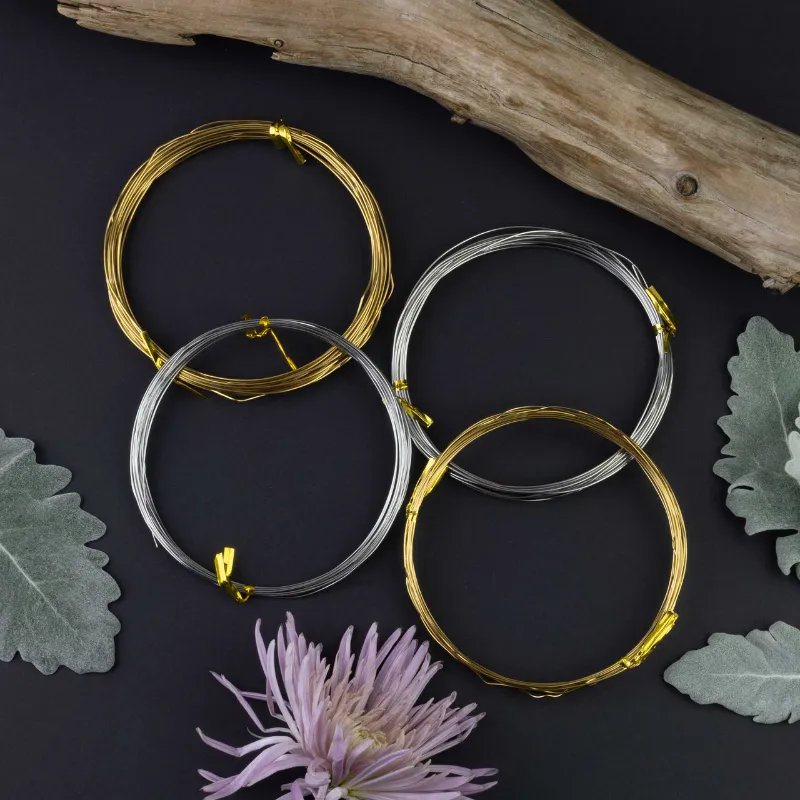
Why Stainless Steel Wire Works Best for Beaded Bracelets
Stainless steel wire delivers the strength and corrosion resistance that beaded jewelry needs to survive daily wear. Unlike copper or brass alternatives, stainless steel wire won't tarnish from water exposure or turn your wrist green. We've tested dozens of wire types with beaded glass beads and clay beads, and stainless consistently outlasts softer metals while maintaining flexibility for comfortable bracelets.
The material shines when you work with heavier beads or create pieces that see frequent handling. Stainless steel wire for jewelry typically comes in gauges from 18 to 24, with lower numbers indicating thicker wire that supports more weight.
Choosing the Right Wire Gauge for Your Beads
Match your wire thickness to your bead holes or you'll fight the stringing process every step of the way. Here's what works for common bead types:
- 24-gauge wire threads easily through small-hole seed beads and delicate jewelry making beads under 4mm
- 22-gauge wire handles most clay beads and standard glass beads in the 4-8mm range
- 20-gauge wire provides structure for larger beads over 8mm and heavier geode rocks
- 18-gauge wire suits bold statement pieces with substantial bead weight
Test your wire through the smallest bead in your design before cutting a full bracelet length. If the wire barely fits, size up one gauge to avoid frustration during assembly. For mixed-material projects that include both glass and clay, choose the gauge that accommodates your tightest bead hole.
Stainless steel wire 12 gauge and thicker works better for structural Stainless Cable Wire Rope applications than delicate jewelry.
Step-by-Step Stringing Process
Cut your stainless steel wire 4-5 inches longer than your finished bracelet measurement to allow room for crimps and clasps. We recommend this sequence:
- Thread a crimp bead onto one wire end
- Pass the wire through your clasp loop
- Loop the wire back through the crimp bead, creating a 1-inch tail
- Flatten the crimp with jewelry pliers (not general pliers that leave rough edges)
- String your beaded glass beads and clay beads in your chosen pattern
- Add a second crimp bead when you reach your desired length
- Thread through the jump ring or second clasp half
- Loop back through the crimp and 2-3 beads for security
- Crimp and trim excess wire flush to the last bead
The doubled wire section inside your crimps prevents the sharp wire end from scratching skin. If you're building a complete bead bracelet from scratch, grab our code to save on your full materials order.
Finishing Techniques That Prevent Unraveling
Poor crimp work causes 90% of beaded bracelet failures we see. Here's how to secure your ends properly:
Crimp bead method: Use tube-style crimp beads sized to your wire gauge. Flatten them completely so no rounded edges remain that could slip through the opening. Add a crimp cover over flattened crimps for a polished look that hides the mechanical connection.
Wire guard method: Thread a U-shaped wire guard between your wire and the clasp loop. This small component prevents the wire from bending at sharp angles that create weak points. The guard distributes tension across a wider curve.
Double-crimp security: For bracelets that will see heavy use, place two crimp beads 1/4 inch apart on your finishing wire. Crimp both. This redundancy means one crimp can fail without losing your entire strand.
Check the latest pricing on crimp supplies and findings when you stock up on wire. The small investment in quality crimps prevents having to restring failed bracelets.
Design Combinations That Work With Steel Wire
Stainless steel wire's neutral silver tone complements most bead colors without clashing. We've found these combinations particularly striking:
| Bead Type | Wire Gauge | Visual Effect |
|---|---|---|
| Transparent glass | 24-gauge | Delicate, barely-there support |
| Matte clay beads | 22-gauge | Modern, balanced proportions |
| Mixed glass + clay | 22-gauge | Versatile everyday wear |
| Large statement beads | 20-gauge | Bold, structured design |
The wire itself becomes part of your design when you space beads with small gaps. For continuous coverage, string beads tightly so they hide the wire completely. Both approaches work well depending on whether you want an airy or dense finished look.
Consider mixing your beaded work with other materials for variety. A charm bracelet kit adds dangles between beaded sections, while sections of leather necklace cord create textural contrast in longer multi-strand pieces.
Care and Durability Expectations
Stainless steel wire maintains its integrity through conditions that destroy other jewelry materials. Your finished pieces will:
- Survive hand-washing and incidental water exposure without rust
- Resist tarnish indefinitely when stored in normal humidity
- Maintain flexibility through hundreds of wear cycles
- Support bead weight without stretching or permanent deformation
Clean your wire-strung jewelry with mild soap and water. Avoid ultrasonic cleaners that can loosen crimps through vibration. Store pieces flat or hanging to prevent wire kinking from tangled storage.
The wire itself rarely fails before other components. Clasps wear out, bead holes crack from stress, and crimps loosen from repeated flexing at the bracelet's closure point. When repairs become necessary, quality stainless steel wire makes restringing straightforward since you're working with the same reliable material.
For pieces incorporating softer accent materials like sardonyx jewelry components or geode rocks, the steel wire provides structural support that extends the life of more fragile elements. The strength differential works in your favor, letting decorative components shine while the wire handles mechanical stress invisibly.
Frequently asked questions
What gauge stainless steel wire should I use for 6mm clay beads?
Use 22-gauge stainless steel wire for 6mm clay beads. This gauge threads easily through standard bead holes while providing enough structure to prevent sagging in a finished bracelet.
Can I use stainless steel wire for jewelry with glass beads that have small holes?
Yes, 24-gauge stainless steel wire works perfectly for glass beads with holes under 1mm. The thinner wire maintains flexibility while the stainless material still resists breakage better than traditional beading thread.
How do I prevent stainless steel wire from scratching my wrist?
Thread your wire end back through 2-3 beads after crimping so the cut edge sits inside the beaded section rather than exposed. This technique tucks sharp ends away from skin contact completely.
Will stainless steel wire tarnish like silver-plated wire?
No, stainless steel wire resists tarnish indefinitely and won't turn black or discolor from water exposure, sweat, or humidity. It maintains its silver appearance without polishing or special care.
Can I mix glass and clay beads on the same stainless steel wire?
Absolutely. Choose your wire gauge based on whichever bead has the smallest hole in your design, typically 22-gauge for most mixed glass and clay projects. The wire supports both materials equally well.
How much wire do I need to make a 7-inch bracelet?
Cut 11-12 inches of stainless steel wire for a 7-inch finished bracelet. The extra 4-5 inches allows room for crimping loops on both ends and threading tails back through beads for secure finishing.