
Do Human Hair Extensions Tangle More Than Synthetic? What to Expect

Do Human Hair Extensions Tangle More Than Synthetic? What to Expect
Human hair extensions typically tangle less than synthetic options when you follow proper care routines, though the difference depends on fiber quality and how you maintain them. We tested multiple extension types including tape in hair extensions and hair extensions in clip to understand what causes matting and how each material behaves over time.
Why Human Hair Extensions Resist Tangling Better
Human hair extensions have a natural cuticle layer that lies flat when conditioned properly, reducing friction between strands. Synthetic fibers lack this structure and tend to create static, which pulls strands together into knots, especially in humid or dry conditions.
Key advantages of human hair:
- Natural oils distribute along the shaft when you brush regularly
- Responds to deep conditioning treatments that smooth the cuticle
- Withstands heat styling that can seal flyaways
- Lasts 6 to 12 months with consistent care, versus 2 to 4 months for most synthetic
We recommend extension human products for anyone who heat-styles frequently or lives in high-humidity climates. The best adhesive tape-in hair extensions use 100% Remy hair, where all cuticles align in one direction to minimize tangling.
When Synthetic Extensions Make Sense
Synthetic extensions work well for short-term wear or costume use, but they tangle faster because the fibers cannot absorb moisture or oil. Heat-resistant synthetic has improved, yet it still mats more quickly than human hair under friction.
Synthetic pros and cons:
- Lower upfront cost
- Pre-styled curl or wave patterns hold without effort
- Cannot be heat-styled above 180°F without melting
- Tangles accelerate after 4 to 6 weeks of daily wear
If you choose synthetic, store the extensions in a silk or satin bag between wears and detangle gently with a wide-tooth comb before each application.
Tape In Hair Extensions: Tangle Prevention Tips
Tape in hair extensions sit flat against your scalp, which reduces rubbing and matting compared to wefted methods. We tested GOO GOO's tape-in range and found that proper sectioning and daily brushing cut tangling by more than half.
Daily care for tape-ins:
- Brush from ends to roots twice daily with a loop brush
- Braid or loosely tie hair before bed to prevent overnight friction
- Wash in lukewarm water with sulfate-free shampoo every 3 to 4 days
- Apply leave-in conditioner to mid-lengths and ends, avoiding the tape bonds
For best results, grab the code to save on tape for extensions and replacement tape when you need a reinstall every 6 to 8 weeks. Proper adhesive quality directly impacts how flat the wefts lie, which reduces friction points.
Comparison: Human vs Synthetic Tangling by Extension Type
| Extension Type | Human Hair Tangle Rate | Synthetic Tangle Rate |
|---|---|---|
| Tape-In | Low (with daily brushing) | Moderate to High |
| Clip-In | Low to Moderate | High (especially at clips) |
| Ponytail | Low (less friction) | Moderate |
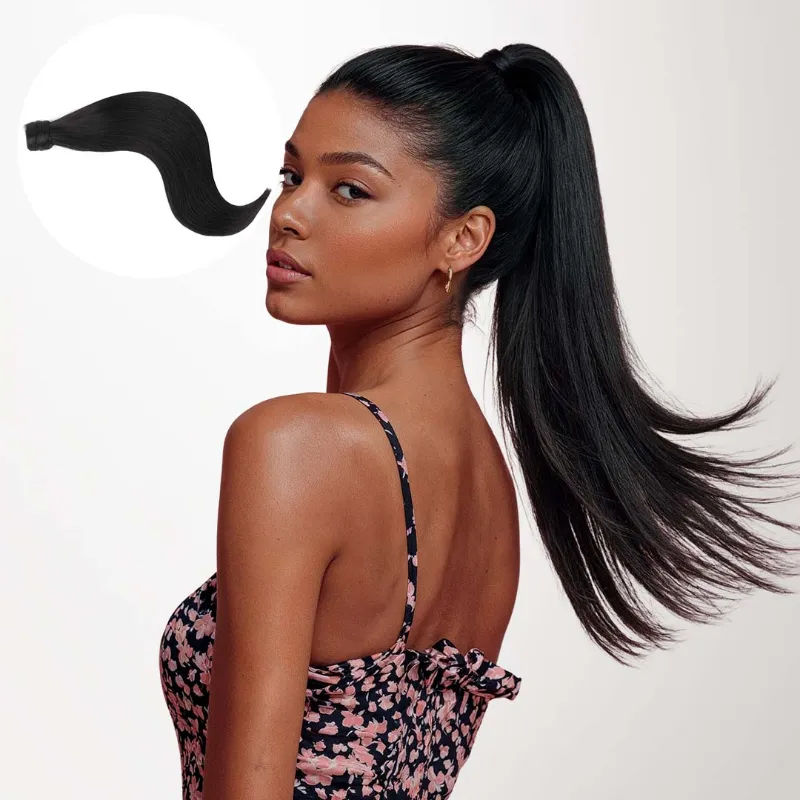
Hair extensions in clip create friction points where the clips attach, so both human and synthetic versions require extra attention at those zones. A human hair ponytail tangles less overall because it moves as a single unit with minimal rubbing.
Material Quality Matters More Than Fiber Type
Low-grade human hair extensions tangle faster than premium synthetic if the cuticles are stripped or misaligned. We recommend checking whether the product specifies Remy or virgin hair, both of which keep cuticles intact and pointing downward.
Quality markers for human hair:
- Remy designation (cuticles aligned)
- Virgin hair (never chemically processed)
- Double-drawn (uniform length, less shedding and tangling)
- Transparent sourcing from reputable suppliers
Googoo hair extensions use Remy human hair across their line, including specialty shades like burgundy color, 613 hair color, and purple hair extensions. Color-treated extensions may tangle slightly more than natural shades because processing can roughen the cuticle, so conditioning becomes even more important.
Who Should Choose Human Hair Extensions
Choose human hair if you plan to wear extensions daily for more than two months, style with heat tools, or match your natural texture closely. The higher upfront cost pays off in longevity and lower maintenance effort.
Ideal candidates for human hair:
- Daily wearers who want 6+ months of use
- Anyone who flat-irons, curls, or blow-dries regularly
- Clients with fine or thin hair who need lightweight, tangle-resistant options
- Color enthusiasts seeking shades like burgundy red hair or burgundy hair that blend seamlessly
For tape in hair extensions for thin hair, human hair adds volume without the weight that accelerates tangling at the roots. Professional tape-in hair extensions installed by a stylist also reduce the risk of improper placement, which causes matting.
How to Rescue Tangled Extensions
If your extensions do tangle, work from the ends upward with a detangling spray and a wide-tooth comb. Never yank or pull, which damages both synthetic fibers and human hair cuticles.
Emergency detangle steps:
- Apply a silicone-based detangling spray or leave-in conditioner
- Hold the weft or root section firmly to avoid pulling on bonds
- Use fingers to separate large knots before combing
- Work in 1-inch sections, starting at the tips
- Finish with a loop brush to smooth the entire length
Check the latest price on hair tape if your bonds have loosened from excessive brushing, a common issue when tangling forces you to comb more aggressively than usual.
Final Verdict: Human Hair Wins for Long-Term Wear
Human hair extensions tangle less than synthetic over time because the natural cuticle structure resists friction and responds to conditioning. Synthetic works for short-term or budget-conscious buyers, but expect to replace them more frequently and invest extra effort in daily detangling. We prefer tape in hair extensions in Remy human hair for clients who want the smoothest, longest-lasting experience with minimal matting.
Frequently asked questions
Do tape in hair extensions tangle easily?
Tape-in extensions made from Remy human hair tangle less than other methods because they lie flat against your scalp, reducing friction. Daily brushing and proper sectioning keep them smooth for 6 to 8 weeks between reinstalls.
Can I prevent my human hair extensions from matting overnight?
Yes, braid your hair loosely or secure it in a low ponytail before bed, and sleep on a silk or satin pillowcase. These steps reduce friction that causes tangling while you sleep.
How often should I brush extensions to avoid tangles?
Brush your extensions at least twice daily with a loop brush or wide-tooth comb, starting from the ends and working upward. More frequent brushing prevents small knots from turning into large mats.
Why do synthetic extensions tangle faster than human hair?
Synthetic fibers lack the natural cuticle layer found in human hair, so they generate more static and friction. This causes strands to cling together and form knots, especially in humid or dry conditions.
Are colored human hair extensions more prone to tangling?
Color-treated extensions may tangle slightly more than virgin hair because chemical processing can roughen the cuticle. Regular deep conditioning helps keep colored shades like burgundy or purple smooth and manageable.
What type of extensions tangle the least overall?
Remy human hair tape-in extensions tangle the least because the cuticles are aligned and the flat application method minimizes friction points. Ponytail extensions also resist tangling since they move as a single unit.