
Do Thin Eyeliner Brushes Work Better for Winged Liner?

Do Thin Eyeliner Brushes Work Better for Winged Liner?
A thin eyeliner brush works significantly better for winged liner because the narrow tip offers precision control that thick brushes simply can't match. The fine point lets you map out your wing angle, draw crisp edges, and build thickness gradually without overshooting your intended shape. Whether you prefer gel, powder, or cream formulas, a dedicated eyeliner makeup brush designed for detailed work transforms winged liner from a frustrating guessing game into a repeatable technique.
We tested brushes across price points and tip shapes to understand what makes wings sharp, symmetrical, and easy to execute. The right tool depends on your formula, skill level, and the wing style you want.
Why Brush Width Matters for Wing Precision
Thick brushes deposit too much product too fast, making it nearly impossible to create a tapered wing tip or adjust your angle mid-stroke. A pointed eyeliner brush with a diameter under 2mm gives you room to correct mistakes and layer pigment where you need it.
Thin brushes excel at:
- Mapping the wing angle before committing to a heavy line
- Creating sharp, hair-thin flicks that taper naturally
- Tight-lining the lash line without smudging onto the lid
- Building opacity gradually so both eyes match
If you're working with a thin eyeliner brush from a quality set like jessup brushes, the synthetic bristles hold their shape through multiple dips and won't splay after the first wash. Natural hair can work beautifully for powder formulas, but synthetic fibers resist breakdown from gel and cream liners.
Best Thin Eyeliner Brush Shapes for Different Formulas
Not every thin brush works with every liner formula. The best results come from matching bristle firmness and shape to your product consistency.
| Brush Shape | Best For | Why It Works |
|---|---|---|
| Ultra-fine pointed | Gel and cream liner | Firm synthetic bristles hold dense product and create crisp edges |
| Thin angled | Powder liner, brow definition | The slant lets you use the tip for precision or the edge for width |
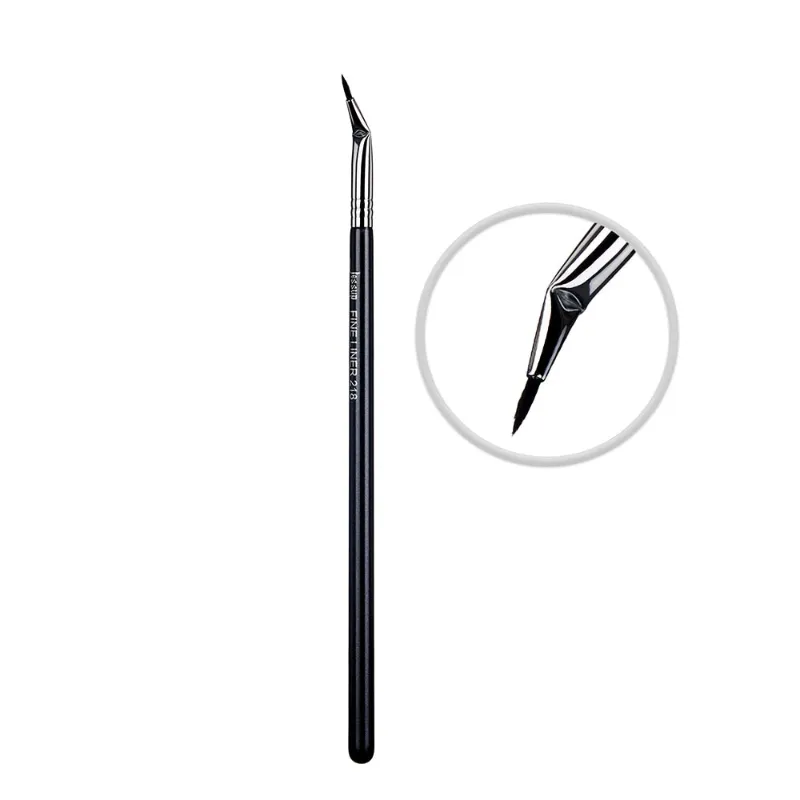
| Bent liner brush | Gel liner wings | The angle keeps your hand out of your sightline while you draw |
An eyeliner brush for gel liner needs densely packed synthetic bristles that won't absorb too much product. Gel formulas dry quickly, so a brush that releases pigment smoothly on the first pass saves you from patchy, dragged lines. We recommend checking The 15 Best Eyeliner Brushes to Address All Your Needs for additional expert-tested options across budgets.
For powder formulas, a best eyeliner brush for powder typically has slightly longer, more flexible bristles that pick up and deposit matte pigment without fallout. Powder requires a bit more pressure than gel, so the bristles need enough give to press product into the lash line without scratching.
How to Use a Thin Angled Eyeliner Brush for Symmetrical Wings
An angled brush offers the best of both worlds: precision at the tip and the ability to create width along the edge. This shape is especially forgiving for beginners because you can rotate the brush to adjust line thickness without switching tools.
Step-by-step technique:
- Hold the brush like a pen for maximum control, gripping closer to the ferrule than the end of the handle
- Start at the outer corner and draw a short diagonal line upward toward your brow tail to set the wing angle
- Connect the wing tip back to your lash line using the pointed edge of the brush
- Fill the triangle created between the wing and your lash line, using the angled edge for faster coverage
- Extend along the lash line toward the inner corner, keeping the line thin and close to the roots
A thin angled eyeliner brush like the options in Jessup's eye brushes sets lets you switch between detail work and broader strokes without changing tools. If you're new to wings, grab the code to save on a full brush set so you can experiment with different shapes.
Do You Need an Ultra Thin Eyeliner Brush for Tight-Lining?
Tight-lining (applying liner between your lashes) demands the thinnest brush tip you can find. An ultra thin eyeliner brush with a diameter around 1mm glides between lash roots without poking your waterline or depositing pigment where you don't want it.
Key features for tight-lining brushes:
- Firm, short bristles that don't bend when you press into the lash line
- A tapered point that fits between individual lashes
- Synthetic fibers that resist bacteria and clean easily after contact with the lash line
Professional options like the Extra Fine Eyeliner Brush - 250 showcase the ideal taper and firmness, though affordable alternatives from Jessup deliver comparable precision. If you're investing in a multi-brush kit, prioritize sets that include at least one ultra-fine option alongside medium and angled brushes.
Best Angled Eyeliner Brush vs. Pointed: Which Wins for Wings?
Both shapes create beautiful wings, but your choice depends on your comfort level and preferred formula.
Pointed brushes give you absolute precision and the finest possible lines. They're ideal for intricate details, graphic liner, and ultra-sharp wing tips. The downside: they require a steadier hand because there's no edge to guide you, and filling in wider sections takes more time.
Angled brushes speed up the process by letting you use the slanted edge to create width and the tip for details. They're more forgiving for beginners because the angle naturally guides your stroke upward. The tradeoff is slightly less precision at the very tip compared to a true point.
We recommend starting with a best angled eyeliner brush if you're building your first wing technique, then adding a pointed brush once you're confident with basic shapes. A comprehensive brush eye collection from Jessup typically includes both shapes, giving you flexibility for different looks.
How to Clean and Maintain Thin Eyeliner Brushes
Thin brushes lose their precision fast if you don't clean them properly. Dried liner in the bristles causes splaying, fraying, and uneven product release.
Weekly cleaning routine:
- Swirl the brush in a gentle brush cleanser or baby shampoo mixed with lukewarm water
- Rinse under running water, pointing bristles downward so water doesn't loosen the ferrule glue
- Reshape the tip while bristles are damp, pinching them gently into a point
- Lay flat on a towel to dry, never upright in a cup
For gel and cream liners, wipe the brush on a paper towel between eyes to remove excess product and maintain your point. If you're using multiple formulas, dedicate one brush to gel (which stains) and another to powder to prevent muddied colors.
Check the latest price on Jessup's brush sets, which often include protective caps that help thin brushes hold their shape between uses. Proper storage extends brush life from months to years, making quality tools a worthwhile investment for anyone serious about winged liner.
Which Thin Eyeliner Brush Should You Buy First?
If you're buying just one brush, choose a thin angled eyeliner brush in synthetic bristles. This single tool handles gel, cream, and powder, works for wings and tight-lining, and forgives minor hand tremors better than an ultra-fine point.
For a complete setup, invest in a set that includes:
- One ultra-fine pointed brush (1-1.5mm) for detail work
- One angled liner brush (2-3mm at the widest point) for versatile application
- One slightly larger brush eye option for smudging or smoking out liner
Jessup's curated sets pair eyeliner brushes with complementary eyeshadow makeup brushes, giving you everything for a complete eye look at a lower per-brush cost than buying individually. Their synthetic options clean easily and maintain stiffness through dozens of washes, which matters when precision is the entire point of choosing a thin brush.
Frequently asked questions
What's the ideal width for a thin eyeliner brush for winged liner?
A brush with a tip diameter between 1mm and 2mm offers the best balance of precision and control for most winged liner styles. Ultra-fine brushes under 1mm work for graphic details but require a very steady hand.
Can I use a thin angled brush with liquid eyeliner?
Most liquid liners come with built-in applicators, but you can use a thin angled brush to refine the wing tip or correct mistakes. The brush works best when dipped into gel or cream formulas rather than liquid.
Do synthetic or natural bristles work better for thin eyeliner brushes?
Synthetic bristles outperform natural hair for gel and cream liners because they resist product absorption, clean more easily, and hold their shape longer. Natural bristles can work for powder liner but require more frequent replacement.
How often should I replace my thin eyeliner brush?
Replace your brush when the bristles splay, fray, or no longer return to a point after cleaning. With proper care, a quality synthetic brush lasts 12 to 18 months of regular use.
Is a bent liner brush better than a straight thin brush for beginners?
A bent or angled handle keeps your hand out of your line of sight, making it easier to see what you're drawing. Beginners often find bent brushes more intuitive, though straight brushes offer more control once you develop muscle memory.
Can one thin eyeliner brush work for both gel and powder formulas?
Yes, a firm synthetic angled brush handles both formulas well. Just clean it thoroughly between uses to prevent color transfer, and expect slightly different performance since gel requires less pressure than powder.