

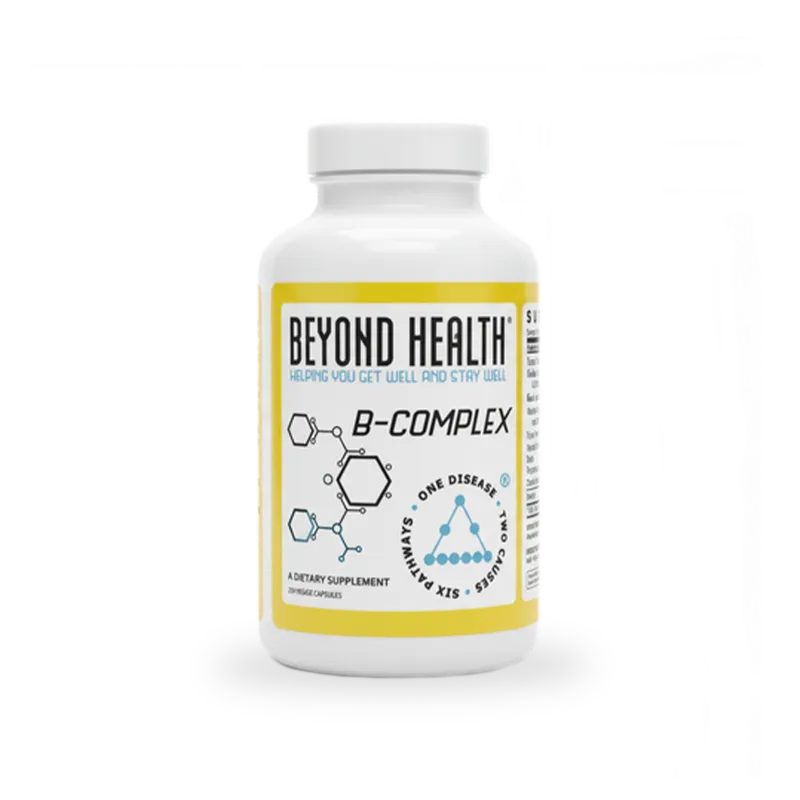
A b vitamin complex for energy targets the specific B vitamins that fuel your metabolism and combat fatigue at the cellular level. When you're dragging through the day, the issue often isn't willpower—it's the raw materials your body needs to convert food into usable energy. The right B vitamins address that directly, and we'll show you which ones matter most and how to choose the best option for your needs.
How B Vitamins Power Energy Production
Your body runs on ATP (adenosine triphosphate), the energy molecule that powers every cell. B vitamins are the foreman on that job site. B1, B2, B3, B5, and B6 all act as coenzymes that shuttle electrons through the metabolic pathways that create ATP. Without adequate B vitamins, your cells can't convert the carbs, fats, and proteins you eat into usable energy—no matter how well you eat.
B12 and folate (B9) round out the picture by supporting red blood cell production and DNA synthesis. When your red blood cells work efficiently, oxygen delivery to tissues improves, and fatigue lifts. This is why b vitamin complex for energy formulas include the full spectrum—each B works in concert, and shortages in any one create bottlenecks.
Which B Vitamins Fight Fatigue Most Directly
Not all B vitamins matter equally for energy. Here's what each one does:
- B1 (Thiamine) breaks down carbs into energy; deficiency causes muscle weakness and mental fog.
- B2 (Riboflavin) supports aerobic energy production; low levels leave you feeling drained even after sleep.
- B3 (Niacin) processes carbs, fats, and proteins; it's foundational to all three macronutrient pathways.
- B5 (Pantothenic Acid) makes coenzyme A, which drives fat and carb oxidation; it's critical for sustained energy.
- B6 (Pyridoxine) supports amino acid metabolism and neurotransmitter production; it helps your brain and body communicate efficiently.
- B12 (Cobalamin) enables red blood cell maturation and nerve function; deficiency causes crushing fatigue and brain fog.
- Folate (B9) works with B12 to build healthy red blood cells and DNA; it's especially important if you're under stress or have high demands.
A quality vitamin b complex for energy covers all of these, not just a few.
B Vitamins Vs. Energy from Other Sources
Energy supplements come in many forms—caffeine, carbs, adaptogens, and more. But B vitamins work differently. Caffeine masks fatigue by blocking adenosine receptors; B vitamins fix the root cause by enabling your body to generate ATP. That's why B vitamin benefits build over time. You won't feel a jolt after one dose, but after a week or two of consistent supplementation, you'll notice clearer thinking, better workout recovery, and steadier energy through the day.
Other supplements like anti inflammatory supplements or digestive health supplements support energy indirectly—chronic inflammation and poor digestion both drain you—but they're not direct energy producers. B vitamins, by contrast, are the actual machinery.
Who Needs B Vitamins Most
Certain groups benefit most from supplementing. If you follow a vegan or vegetarian diet, B12 is critical because it's primarily available from animal sources. If you're under chronic stress, your B vitamin demands spike because stress hormones deplete them. High-intensity athletes burn through B vitamins faster and need replenishment. People with digestive issues, autoimmune conditions, or chronic illness often have absorption problems, so supplementation bridges the gap.
Older adults also benefit more from B complex supplementation because stomach acid naturally decreases with age, reducing B12 and other B vitamin absorption from food. If fatigue is a persistent issue despite good sleep, a b vitamin complex for energy is a logical first step before assuming you're burnt out.
How to Choose a B Vitamin Complex
Not all B complexes are equal. Here's what matters:
- Full spectrum: make sure it includes all eight B vitamins, not just a few.
- Bioavailable forms: look for methylcobalamin (not cyanocobalamin) for B12, methylfolate (not folic acid) for B9, and pyridoxal-5-phosphate for B6. These forms your body uses immediately.
- Dosage: most energy-focused complexes provide 100-400% of the daily value for each B vitamin. This is safe (B vitamins are water-soluble and excess is excreted) but check labels to ensure they match your needs.
- Minimal fillers: avoid products with excessive binders, dyes, or added sugars that defeat the purpose.
Grab the code to get 10% OFF All Orders on Beyond Health's full range of energy and wellness supplements.
Real Results and Timeline
Most people notice something within 2-4 weeks—steadier energy, less post-lunch crashes, clearer thinking by mid-afternoon. Athletes often report better recovery between workouts. If fatigue is severe or accompanied by other symptoms, rule out thyroid issues, sleep disorders, or anemia first. A B complex works best when the underlying physiology is sound.
Store-bought energy drinks and pills are quick fixes that often leave you more tired afterward. A quality b vitamin complex for energy costs less, has no jitters, and actually addresses why you're tired instead of masking it. Combined with consistent sleep, movement, and stress management, B vitamins are the supplement that most people genuinely need and notice.
Check the latest price and current offers on Beyond Health's vitamin B complex to start steady energy today.
 Shopping at Beyond Health? See today's verified Beyond Health discount code
Frequently asked questions
How fast does a b vitamin complex for energy actually work?
B vitamins typically show noticeable benefits within 2-4 weeks of consistent daily use, not immediately. Your body needs time to rebuild energy-producing capacity at the cellular level. Some people feel sharper thinking within the first week, but sustained energy improvements take longer.
Can I take a B vitamin complex with other supplements?
Yes, B vitamins are safe to combine with most supplements. They actually work synergistically with magnesium, iron, and coenzyme Q10. Just avoid taking them with alcohol or medications that interfere with B vitamin absorption—ask your doctor if you're on prescription drugs.
Is vitamin B complex better than individual B vitamins?
A complete complex is usually better for energy because all eight B vitamins work together. Taking only B12 or only B6 can create imbalances. A full spectrum ensures no bottlenecks in energy production.
Who should avoid B vitamin supplements?
Most people tolerate B vitamins well, but anyone with gout should avoid high-dose niacin (B3), and those on blood thinners should discuss high-dose B6 with their doctor. Pregnant women should consult their 内部内部路由信息信息 about dose levels.
Can a B vitamin complex replace sleep?
No. B vitamins support your body's energy-making machinery, but sleep is irreplaceable for recovery and cognitive function. Use a complex to optimize energy when sleep is adequate, not to compensate for poor sleep habits.
What's the difference between the vitamin B complex for energy products available?
Beyond Health's options differ in bioavailable forms, potency, and added support—some are paired with energy-boosting herbs, others are pure B vitamins. [Check the store page](/store/beyond-health-discount-code/) to compare specific formulas and find the one that matches your needs.