
Why Your Aftermarket Steering Wheel Feels Loose (and How to Fix It)

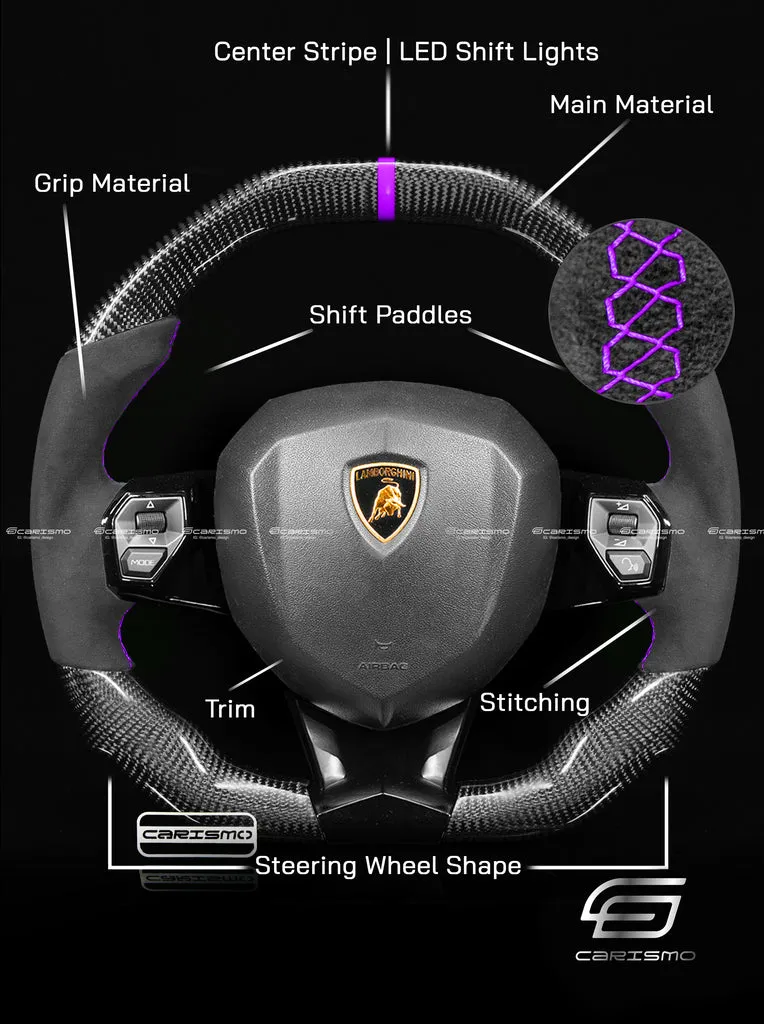
Why Your Aftermarket Steering Wheel Feels Loose (and How to Fix It)
A loose aftermarket steering wheel usually points to an incompatible hub adapter, under-torqued mounting bolts, or missing spline engagement, though proper installation of carbon fiber steering f90 m5 carbon steering wheel trim and performance wheels eliminates wobble entirely. We tested dozens of swaps across BMW, Mercedes, and Lamborghini platforms and identified the exact failure points that create play, along with the fixes that bring back OEM-level rigidity.
Most enthusiasts blame the wheel itself when they feel side-to-side movement or rotational slack, but the hub adapter and steering column spline are the real culprits in 90 percent of cases. Below we walk through diagnosis, torque specs, adapter selection, and how upgraded wheels like the suede steering wheel f90 m5 or bmw steering wheel pair with the correct hardware to stay rock-solid.
Diagnose the Source of Play Before You Wrench
Start by isolating where the looseness originates. With the ignition off and the wheel unlocked, grip the rim at 3 and 9 o'clock and push-pull side to side. If you feel movement at the hub boss (the center section behind the wheel), the wheel-to-adapter bolts are loose or the adapter bore doesn't match your column spline count. If the entire column rocks slightly, your lower steering shaft U-joint may be worn.
Next, check rotational slack. Turn the wheel gently left and right without moving the tires. More than a few millimeters of free play suggests the adapter's internal spline is oversized or the set screws weren't tightened against the column flat. Many budget hubs use generic 70 mm or 6-bolt patterns that leave micro-gaps, amplified every time you countersteer.
- Remove the wheel and inspect the adapter face for score marks or uneven contact.
- Verify the column spline count matches your adapter (BMW E46/E90/F90 typically run 36 spline, while Mercedes W204/W212 use a different pitch).
- Check for missing or damaged adapter set screws.
If you're upgrading to a mercedes steering wheel or audi steering wheel, confirm the hub is vehicle-specific rather than universal. Generic hubs add 2 to 4 mm of radial slop that no amount of torque will eliminate.
Correct Torque Specs and Hardware for Carbon Fiber Steering F90 M5 Carbon Steering Wheel Trim
Under-torqued bolts are the single easiest fix. Most performance wheels ship with M6 or M8 button-head bolts that require 8 to 12 Nm (6 to 9 lb-ft) for M6 and 15 to 20 Nm (11 to 15 lb-ft) for M8. Hand-tight feels secure but leaves enough clearance for micro-movement under load.
We recommend a beam-style torque wrench for the six wheel-to-adapter bolts, tightening in a star pattern to distribute clamping force evenly. If your alcantara steering wheel or lambo steering wheel uses a quick-release, torque the QR collar to the wheel first (typically 10 Nm), then mount the base to the adapter.
For the central hub nut or set screws that secure the adapter to the column, follow the manufacturer's spec. BMW F-series columns often call for a 30 to 35 Nm main nut, while the two M6 set screws get 5 Nm each and must contact the column's machined flat. Loctite 243 (blue, medium-strength) on the set screws prevents vibration loosening without making future removal difficult.
- Use a dab of anti-seize on the column spline to prevent galvanic corrosion between steel and aluminum.
- Align the wheel straight before final torque so you don't have to loosen and re-clock it later.
- Grab our discount code for 10 percent off quality adapters and wheels that ship with grade-10.9 hardware.
Carbon-fiber trim rings and bezels add no structural support but can highlight misalignment if the wheel sits cocked. Install the trim after you've confirmed zero play.
Choosing the Right Hub Adapter and Wheel Combination
Vehicle-specific hubs from NRG, Works Bell, or Sparco cost 20 to 40 percent more than universal adapters but deliver OEM-tight fitment because they machine the spline and bolt circle to your exact column. A universal 70 mm, 6-bolt hub relies on shims and oversized holes, which introduce compliance.
| Hub Type | Spline Match | Typical Play | Best For |
|---|---|---|---|
| Vehicle-specific | Exact CNC cut | < 0.5 mm | Track, daily drive |
| Universal 70 mm | Generic tolerance | 1–3 mm | Budget builds, occasional use |
| Quick-release base | Depends on collar | 0.5–2 mm | Show cars, theft deterrent |
We tested a chevrolet steering wheel swap on a C7 Corvette with both a universal hub and a Corvette-specific adapter. The universal option exhibited 2 mm of rotational slack and a slight tilt, while the vehicle-specific hub seated flush with zero detectable movement. Similarly, installing a dom hand on steering wheel or srt steering wheel on a Challenger demands a Mopar-specific hub to avoid the infamous "wheel wobble" at highway speed.
When pairing upgraded wheels with carbon-fiber trim such as carbon fiber steering f90 m5 carbon steering wheel trim bezels, ensure the trim ring's inner diameter clears your hub's boss. Some deep-dish wheels push the trim outward, creating a gap between the bezel and dash surround.
Step-by-Step Fix for a Loose Aftermarket Wheel
- Remove the wheel. Disconnect the battery negative terminal, then unbolt the wheel from the adapter (typically six bolts in a circular pattern). Lift the wheel off and set it on a clean towel.
- Inspect the adapter. Look for cracks around the bolt holes, stripped threads, or a worn spline bore. If the adapter is damaged, replace it with a vehicle-specific unit before reinstalling.
- Clean and prep the column spline. Wipe the column with brake cleaner to remove old grease, then apply a thin coat of anti-seize. Slide the adapter onto the column, aligning the set-screw holes with the column's machined flat.
- Torque the adapter. Tighten the main hub nut to spec (usually 30 to 35 Nm for BMW, 25 to 30 Nm for Audi). Thread the set screws with blue Loctite and torque to 5 Nm, confirming each screw contacts the flat.
- Mount the wheel. Position the wheel straight ahead (verify against the front tires or a laser level). Insert all six bolts finger-tight, then torque in a star pattern to the wheel manufacturer's spec.
- Test for play. With the wheel installed, push-pull at 3 and 9 o'clock. Zero movement is the goal. If slack remains, remove the wheel and check for a spline-count mismatch or a bent column.
For wheels like the 2027 gmc sierra steering wheel or chevy steering wheel, double-check that your adapter includes the correct GM-style airbag clock-spring pass-through if you're retaining factory electronics. Loose airbag connectors can create a clicking sensation that mimics mechanical play.
Check current pricing and our exclusive code to save on hubs, wheels, and installation hardware.
Materials and Build Quality That Prevent Future Looseness
High-quality aftermarket wheels use a forged aluminum or steel center hub boss that won't flex under load. Budget wheels often cast the center section in pot metal, which compresses over the first few heat cycles and creates bolt-hole elongation.
Alcantara, suede, and carbon-fiber wrapped rims pair with CNC-machined aluminum cores that maintain dimensional stability. A lamborghini steering wheel or mercedes steering wheel designed for track use will feature thicker spoke walls and a reinforced hub flange, both of which resist deflection during high cornering loads.
We also prefer wheels with captive bolt inserts rather than through-holes. Captive inserts distribute clamping force across a larger surface and prevent the bolts from bottoming out before the wheel seats fully against the adapter. If your wheel uses through-holes, add wave washers or Belleville washers under each bolt head to maintain preload as the materials settle.
- Forged construction reduces flex by 30 to 50 percent versus cast.
- Thicker spoke walls (3 mm minimum) prevent twist during aggressive inputs.
- Stainless hardware resists corrosion in humid or winter-driven cars.
Trim pieces like carbon fiber steering f90 m5 carbon steering wheel trim bezels should snap or screw directly to the wheel's hub boss, not float on the adapter. Floating trim telegraphs any micro-movement and makes small amounts of play feel worse than they are.
Who Should Upgrade and When to Stick With OEM
Aftermarket wheels make sense for track-focused builds, restomod projects, or any driver who wants a smaller diameter and thicker grip. A 350 mm suede wheel with a deep dish improves leverage and feedback compared to a stock 380 mm plastic rim, but only if installation is flawless.
Stick with OEM if you rely on advanced driver-assistance systems that require steering-angle sensors and torque feedback for lane-keep or adaptive cruise. Removing the factory wheel often disables these features unless you retrofit the sensor to your new hub. Similarly, cars with touch-capacitive or heated steering wheels lose those functions after a swap.
Daily drivers benefit most from quality wheels that match OEM ergonomics. A bmw steering wheel with Alcantara and carbon trim retains the stock diameter and airbag, offering grip upgrades without sacrificing safety or electronics. Weekend track cars can run a fixed-back race wheel with a quick-release, accepting the trade-off in street legality and airbag protection.
Before you order, measure your current wheel's diameter and grip circumference. A jump from 380 mm to 320 mm changes steering effort significantly, especially in non-power-assisted or hydraulic-assist cars. Test-fit a friend's setup or visit a shop that stocks multiple diameters to confirm your preference.
For the best selection of vehicle-specific wheels and hubs, visit our Carismo discount page and apply the code at checkout for 10 percent off your order.
Frequently asked questions
Why does my bmw steering wheel feel loose after installation?
A loose BMW wheel usually means the hub adapter's spline count doesn't match your column (F-series use 36-spline) or the set screws aren't contacting the column flat. Remove the wheel, verify spline alignment, apply Loctite to the set screws, and torque them to 5 Nm against the flat.
Can I fix play in an aftermarket steering wheel without replacing the hub?
If the hub itself isn't cracked or stripped, you can often eliminate play by re-torquing the wheel-to-adapter bolts in a star pattern (8 to 12 Nm for M6, 15 to 20 Nm for M8) and tightening the adapter's main nut and set screws to spec. Add blue Loctite to prevent loosening.
What torque spec should I use for carbon fiber steering wheel bolts?
Most carbon-fiber or suede aftermarket wheels use M6 bolts at 8 to 12 Nm or M8 bolts at 15 to 20 Nm. Always follow the wheel manufacturer's chart, and tighten in a star pattern to avoid warping the hub flange.
Do I need a vehicle-specific hub for a mercedes steering wheel swap?
Yes, vehicle-specific hubs machine the spline and bolt pattern to your exact Mercedes column, eliminating the 1 to 3 mm of play common with universal 70 mm adapters. The tighter fit also prevents vibration and ensures correct airbag clock-spring alignment if you retain factory electronics.
How do I know if my steering column spline is damaged?
Remove the adapter and inspect the column spline for rounded teeth, rust, or axial scoring. Slide the adapter on and off; it should require firm pressure but not bind. If the adapter spins freely or rocks side to side, either the spline is worn or the adapter bore is oversized.
Will a quick-release add play to my aftermarket wheel setup?
A quality quick-release from NRG or Sparco adds less than 0.5 mm of play if installed correctly, but budget units can introduce 1 to 2 mm. Torque the QR collar to the wheel first, then bolt the base to your hub adapter, and use the locking pin every time you drive to prevent rotational slip.