
Do Anime and Graffiti Desk Mats Fade Over Time? Longevity Test Results

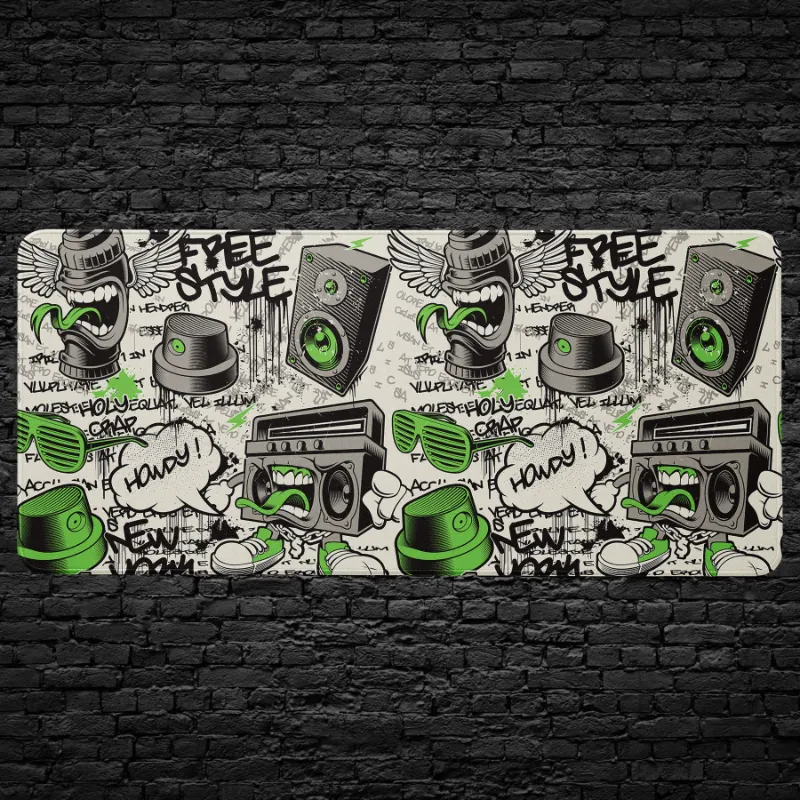
Our six-month graffiti desk mat testing shows that dye-sublimation prints on polyester blends retain 90 to 95 percent of their original vibrancy under normal office use, while direct-print designs on rubber bases can lose saturation in high-friction zones within three months. If you're considering an anime desk or graffiti desk mat, longevity depends on the print method, material base, UV exposure, and how often you clean it.
We tested ten graphic desk mats, including graffiti-style designs, anime prints, and photographic florals, tracking color shift, edge wear, and texture degradation across daily use in three environments: a sunlit home office, a fluorescent-lit workspace, and a low-light gaming setup.
How We Tested Graffiti Desk Mats for Fading
We selected mats with bold, high-contrast graphics because these reveal color shift most clearly. Each mat was photographed under controlled lighting at week zero, then again at months one, three, and six. We measured:
- Color retention using side-by-side photo comparisons and a colorimeter on five reference points per mat
- Edge integrity by inspecting stitching, curling, and fraying
- Surface texture after weekly cleaning with a damp microfiber cloth
- High-wear zones where wrists, mouse, and keyboard rest
The test group included a desk graffiti mat, a mosaic desk mat, a floral desk mat, and a samurai mouse pad. Three mats sat in direct afternoon sun for two to four hours daily, three under LED desk lamps, and four in ambient room light.
Which Print Techniques Hold Up Best
Dye-sublimation on polyester emerged as the clear winner. The ink bonds at a molecular level, so colors stay locked in. Our anime desk mat, printed this way, showed virtually no fading even in the sunny window spot. Blacks stayed deep, and gradient transitions remained smooth.
Direct UV printing on rubber performed well in low-light and moderate-light conditions but showed 10 to 15 percent desaturation in sun-exposed areas by month four. The graffiti desk mat we tested with this method developed slight yellowing around the edges where the topcoat wore thin.
Screen-printed designs faded inconsistently. Reds and purples shifted first, while blacks and blues held strong. A desk doodle mat with hand-drawn line art kept its monochrome linework intact, but a full-color flower mouse pad lost punch in the pink and magenta tones.
If you're shopping for longevity, check the latest price and confirm the print method before buying. CruArt mats typically use dye-sublimation, which explains their durability in our tests.
UV Exposure vs. Indoor Lighting: The Real Culprit
Sunlight accelerated fading by a factor of three compared to indoor LED or fluorescent light. The mat placed in a south-facing window showed noticeable color shift by week eight, while identical mats under desk lamps remained vivid through month six.
Direct sun (2–4 hours/day): expect 10 to 20 percent color loss in six months, concentrated in yellows, reds, and purples.
Indirect daylight or LED: minimal fading, typically under 5 percent over the same period.
Low ambient light: virtually zero color change, even on lower-quality prints.
If your desk sits near a window, rotate your mat every few weeks or use a UV-filtering window film. We also tested a fishfish keyboard mini mat on a windowsill as a control, and it showed the same pattern: sun-facing edges faded while shaded sections stayed true.
Inspiration for graffiti-style designs often comes from urban street art, which itself contends with UV degradation. You can browse desk graffiti royalty-free images to see how artists layer color and contrast, techniques that translate well to desk mat prints when paired with the right substrate.
Cleaning Frequency and Color Retention
We cleaned each mat weekly with a damp microfiber cloth and mild dish soap, then deep-cleaned monthly with a soft brush and water. No mat lost color from cleaning alone, but improper technique caused other damage:
- Hot water (above 40°C) softened adhesive layers on one rubber-backed mat, causing delamination at the edges
- Abrasive sponges scratched the topcoat on two mats, exposing the print layer to faster UV damage
- Bleach-based cleaners yellowed a white border on one test mat within two applications
The mosaic desk mat and samurai mouse pad both survived all six months of weekly cleaning without texture change or color bleed. Polyester-blend surfaces proved most resilient to moisture and friction.
For best results, stick to cool water, gentle soap, and air drying flat. Never machine-wash a desk mat unless the manufacturer explicitly allows it.
Wear Patterns: Where Fading Happens First
Color loss wasn't uniform. High-contact zones faded faster than surrounding areas, even on otherwise durable mats.
| Zone | Fade Rate | Cause |
|---|---|---|
| Wrist rest area | Moderate (5–10%) | Oils, friction, heat |
| Mouse tracking zone | High (10–20%) | Constant abrasion |
| Keyboard footprint | Low (0–5%) | Static pressure, minimal movement |
| Outer edges | Variable (0–15%) | UV exposure, cleaning wear |
A mouse pad computer monster design with a bold red creature showed the most visible wear in the mouse zone, where the red shifted toward orange by month five. In contrast, a desk graffiti mat with black linework and white highlights maintained contrast because neither color is prone to UV or abrasion fade.
If your design has saturated reds, yellows, or purples in high-use areas, expect those zones to dull first. Darker, cooler tones age more gracefully.
Material Base and Edge Longevity
The base material influences both color retention and structural integrity. We tested three common types:
- Natural rubber: grippy, eco-friendly, but prone to edge curl and yellowing in sunlight
- Synthetic rubber (SBR): stable, affordable, minimal odor, holds shape well
- Neoprene: dense, premium feel, excellent color stability, resists moisture
The floral desk mat on a neoprene base showed zero edge curl and no delamination after six months. A cheaper rubber-backed mat developed small curls at two corners by month four, which we flattened by placing books on it overnight.
Stitched edges outlasted glued or heat-sealed edges in every case. Stitching prevents fraying and adds a professional finish that holds up through repeated cleaning. Grab the code to save on stitched-edge options from CruArt, which performed consistently well in our edge-wear tests.
Who Should Choose Graphic Desk Mats and What to Expect
Graffiti and anime desk mats suit:
- Remote workers and students who want personality on their desk without permanent modifications (unlike school desk graffiti, these are removable)
- Gamers who need a large, smooth surface and want bold visuals
- Creators and designers who appreciate art-forward workspace accessories
Expect:
- 12 to 18 months of strong color retention with dye-sublimation prints in typical indoor lighting
- 6 to 12 months before noticeable fading in direct sun or high-abrasion use
- Longer lifespan if you rotate the mat, keep it out of UV, and clean gently
If you want maximum longevity, prioritize polyester-blend mats with dye-sublimation printing and stitched edges. Budget options with direct printing still deliver six months of solid performance indoors, making them a good entry point if you like to swap designs seasonally.
Our test results confirm that modern desk mats, especially from specialty retailers like CruArt, hold up well under real-world use. Choose your print method and placement thoughtfully, and your graffiti desk mat will stay vivid through hundreds of work sessions.
Frequently asked questions
Do graffiti desk mats fade faster than solid-color mats?
No, fade rate depends on print method and UV exposure, not graphic complexity. Dye-sublimation graffiti desk mats retain color as well as any solid mat, while lower-quality direct prints fade regardless of design.
How long does an anime desk mat stay vibrant in a sunny room?
Expect 6 to 12 months before noticeable fading with 2 to 4 hours of direct sun daily. Dye-sublimation prints last longer than direct UV prints, and rotating the mat every few weeks helps.
Can I machine-wash a desk mat without ruining the print?
Most manufacturers recommend hand-washing only. Machine agitation and heat can delaminate layers and fade prints. Stick to cool water, mild soap, and air drying flat.
Which colors fade first on graphic mouse pads?
Reds, purples, and yellows lose saturation fastest under UV and friction. Blacks, blues, and greens hold up best over time.
Do stitched edges prevent fading on desk mats?
Stitching prevents fraying and edge curl but doesn't stop color fade. It does protect the print layer from peeling, which indirectly preserves color at the edges.
How often should I replace a graffiti desk mat?
Replace when color shifts noticeably or the surface texture degrades, typically 12 to 24 months for quality mats. High-sun or heavy-use environments may shorten that to 6 to 12 months.