

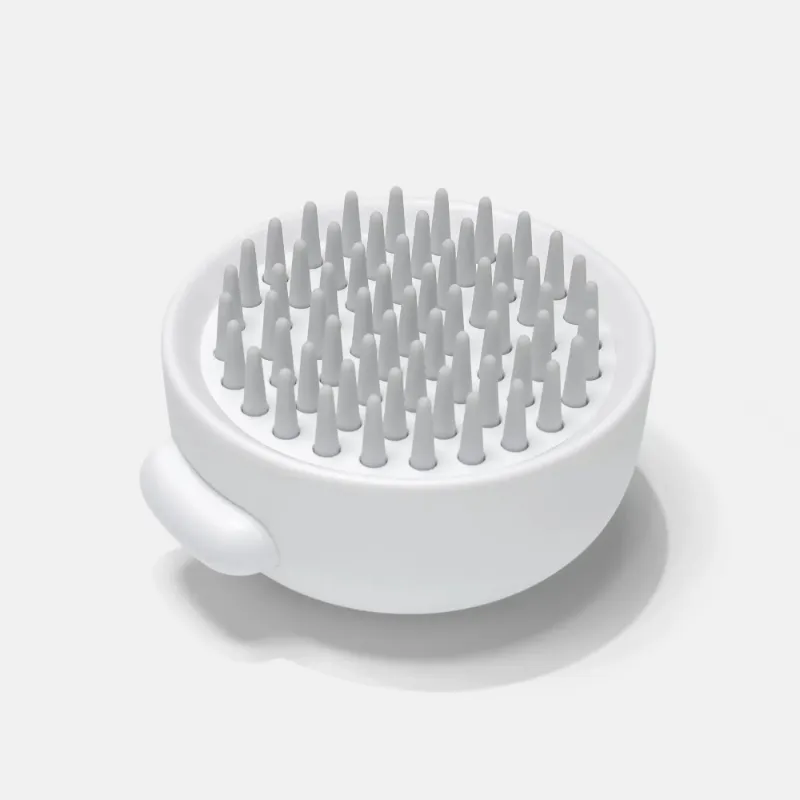
Spring moulting comes down to tool choice rather than effort, and the aumuca self cleaning slicker brush handles day-to-day loose hair on most short-coated cats while a deshedding brush for cats does the heavy lifting when the undercoat releases. Use the slicker daily and the deshedder only at peak, and you spend less time chasing fur across the sofa than you would with either tool alone.
What the Aumuca Self Cleaning Slicker Brush Does Best
A slicker is an upkeep and finishing tool. Fine, closely spaced pins separate the topcoat, lift loose hair, and pick up the dust and dander sitting near the skin.
- Daily upkeep: three to five minutes across the back, flanks, chest and tail base keeps loose hair out of your house.
- Self cleaning pad: press the back plate, the pins retract, and collected fur lifts off in one sheet instead of being picked out by hand.
- Finishing work: it smooths the coat after a bath or after raking, when you want the hair to sit flat.
- Fussy cats: short, light passes feel far less invasive than a raking tool on a cat that walks away mid-session.
It is also the sensible starting point for an american shorthair calico cat, whose dense short coat holds a surprising amount of loose hair close to the body. More on matching tool to coat below.
When a Deshedding Brush for Cats Earns Its Place
Spring moulting is an undercoat event. The topcoat stays put; what lets go is the dense layer underneath, and that is exactly what a slicker cannot reach without endless repeated passes.
A deshedding brush for cats uses a blade or tightly set teeth to draw dead undercoat out in a controlled way:
- Fewer passes: two or three sessions a week at peak shed removes more undercoat than daily slicker work.
- Mats prevented: trapped undercoat is what felts behind the front legs and around the trousers.
- Not a daily tool: overuse irritates skin, so ease back to weekly once the coat stops releasing.
- Pair it with a slicker: deshed first, then finish with the slicker to catch whatever the blade loosened.
Slicker, deshedder and rake side by side
| Tool | Best job | Spring moulting role |
|---|---|---|
| aumuca self cleaning slicker brush | surface hair, daily tidy, finishing | every day, short sessions |
| deshedding brush cat | dead undercoat removal | 2 to 3 sessions a week at peak |
| undercoat rake for cats | thick or double coats | weekly, deeper than a slicker |
Undercoat Rake Basics and Where the Moulting Brush Fits
An undercoat rake sits between the other two. Wide, spaced metal teeth drop beneath the topcoat and comb the undercoat out rather than dragging across it.
- Rakes suit cats with genuinely thick or double coats. On a short, flat coat they mostly skate over the surface.
- Work in the direction of the coat, in short sections, and clear the teeth every few strokes.
- A cat moulting brush is the gentler middle option when a full undercoat rake for cats feels like too much tool for the cat in front of you.
Grooming Short Haired Cats and Calico Coat Care
Short hair does not mean low shedding. Short-coated cats drop masses of small hairs that weave into fabric, which is why a cat hair brush earns its keep all year, not just in spring.
- Calico coat care: calico is a colour pattern, not a coat type, so judge the tool by your cat's real coat length and density rather than the pattern.
- Sensitive skin: keep strokes short, follow the direction of growth, and leave the belly, armpits and inner thighs alone unless your cat offers them.
- Cat shedding brush timing: brush before meals or play, so a cat that dislikes handling has a reason to sit still.
- Wild cats: a blackfooted cat is a small wild African species, not a pet, so grooming tools simply do not apply. We mention it because it turns up alongside cat brush searches, and it is worth knowing the difference before you buy anything.
Cleaning and Storing Your Tools
- Clear hair after every session. On the aumuca self cleaning slicker brush, press the retract plate and lift the fur off in one piece.
- Wipe pins or teeth with a damp cloth and a little mild soap, then dry fully before storing.
- Store rakes teeth-up or in a case so the tines do not bend against other tools in the drawer.
- Check the pins monthly. A bent tip is what scratches skin, and it is easy to miss on a dark coat.
Price, Code, Shipping and Returns
We do not publish prices here because they move. Check the latest price on the store page before you decide between a single brush and a two-tool kit.
The current offer is 10% off sitewide. Grab the code before checkout and apply it in the discount field. Two things are worth doing first:
- Confirm the code is still valid, since offers rotate and an expired code often fails silently at the payment step.
- Read the terms for items excluded from offers, which usually covers bundles and gift sets.
Shipping and returns are set by the store, so read those terms on the same page before you add a second tool to the basket.
Which One Suits Spring Moulting?
- One brush budget, short coat: the slicker alone covers daily moulting and finishing.
- Heavy shedder, hair everywhere: add the deshedding brush and use it only at peak.
- Thick or double coat: start with the rake, then finish with the slicker.
- Nervous or senior cat: slicker first, deshedder later, once handling is accepted.
If you want to compare the tools side by side before buying, check the current offer and read the product pages, then pick the pair that matches your cat's coat rather than the biggest kit on the page.
 Shopping at Aumuca? See today's verified Aumuca discount code
Frequently asked questions
Is the aumuca self cleaning slicker brush enough on its own for spring moulting?
For most short-haired cats it covers daily moulting well, because it lifts loose topcoat hair and finishes the coat. During the peak two or three weeks of shedding, though, most owners add a deshedding brush to reach the undercoat.
How often should I use a deshedding brush for cats during moulting season?
Two or three sessions a week at peak shed is a sensible rhythm, dropping back to weekly or less once the coat stops releasing. More than that tends to irritate skin without removing more hair.
Do I need an undercoat rake as well as a slicker?
Only if your cat has a thick or double coat. On short, flat coats an undercoat rake mostly skates over the surface, and the slicker plus a deshedding brush does the job.
How do I apply the Aumuca discount code at checkout?
Add your items to the basket, open the store's offer page to copy the current code, then paste it into the discount field at checkout and confirm the reduction shows before you pay. Check the terms for items excluded from offers.
Are these brushes safe for cats with sensitive skin?
Yes, with care. Use short strokes in the direction of the coat, keep pressure light enough that pins do not press into skin, and skip the belly, armpits and inner thighs. Stop if the skin reddens.
Why is a blackfooted cat listed among cat brush products?
A blackfooted cat is a small wild African species, not a domestic pet, so grooming tools do not apply to it. It appears here because readers search the term alongside cat brush questions.