

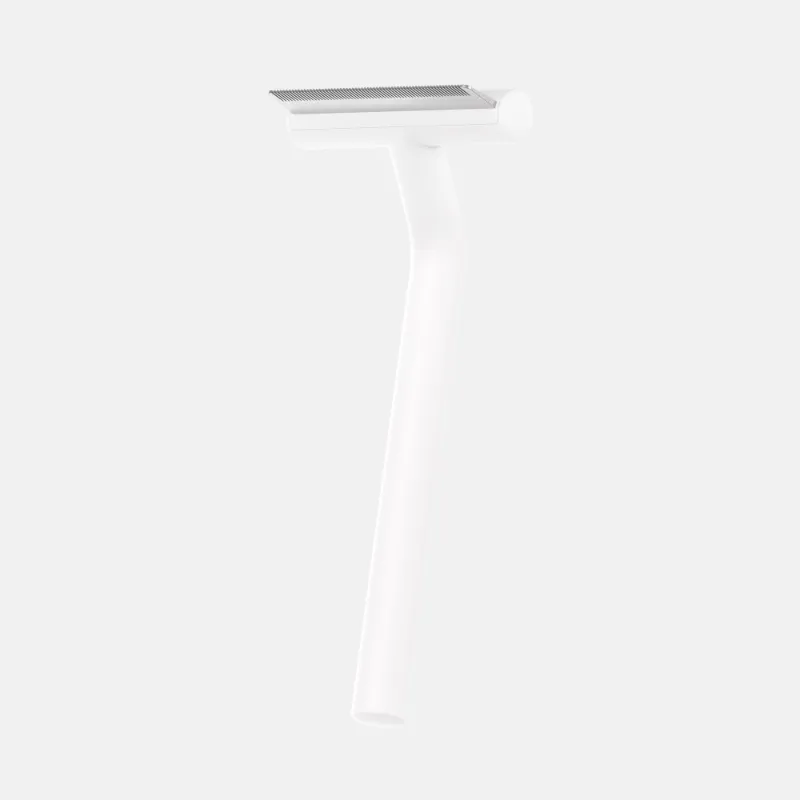
A cat moulting brush kit for heavy moulting season needs five things: an undercoat rake, a shedding or slicker brush, a fine-toothed comb for face and legs, a mat splitter, and a lint roller for the furniture. The rake does 80 percent of the work by lifting dead undercoat before it mats, and everything else supports it.
We test grooming tools on real coats, from double-coated American shorthairs to fine, sparse fur, and the kits that work are the boring ones: few tools, used often, cleaned after every session.
What goes in a cat moulting brush kit
Build the kit around the coat type, not the season. A short, dense coat needs different teeth from a soft, single coat.
- Undercoat rake for the dense layer sitting under the guard hairs. This is the tool that stops matting.
- Slicker or shedding brush for the topcoat and for finishing.
- Fine metal comb for the face, paws, armpits and tail base, where rakes do not fit.
- Mat splitter for the two or three mats you will find behind the elbows in spring.
- Rubber curry or damp cloth for surface hair and for cats that hate metal.
- Lint roller or rubber glove for the sofa, because the fur has to go somewhere.
If you own only one tool, make it the cat moulting brush and use it three times a week instead of once. Frequency beats equipment.
Undercoat rake basics: the tool that does the heavy lifting
An undercoat rake for cats has staggered metal teeth that reach under the guard hairs and pull out the loose undercoat without scraping the skin. Two rules matter when buying one:
- Teeth length matches coat length. Short, sparse teeth for short-haired cats; longer, wider-spaced teeth for semi-longhair. Long teeth on a short coat just skate over the surface.
- Rounded tips only. Sharp-tipped rakes scratch, and a scratch means a cat that hides next time you pick up a brush.
Use it in short strokes in the direction of the coat, working the back, flanks and hindquarters. Never drag it over the belly, the tail or the throat. Ten strokes per zone is plenty. Stop when the rake comes away clean, because that means the loose undercoat is gone and more strokes are just friction.
Choosing a shedding brush for short-haired cats
A cat shedding brush or deshedding brush for cats removes the surface hair the rake loosens and smooths the coat afterwards. For short-haired cats, a slicker with fine, angled pins works better than a wide-toothed comb, which skips over dense fur.
| Tool | Best job | Coat type it suits |
|---|---|---|
| Undercoat rake | Lifting dead undercoat before it mats | Double coats, dense shorthairs |
| Slicker or aumuca self cleaning slicker brush | Surface hair, finishing, daily upkeep | Short and medium coats |
| Fine metal comb | Face, legs, armpits, tail base | All coats, especially check-up work |
The self-cleaning slicker earns its place during moulting season specifically: the retract button pushes the collected fur off the pins in one motion, so you are not picking hair out of the brush between zones. Over a heavy season that is the difference between a two-minute session and a ten-minute one.
For a general-purpose cat hair brush to keep out on the sofa, choose something you can use without thinking. The brush that gets used is the one that is already within reach.
Calico cat coat care and grooming short haired cats
Coat colour does not change grooming needs, but coat density does. An American shorthair calico cat carries a dense double coat, so the moulting routine is rake first, slicker second, comb third. Short-haired cats are not low-maintenance in spring, they are just faster to finish because the fur is short enough that mats form later.
Two things short-haired owners often miss:
- The hindquarters and tail base mat first, because that is where the undercoat is thickest and friction is highest.
- Over-brushing is real. Ten minutes of rake work on a short coat can leave pink, irritated skin. Two minutes done properly is better.
One note on the wild side: a blackfooted cat is a small wild African species, not a domestic breed, and it is not a pet you groom at home. If you have been searching for it out of curiosity, the kit above does not apply. Your domestic shorthair is the customer.
Safe brushing for sensitive skin
Skin sensitivity, age and arthritis all change how you use a cat moulting brush, and the tool matters less than the pressure.
- Start with the hand. Stroke the cat first so you know where it flinches. Those are the areas to comb, not rake.
- Use the lightest pressure that still collects fur. If the skin moves with the teeth, you are pressing too hard.
- Work in zones with a break between each one. Back, then pause, then flanks. Cats tolerate a series of short sessions far better than one long one.
- Skip the belly, throat and tail unless the cat offers them. Those are comb-only areas, and only if the cat allows it.
- End on a positive. Treat, then stop, even if you have not finished. A cat that walks away relaxed is a cat you can brush tomorrow.
If your cat has scabs, bald patches, or reacts to any touch in one spot, that is a vet question, not a brush question. Groom around it.
Cleaning and storing the rake
Matted fur left in the teeth of a rake is how tools get ruined and how skin gets scratched next time.
- Pull trapped fur out of the teeth after every session, not every week.
- Wipe metal pins with a damp cloth and dry them fully before storage.
- Keep tools in a closed box or drawer, not loose in a bag where pins bend.
- Replace a rake as soon as the tips feel rough against your own forearm.
Store the kit where you groom, not where you store the hoover. Convenience is the whole reason the routine survives past week two.
Where to buy, and using the Aumuca code
The Aumuca range covers the rake, the slicker and the everyday brush, so you can build the whole kit from one place. For current pricing on each tool, check the latest price here.
If you are applying a code at checkout, add your items first, then paste the code in the discount field and confirm it has applied before paying. Checking code validity takes ten seconds and saves the refund email. Read the offer terms too: items excluded from offers are usually listed in the small print, and shipping and returns are handled separately from any discount. There is 10% off sitewide running now, so grab the code before you order.
Moulting season is short and intense. Buy four tools you will actually use, keep them clean, and brush little and often. Your cat's coat, your floor and your washing machine will all notice the difference.
 Shopping at Aumuca? See today's verified Aumuca discount code
Frequently asked questions
Do I need both a cat moulting brush and an undercoat rake?
They do different jobs. The rake lifts dead undercoat from below, and the slicker or shedding brush removes the surface hair and smooths the coat. If your cat has a dense double coat, you want both.
How often should I use a deshedding brush for cats during moulting season?
Little and often beats long sessions. Short daily or every-other-day sessions work better than one weekly marathon, especially on short coats where over-brushing irritates the skin.
Is a slicker brush safe for cats with sensitive skin?
Yes, with a light hand. Let the pins glide rather than press, and avoid the belly, throat and tail unless your cat offers them. If the skin moves with the brush, you are pressing too hard.
How do I use the Aumuca discount code at checkout?
Add your items to the cart, paste the code into the discount field and confirm it applies before you pay. Check the offer terms for any items excluded from offers, and note that shipping and returns are handled separately.
Can I use these grooming tools on a blackfooted cat?
No. The blackfooted cat is a small wild African species, not a domestic breed, and it is not kept as a pet. This kit is built for domestic cats.
How do I clean the Aumuca self cleaning slicker brush?
Press the retract button to push collected fur off the pins, then wipe the pins with a damp cloth and dry them fully. Clearing the brush after each session keeps it effective for the whole moulting season.