

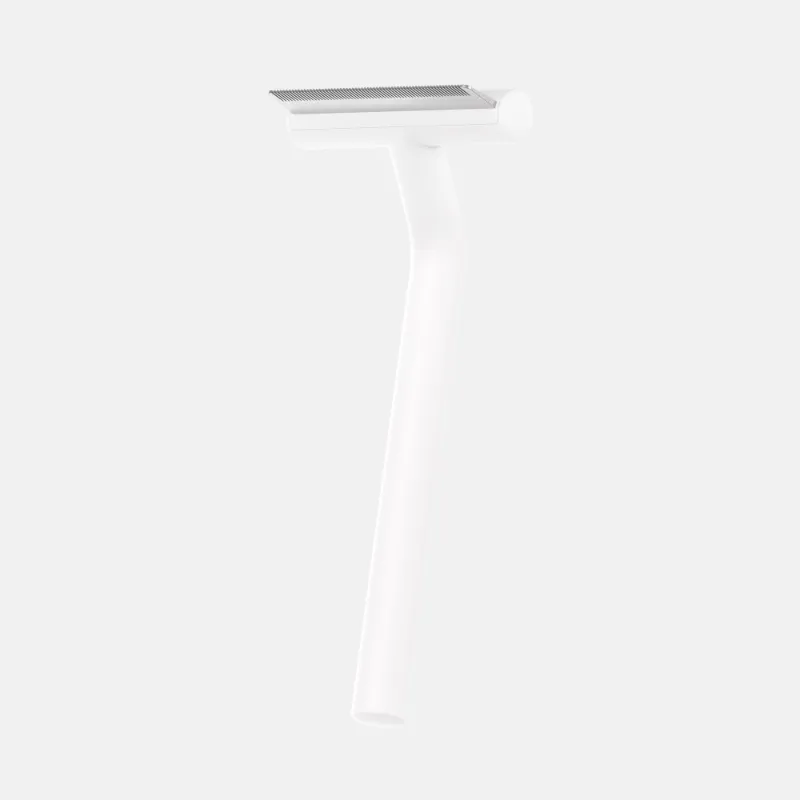
To use an undercoat rake on an American Shorthair calico cat, make short, shallow strokes that follow the coat, keep each session to five or ten minutes, and stop as soon as the teeth come up clean instead of furred. Short double coats shed in bursts, so the routine matters more than the tool. The undercoat rake for cats lifts the detached undercoat, then a lighter finisher such as the aumuca self cleaning slicker brush smooths the top coat without scraping skin. Get the order and the timing right and you pull the loose coat out in two sessions a week instead of fighting it daily.
Why Your American Shorthair Calico Cat Sheds the Way It Does
Calico describes a colour pattern, not a breed. Almost every calico you meet is a domestic shorthair or an American Shorthair with patches of black, red and white, and the coat underneath those patches is the classic short double coat: a dense, soft undercoat beneath a harder top coat.
On an American Shorthair calico cat, the patches say nothing about coat type. That structure is why a plain bristle brush underperforms. It glides over the top coat and leaves the fur that mats near the skin untouched. An undercoat rake has spaced metal teeth that reach below the top coat and hook loose undercoat without dragging on the skin.
Peak shedding usually follows seasonal light changes rather than a tidy calendar. Expect heavier loose coat in spring, a second push in autumn, and steady low-level shedding in between.
Undercoat Rake Basics: Teeth, Spacing and Blades
- Spaced teeth comb through the top coat and catch undercoat that has already detached.
- Rounded tips are non-negotiable on a cat. Sharp or blunt-cut ends scratch skin.
- Single row versus double row changes how much coat you move per stroke. A single row is gentler and easier to control on a small cat.
- Blade rakes cut through mats. They are not a general shedding tool and are easy to misuse on a cat's thin flank skin.
A rake is not the same as a fine-bladed deshedding tool and it is not a slicker. Each does one job well.
| Tool | What it removes | Best cadence for a short coat |
|---|---|---|
| Undercoat rake | Detached undercoat beneath the top coat | Twice a week, 5 to 10 minutes |
| aumuca self cleaning slicker brush | Surface hair, light tangles, finish | After raking, or 2 to 3 minutes on off days |
| deshedding brush for cats | Bulk loose coat during heavy shed | Once a week at peak season |
| cat moulting brush | Everyday light shedding | Daily if your cat tolerates it |
Choosing a Shedding Brush for Short-Haired Cats
Grooming short haired cats is about reach and control, not aggression. Choose by coat density and skin sensitivity:
- Dense, plush coat with visible undercoat: the rake is your primary tool. A moulting brush handles daily dust.
- Thin or sparse coat: skip the rake and stay with a soft slicker or a cat hair brush. Raking a sparse coat adds nothing and irritates skin.
- Sensitive or older cat: single-row rake, light pressure, back and sides only.
- Heavy seasonal shed: a deshedding brush does the bulk work, then the rake cleans up underneath.
Buy one good primary tool rather than four cheap ones. A rake that snags or scratches gets refused by the cat within a week, and then no tool gets used at all.
How to Rake Without Over-Grooming
Over-grooming looks like red skin, twitching, patchy coat, or a cat that leaves the room when the drawer opens. Prevent it with a fixed routine:
- Do a hands-on check first. Run your palm along the coat against the grain and feel for tufts, mats behind the legs, or tender spots worth avoiding.
- Work in sections. Back, flanks, chest, hindquarters. One area at a time, always in the direction the coat grows.
- Use short, shallow strokes. Two or three centimetres at a time, letting the teeth work instead of pressing down.
- Stop when the rake comes up clean. Clean teeth mean the detached undercoat is gone. Continuing only pulls healthy coat and annoys the skin.
- Cap the session. Five to ten minutes, or sooner if your cat shifts and flicks its tail.
- Finish with the slicker. One or two soft passes collect the fluff you loosened and lay the top coat flat.
- Reward and release. Treat, then let the cat go. Short positive sessions beat one long wrestling match.
Every American Shorthair calico cat has its own tolerance, so treat the numbers above as a ceiling, not a target.
Safe Brushing for Sensitive Skin
Never rake the belly, armpits, groin or thin skin along the spine if your cat objects. Do not rake over a rash, a healing wound, or unexplained bald patches; that is a vet question, not a grooming one. If your cat has longer fur behind the ears or around the trousers, detangle it by hand rather than forcing a rake through.
Calico Cat Coat Care Between Sessions
The rake handles the coat. The rest is habits:
- Feed a consistent diet. Coat condition tracks overall condition more than it tracks brush choice.
- Keep a lint roller by the door and a light brush where you sit, so quick passes replace marathon sessions.
- Watch for sudden heavy shedding, dull patches or bald spots and book a vet call.
- A blackfooted cat is a small wild species with its own coat biology, so nothing here applies to it. This guide is only about house cats.
With an American Shorthair calico cat, the schedule matters more than the tool. Two calm sessions a week beat a daily battle.
Cleaning and Storing the Rake
- Pull trapped fur out of the teeth after every session, not once a month.
- Wipe teeth and handle with a damp cloth and mild soap, then dry fully before storing.
- Disinfect after grooming a cat with a skin issue.
- Store flat in a drawer or hang it so the teeth do not bend.
- Replace a rake with bent, rusty or missing teeth. Damaged tips scratch.
Where to Buy and How the Discount Works
The Aumuca range covers the rake, slicker and shedding brushes in one place. Check the latest price on the store page before ordering, and grab the code for the current sitewide offer.
- Applying a code at checkout is a separate step from landing on the offer page, so paste it before you pay.
- Checking code validity takes seconds: add the item to the cart, enter the code, and read the discount line before confirming.
- Items excluded from offers are listed in the offer terms, so check the small print if your basket looks unchanged.
- Shipping and returns follow the store's standard terms, so keep your order confirmation until the parcel arrives.
Buy the rake first, add a slicker as the finisher, and only add a deshedding blade if seasonal shed genuinely overwhelms the rake.
 Shopping at Aumuca? See today's verified Aumuca discount code
Frequently asked questions
How often should I use an undercoat rake on an American Shorthair calico cat?
Twice a week for five to ten minutes is plenty for most of the year. Step it up to every other day during a heavy spring or autumn shed, and stop each session once the teeth come up clean.
Do I need both an undercoat rake and an aumuca self cleaning slicker brush?
They do different jobs. The rake lifts detached undercoat below the top coat, while the self cleaning slicker collects surface fluff and smooths the finish. Using the slicker second makes the coat look tidier and keeps loose hair off your furniture.
How can I tell if I am over-grooming my cat?
Look for red or flaky skin, twitching, patchy coat, or a cat that avoids the brush. If the rake keeps pulling coat after the teeth look clean, you have gone past the loose undercoat and are working on healthy hair.
Can I use a deshedding brush on a cat with sensitive skin?
Only with a light hand and a fine, rounded-edge tool, and always after a hands-on check for tender spots. For sensitive cats, stay with a single-row undercoat rake and short strokes along the back and sides rather than the belly.
Where do I apply the Aumuca discount code?
At checkout on the store page, after you have added the items to your cart. Paste the code into the discount field and confirm the reduction appears before you pay.
Is a calico cat the same as an American Shorthair?
No. Calico is a colour pattern of black, red and white patches, while American Shorthair is a breed. Most calicos are domestic shorthairs, and their coat care is the same short double coat routine described here.