

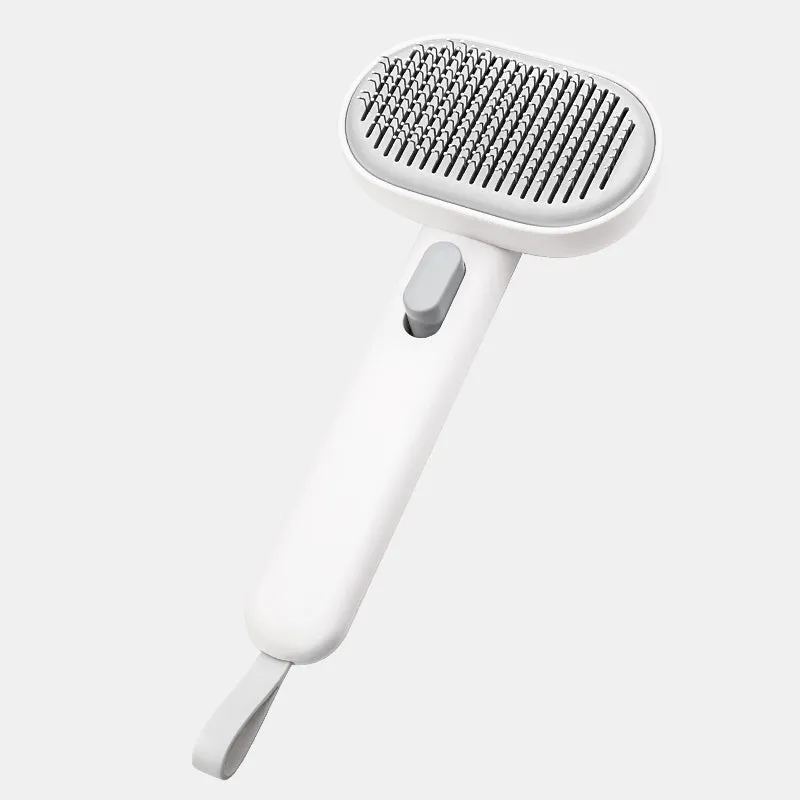
A cat shedding brush usually fails for one of three reasons: you are brushing the wrong layer of the coat, you are brushing in the wrong direction, or the tool is matched to the wrong coat type. Before you buy another cat shedding brush, work through the checks below. Most owners find the fix in ten minutes, not in a new purchase.
Why loose hair keeps sitting on top of the coat
Loose undercoat hair sits below the guard hairs, so a brush has to reach past the topcoat to grab it.
- Only the surface is touched. Short, soft pins stroke the topcoat and press the undercoat down instead of lifting it.
- The direction is wrong. Most tools do their best work with the grain along the body, then short crosswise strokes over dense zones. Dragging backwards over the whole cat just polishes the coat.
- The tool is clogged. A slicker packed with old fur cannot pick up new fur. Same for a rake with hair wrapped around the tines.
- Timing. During a seasonal coat blow, a cat sheds faster than a quick daily pass can keep up with.
If your cat is leaving fur on the sofa an hour after a full session, the tool is not reaching the undercoat. That is a mismatch problem, not a shedding problem.
Match the tool to the coat, starting with short haired cats
Grooming short haired cats is mostly undercoat management. The length on top is short, so the density underneath is what ends up on your furniture.
- American shorthair calico cat: calico is a color pattern, not a breed, so the coat you are dealing with is a dense short double coat. Treat it like any short haired cat: light weekly sessions plus heavier passes in spring and autumn.
- Calico cat coat care: color does not change shedding volume, but white and light patches show loose hair faster, which actually helps you spot build-up early.
- Long haired cats: separate and detangle first, then deshed. Never do both jobs at once with one tool.
- The blackfooted cat: this is a small wild African species, not a domestic pet, and wild cats are not brushed at all. Our shedding tools are for domestic cats only.
Undercoat rake basics: when a rake beats a slicker
An undercoat rake for cats reaches the layer a slicker cannot. Reach for one when:
- Your cat has a visible ruff, thick trousers, or a coat that feels springy to the touch.
- You are mid blowout and pulling loose tufts every day.
- A metal comb stops halfway down the coat, which means packed undercoat.
Work in short, overlapping strokes along the back and flanks, then the chest and belly only if your cat allows it. A rake should glide, not scrape.
Check the brush itself: tines, blade angle, and self cleaning
Before blaming your technique, inspect the tool.
- Pins: bent, missing, or splayed pins stop grabbing hair.
- Blade angle: worn, flattened pins just smooth the coat.
- Self cleaning: the push-button retract mechanism is the difference between a brush you use weekly and one that stays in a drawer because cleaning it is a chore.
The aumuca self cleaning slicker brush is the one we reach for on everyday short haired coats because the retracting pins clear the fur pad in one push. If you want to know what a second tool costs before ordering, check the latest price on the store page first.
Technique fixes that beat buying another brush
- Shorter sessions, more often. Five to ten minutes beats one long marathon your cat merely tolerates.
- Section the coat. Brush in lines the way a groomer does, not in random circles.
- Light pressure. Let the pins find the hair. Pressing harder does not lift more undercoat, it just irritates skin.
- Use the comb test. Run a metal comb through after each pass. If it snags, do another light pass with the rake.
- End on a good note. Stop while your cat is still relaxed, or the next session starts with a hidden cat.
Safe brushing for sensitive skin and older cats
Safe brushing for sensitive skin comes down to skipping anything that looks angry.
- Never brush over scabs, hot spots, rashes, or bald patches.
- Go around the belly and armpits rather than straight through them on thin-skinned or senior cats.
- Stop if the skin reddens or the cat flinches repeatedly. That is information, not stubbornness.
- Softer-pinned tools suit kittens and older cats better than stiff rakes.
Choosing a cat shedding brush that fits your cat
| Tool | Best for | What it lifts |
|---|---|---|
| Slicker brush | Short and medium coats, daily upkeep, finishing | Surface hair and light undercoat |
| Undercoat rake | Double coats, seasonal shedding, packed undercoat | Dense undercoat |
| Moulting or deshedding tool | Heavy shedders, short dense coats, coat blowout | Loose dead undercoat |
Most short haired households need a slicker plus one stronger tool for shedding season. A cat moulting brush covers the seasonal peak, and a heavier deshedding tool handles cats that produce visible tufts. If you are buying both, grab the code first and read the offer terms so you know which items are excluded from offers before applying a code at checkout. Shipping and returns details sit on the same page.
Cleaning and storing the rake
Cleaning and storing the rake takes two minutes and doubles the working life of the tool.
- Flick the fur pad out after every session, before it compacts.
- Wash slicker heads in warm water with a drop of mild soap, then dry pins-down on a towel.
- Keep brushes dry and out of steamy bathrooms. Rusted pins grab nothing.
- Store in a drawer or pouch, not loose in a basket where pins bend.
If a tool is genuinely worn out, replacing it is cheaper than a grooming appointment, and the current Aumuca offer makes a second brush an easy call. Checking code validity takes a minute on the store page, so confirm it before you fill a basket.
 Shopping at Aumuca? See today's verified Aumuca discount code
Frequently asked questions
Why isn't my cat shedding brush catching the undercoat?
Most likely the pins are too short or too soft to reach past the guard hairs, or the tool is clogged with old fur. Clean the brush, then try an undercoat rake on a small section and run a metal comb through afterwards to see whether loose hair is actually coming out.
Can I use a shedding brush on a calico cat with a short coat?
Yes. Calico is a color pattern rather than a breed, so the coat is usually a dense short double coat that responds well to a slicker for upkeep plus a rake during shedding season. Light patches simply make loose hair easier to spot.
How often should I use an undercoat rake for cats with heavy shedding?
During a seasonal blowout, a few short sessions a week is normal, then drop to once a week or less once the coat settles. Stop if the skin reddens or your cat flinches, since pressure is not the same as progress.
Is the aumuca self cleaning slicker brush safe for sensitive skin?
It works well for routine brushing, but go lightly and skip scabs, rashes, and bald patches. For kittens, seniors, or thin-skinned cats, use lighter pressure or a softer-pinned brush and let the cat set the pace.
How do I check a discount code before checkout?
Open the store offer page, read the terms, and note which items are excluded from offers before you fill a basket. Apply the code at checkout and confirm the total changes before paying, since some codes only apply to certain products.