

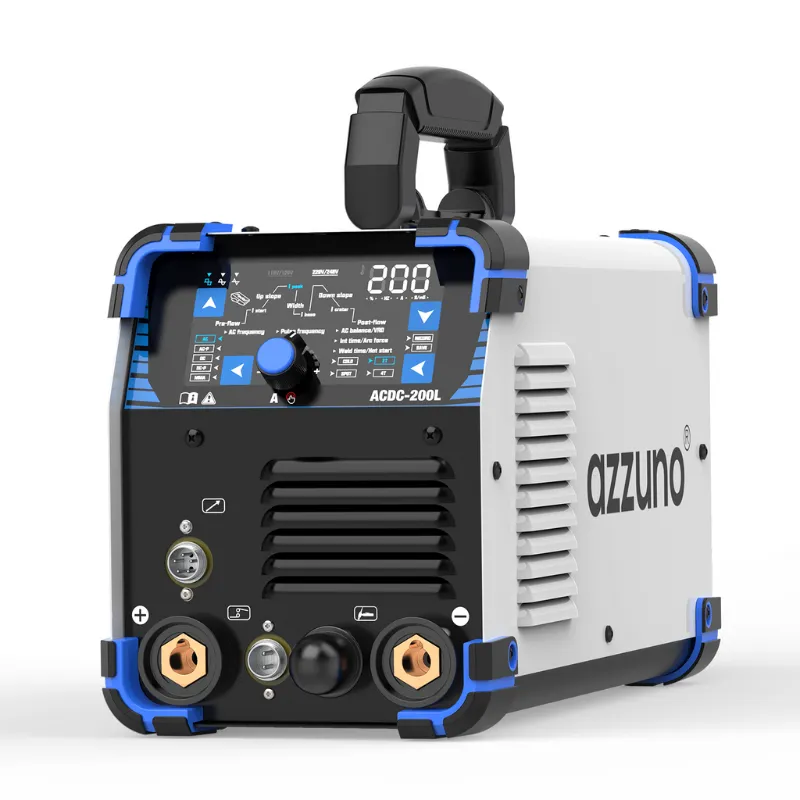
An ac dc tig welder is the right choice if you weld aluminum, thin sheet, or want the cleanest possible beads, while a MIG welder wins for speed, thicker steel, and easier learning. The honest answer for most home and small shops: if your budget only covers one machine and you mostly work on steel, start with MIG; if aluminum and stainless are on your project list, the TIG side of this comparison earns its price.
We run both types on our test bench, including the azzuno welder lineup, so this guide breaks down where each process shines, what each one demands from you, and which one fits the way you actually work.
AC DC TIG Welder vs. MIG: The Core Difference
TIG (tungsten inert gas) uses a non-consumable tungsten electrode and a separate filler rod. MIG uses a continuously fed wire electrode. That single difference drives everything else:
- Heat control. TIG gives you precise amperage control with a foot pedal or torch trigger, which is why it dominates thin materials.
- Speed. MIG lays weld faster because the filler feeds automatically. TIG requires one hand on the torch, one on the rod, and one on the pedal.
- Skill curve. Most welders produce acceptable MIG beads within a few hours of practice. TIG coordination takes weeks to look good.
- Material range. A proper ac dc tig welder switches between DC (steel, stainless) and AC (aluminum), while MIG handles steel and, with the right setup and technique, aluminum.
Comparison at a Glance
| Factor | TIG | MIG |
|---|---|---|
| Learning curve | Steep | Gentle |
| Best materials | Aluminum, stainless, thin steel | Steel, thicker sections |
| Speed on production work | Slow | Fast |
| Bead appearance | Show-quality | Good, spatter-prone |
| Outdoor use | Poor (wind blows shield gas) | Possible with flux core |
| Filler cost | Rods, purchased as needed | Continuous wire spools |
When a TIG Welder Is Worth It
Choose TIG if your projects involve aluminum, thin-gauge sheet, stainless, or anything visible that needs to look clean. The AC half of an ac dc tig welder is what actually welds aluminum: it cycles polarity to break up the oxide layer on the metal surface. Machines without AC can only handle steel and stainless in DC.
TIG also pays off when you need control. Welding 22-gauge auto body panels, thin-walled tubing, or repair work on castings all benefit from the fine heat adjustment.
If you go this route, add a tungsten grinder to your order. Grinding a consistent tungsten tip is one of the easiest ways to improve arc stability and bead quality, and doing it by hand with a regular bench grinder rarely produces a repeatable point. For current pricing on the machine itself, check the latest price before you buy.
When a MIG Welder Fits Better
MIG is the pragmatic choice for fabrication, repair, and general steel work. It is faster, more forgiving, and easier to learn, which matters if you weld occasionally rather than daily.
- Thick material. MIG handles heavier plate without the patience TIG demands.
- Fence, trailer, and automotive frame work. Speed beats bead beauty on structural steel.
- Garage and outdoor projects. A machine running e71t-gs flux cored wire works without a gas bottle, so wind is less of a problem. That wire runs on machines designed for gasless flux core, and it is a cheap way to test whether you like welding at all.
For shops that want one machine doing several jobs, the bilt hard aluminum 250a 6-in-1 igbt mig welder combines multiple processes in a single unit, and a 200 amp mig class machine covers most hobby and light-fabrication steel work with headroom to spare. If you mostly run steel with shielding gas, a dedicated mig welder with gas produces cleaner beads than flux core and is the standard setup for shop work.
Which Process for Aluminum?
This is where the ac dc tig welder pulls ahead. Welding aluminum with MIG is possible but finicky: the wire is soft, feeds poorly through long liners, and spatters more. TIG on AC mode gives you puddle control that makes aluminum joints manageable, even for a newer welder with practice.
If aluminum is your main material, prioritize the TIG side. If aluminum is an occasional job and steel is your daily bread, a capable MIG machine with the right settings and a short liner will get it done.
Machine Features to Check Before Buying
Whichever process you pick, look for these on the spec sheet:
- AC/DC output on TIG machines, with adjustable AC balance and frequency for aluminum.
- Spool gun or aluminum-ready wire feed if you plan to MIG aluminum.
- HF start hand torch for contact-free TIG arc starting, which keeps tungsten contamination down.
- Amperage range that suits your work. Thin sheet needs low-end amperage that actually stays stable at minimum settings.
- Duty cycle matched to how long you weld per session.
Azzuno machines cover most of these bases at hobby-shop prices, and you can grab the code for 5% off all orders before checkout.
Can You Just Buy One Machine That Does Both?
Yes, if you buy a multi-process unit. Machines like the azzuno welder models combine TIG and MIG capability in one chassis, which solves the "which one fits my shop" question for welders who genuinely need both. The trade-offs: multi-process machines cost more than a single-process unit of the same quality, and torch setups differ between processes, so expect to buy separate torches and consumables for each mode.
Our take: a multi-process machine makes sense if you switch between steel fabrication and aluminum work regularly. If you only rarely touch one of the processes, a dedicated single-process machine at that process's price point usually welds better per dollar.
Our Verdict
For a small shop welding steel most of the time, buy MIG. It is faster to learn, faster to run, and cheaper to feed. For a shop chasing aluminum, stainless, or show-quality beads, buy an ac dc tig welder and budget for a tungsten grinder and practice time. And if your answer to "which one" is genuinely "both," a multi-process machine saves bench space and lets you grow into the second process.
Whichever way you lean, check the latest price on the store page, since current offers and the 5% code change, and we keep that page updated rather than quoting numbers that go stale.
 Shopping at Azzuno Tools? See today's verified Azzuno Tools discount code
Frequently asked questions
What does AC mode do on a TIG welder?
AC mode cycles polarity to break up the oxide layer on aluminum so the weld puddle can form. DC mode handles steel and stainless. Without AC, a TIG machine cannot weld aluminum effectively.
Can I weld aluminum with a MIG welder instead of TIG?
Yes, but it is difficult. Aluminum MIG wire is soft and prone to bird-nesting, so you need a spool gun or a very short liner, plus correct settings. TIG on AC gives much better control for aluminum work.
Do I need a tungsten grinder for TIG welding?
It keeps a consistent, sharp tungsten tip, which improves arc stability and bead quality. Hand grinding on a standard bench wheel rarely produces a repeatable point, so a dedicated grinder is a worthwhile add-on for TIG work.
Is flux cored wire a good substitute for MIG with gas?
Yes. Flux core runs without a shielding gas bottle, which makes it more practical outdoors where wind blows gas shielding away. It produces more spatter and slag than gas-shielded MIG, so it is a trade-off.
Which process is easier to learn: TIG or MIG?
Most beginners can lay acceptable MIG beads within a few hours of practice. TIG takes longer because it demands hand, rod, and foot coordination at the same time.
How many amps do I need for a shop MIG welder?
A 200 amp class MIG machine covers most hobby and light fabrication steel work with headroom. For heavy plate or daily production work, a 250a 6-in-1 unit gives more capacity and process flexibility.