

# How to Grind Tungsten Electrodes Properly for Cleaner TIG Arcs
A crisp, stable TIG arc starts long before you strike it. It starts at the tip of your tungsten. A poorly ground electrode sputters, wanders, and contaminates your weld, while a properly sharpened one ignites instantly and holds a tight, focused arc. In this guide, we'll cover exactly how to grind tungsten electrodes for clean, consistent TIG welds — and the tools that make the job faster and more precise.
Why Tungsten Preparation Matters
Tungsten electrodes carry the arc in TIG welding. If the tip is chipped, contaminated, or ground incorrectly, you'll see arc wander, erratic starts, and black soot along the weld bead. A clean, properly sharpened electrode gives you:
- Faster, more reliable arc starting
- A tighter, more focused arc cone
- Better weld penetration and bead appearance
- Longer electrode life between re-sharpenings
If you're just setting up your first rig, pair a quality ac dc tig welder with good tungsten preparation habits — the machine can only perform as well as the electrode feeding it.
Step 1: Choose the Right Tungsten
For most steel and stainless work, 2% lanthanated or 2% ceriated electrodes are excellent all-rounders. Pure tungsten is mostly reserved for older AC machines on aluminum, while thoriated options are less popular today due to radioactivity concerns.
For AC work on aluminum, remember to ball the tip slightly rather than keeping a sharp point.
Step 2: Grind Lengthwise — Always
This is the golden rule of tungsten preparation: grind the point lengthwise, with the grinding lines running along the axis of the rod, never crosswise.
Crosswise grinding marks create tiny ridges that cause electrons to spiral around the tip, leading to arc wander and instability. Lengthwise grind marks guide the arc straight off the tip, producing a stable, focused cone.
A dedicated tungsten grinder takes the guesswork out of this. Unlike a standard bench grinder, a purpose-built tungsten grinder holds the electrode at a consistent angle and rotates it for you, ensuring perfectly lengthwise, repeatable grinds every time.
Step 3: Use the Right Angle
The taper angle affects arc focus and penetration:
- 20–30 degrees (sharper): Best for low-amperage work, thin materials, and AC welding. Gives a tight arc but the tip wears faster.
- 60 degrees or more (blunter): Better for high-amperage DC welding, where a sharper tip would erode quickly and possibly drop into the puddle.
A good rule of thumb: the taper length should be about 2 to 2.5 times the electrode diameter.
Step 4: Use a Dedicated Grinding Wheel
Never use the same wheel for tungsten that you've used on steel or aluminum. Contamination from other metals embeds in the tungsten and ends up in your weld. Keep a dedicated fine-grit wheel — or better yet, use a proper tungsten grinder with diamond wheels designed specifically for tungsten.
Step 5: Finish and Inspect
After grinding:
- Remove any burrs by lightly touching the very tip to the wheel
- Wipe the electrode clean with a lint-free cloth
- Inspect under good light — grind marks should run evenly to the point
- If the tip has ever touched the puddle, re-grind before continuing
AC vs DC Considerations
- DC (steel, stainless): Sharpen to a point, grind lengthwise, 20–30° taper
- AC (aluminum): Grind to a point, then form a small ball by striking the arc briefly on scrap; or use a slightly blunted tip with modern inverter machines
When welding aluminum, make sure your machine can handle it well — a capable ac dc tig welder with high-frequency start will treat your carefully ground tungsten far better than an older transformer unit.
Don't Forget Gas Coverage
Even a perfectly ground tungsten will fail if the shield gas is wrong. Use 100% argon for TIG, check your flow rate (roughly 15–20 CFH), and inspect your cup and collet for cracks. Loose or cracked gas cups cause turbulence that pulls air into the arc — another common cause of contamination.
Where TIG Fits in Your Shop
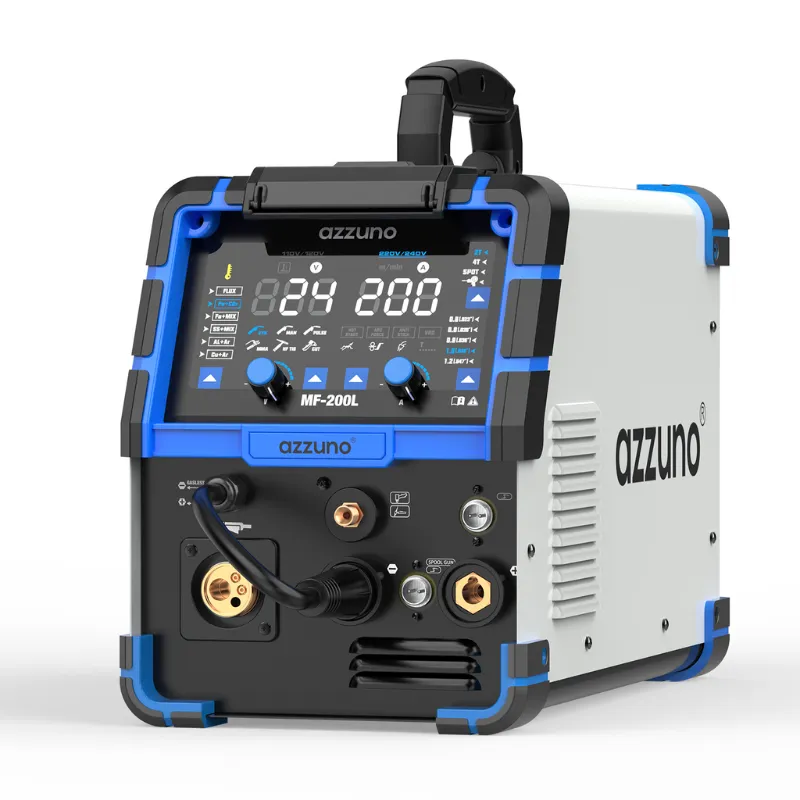
TIG isn't the only game in town. For fabrication and repair work, a mig welder with gas gets you fast, clean welds on steel without the tungsten upkeep. If you want one machine that does it all, a versatile azzuno welder or a multi-process unit like the bilt hard aluminum 250a 6-in-1 igbt mig welder covers MIG, TIG, and stick in one footprint. For heavier steel work, a 200 amp mig with e71t-gs flux cored wire lets you weld outdoors without gas bottles.
That said, when appearance and precision matter — stainless, aluminum, thin material — nothing beats a well-prepared tungsten in a quality TIG torch.
Common Tungsten Grinding Mistakes to Avoid
- Grinding crosswise instead of lengthwise
- Using a contaminated or coarse wheel
- Grinding a needle-sharp point for high-amperage DC work
- Reusing a tungsten after it's touched the weld pool
- Letting the tip overheat and oxidize (it turns colors — grind past the discoloration)
- Applying too much pressure, which overheats the electrode
Quick Tungsten Prep Checklist
- Select the right tungsten type for your metal
- Cut to length with clean cutters
- Grind lengthwise at 20–30° (DC) on a dedicated wheel
- Deburr, wipe, and inspect the tip
- Set correct gas flow and check the cup
- Test start on scrap before committing to the workpiece
Final Thoughts
Tungsten preparation is one of those small habits that separates frustrating, contaminated welds from clean, shiny beads. Invest in a dedicated tungsten grinder, grind lengthwise at the right angle, and keep your electrodes clean — and your TIG arcs will thank you.
Looking to upgrade your welding setup? Check out our current 5% OFF coupon for Azzuno Tools and save on your next machine or accessory.
 Shopping at Azzuno Tools? See today's verified Azzuno Tools discount code
Frequently asked questions
Which way should you grind a tungsten electrode?
Grind the tungsten lengthwise, with the grinding marks running along the axis of the rod, at a taper angle of roughly 20–30 degrees for most DC work. Never grind crosswise — crosswise marks cause arc wander and instability.
Can I use a regular bench grinder for tungsten?
Not recommended. A dedicated tungsten grinder holds a consistent angle and uses clean diamond wheels designed for tungsten. A bench grinder works in a pinch, but the wheel must be dedicated to tungsten only and fine enough to avoid contamination and rough edges.
Should I ball the tungsten tip for aluminum welding?
For DC welding on steel and stainless, keep a sharp 20–30° point. For AC welding on aluminum with older machines, form a small ball on the tip; modern inverter AC machines can work well with a slightly blunted point instead.
How do I know when to re-grind my tungsten?
Arc wander, erratic arc starting, sputtering, and black soot or contamination along the weld bead are all signs the tungsten needs re-grinding. If the tip has touched the weld pool, always re-grind before continuing.
Is a dedicated tungsten grinder worth it?
A tungsten grinder is a small investment that pays off in consistency — every tip is ground at the same angle, lengthwise, with a clean diamond wheel. For anyone doing regular TIG work, it's one of the most worthwhile shop upgrades.