
Do Barefoot Dress Shoes and Loafers Provide Enough Support for Work?

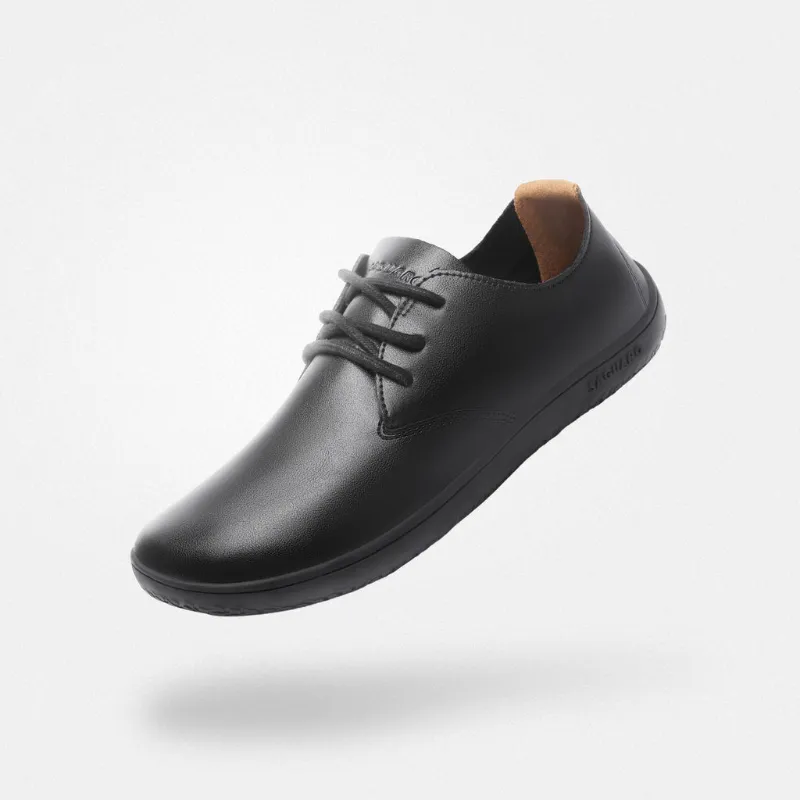
Do Barefoot Dress Shoes and Loafers Provide Enough Support for Work?
Barefoot dress shoes support your feet by letting natural biomechanics do the work instead of relying on cushioned arches and elevated heels. The zero-drop platform encourages proper posture and strengthens foot muscles over a transition period, making them suitable for office environments once your feet adapt. We tested barefoot loafers and barefoot dress shoes across standing desks, client meetings, and daily commutes to see how they hold up in professional settings.
How Zero-Drop Design Changes the Support Equation
Traditional dress shoes prop your heel 10 to 15 mm above your toes, shortening your Achilles tendon and shifting weight forward. Zero-drop barefoot dress shoes for men and women place heel and forefoot at the same height, distributing your body weight evenly across the entire foot.
This flat geometry activates stabilizer muscles in your arches, ankles, and calves. During the first two to four weeks, you may notice fatigue in these underused muscles—that sensation is your foot relearning its natural support role. Start with half-days at work and alternate with conventional shoes until the discomfort fades.
The wide toe box in quality barefoot shoes allows your toes to splay and grip the ground, creating a stable base without external arch props. For current pricing on office-ready options, check our discount code page before you buy.
What Support Actually Means in Barefoot Footwear
Support in barefoot dress shoes comes from four design elements working together:
- Flexible sole – Thin soles (4 to 8 mm) let your foot sense the ground and adjust balance in real time, engaging stabilizer muscles that cushioned shoes suppress
- Zero drop – Level heel-to-toe platform maintains natural spinal alignment and prevents the forward lean that causes lower-back strain
- - Wide toe box – Room for toe splay distributes impact forces across metatarsal heads instead of cramming them into a narrow point
- Minimal cushioning – Firm midsoles provide ground feedback, training proprioception and building arch strength over weeks of wear
If you need immediate arch support due to injury or plantar fasciitis, transition gradually or consult a specialist. Research on minimalist footwear shows that healthy feet adapt within eight to twelve weeks, but rushing the process risks overuse injuries.
Best Barefoot Dress Shoes for Office and Professional Wear
We evaluated barefoot dress shoes and loafers against three criteria: professional appearance, all-day wearability, and true barefoot geometry. Here's how the top options compare.
| Feature | Barefoot Loafers | Barefoot Dress Shoes | Zero Drop Boots |
|---|---|---|---|
| Formality | Business casual | Full business attire | Casual to smart-casual |
| Sole thickness | 5–6 mm | 6–8 mm | 8–10 mm |
| Break-in period | 1–2 weeks | 2–3 weeks | 3–4 weeks |
Barefoot loafers work for offices with relaxed dress codes and pair well with chinos or dark jeans. Their slip-on design and leather or vegan-leather uppers look polished enough for internal meetings but skip the rigid structure of lace-up oxfords.
For client-facing roles or conservative workplaces, barefoot dress shoes offer lace-up styling that matches traditional business attire. Look for models with a leather upper and rounded toe that reads as dressy despite the wider footprint.
Zero drop boots bridge the gap when your office allows smart-casual footwear or you need ankle support during winter commutes. They pair with tailored trousers and provide more coverage than low-cut oxfords.
Explore fit and pricing options to find the silhouette that matches your workplace dress code.
Transitioning from Traditional Dress Shoes to Barefoot Styles
Switching to barefoot dress shoes requires a deliberate adaptation plan to avoid soreness and injury. Your feet have likely spent years in elevated, cushioned shoes that weakened intrinsic foot muscles.
Week 1–2: Wear barefoot loafers or dress shoes for two to three hours per workday, then switch back to your regular shoes. Focus on low-impact activities like desk work rather than standing presentations.
Week 3–4: Extend wear time to half the workday. Walk short distances and notice how your gait changes—you'll likely land more on your midfoot instead of heel-striking.
Week 5–8: Transition to full-day wear, adding standing meetings and longer walks. If you experience sharp pain (not general muscle fatigue), scale back and rest.
Pairing barefoot dress shoes with women's barefoot shoes for weekends or yoga shoes for exercise accelerates the strengthening process by giving your feet varied barefoot stimulus outside the office.
According to reviews from barefoot communities, most users report full adaptation within two to three months, after which conventional shoes feel restrictive and uncomfortable.
Who Should (and Shouldn't) Wear Barefoot Dress Shoes for Work
Barefoot dress shoes suit professionals who spend their workday moving between sitting, standing, and walking. They excel when you need:
- All-day comfort without pressure points or toe pinching
- Improved posture and reduced lower-back strain during long desk sessions
- Lightweight, packable footwear for business travel
- A minimalist aesthetic that pairs with modern or casual business attire
They're less ideal if you require steel-toe protection, work on concrete for eight-hour shifts without break, or have a workplace dress code that mandates traditional dress shoe silhouettes with pointed toes.
People recovering from foot surgery, severe plantar fasciitis, or Achilles tendonitis should consult a podiatrist before making the switch. Barefoot footwear strengthens healthy feet but can aggravate acute injuries if introduced too quickly.
For versatile barefoot options beyond the office, consider breeze shoes for casual Fridays or water shoes if your commute involves unpredictable weather. Grab the latest discount code to test a pair risk-free with the retailer's return policy.
Materials and Durability in Professional Barefoot Footwear
The best barefoot dress shoes for men and women use full-grain leather or high-quality synthetic uppers that resist creasing and maintain shape through daily wear. Cheaper models often substitute thin, plasticky materials that crack within months.
Look for Goodyear-welted or stitched construction rather than glued soles—this extends lifespan and allows for resoling. A 5 to 6 mm rubber outsole with light texture provides grip on polished floors without the clunky tread of hiking boots.
Breathable linings (leather, canvas, or moisture-wicking mesh) prevent the sweat buildup common in non-breathable dress shoes. Some barefoot loafers add removable insoles; pull them out immediately to preserve ground feel and zero-drop geometry.
With proper rotation (avoid wearing the same pair daily) and basic care (wipe down, condition leather quarterly), quality barefoot dress shoes last eighteen months to three years of office use—comparable to conventional dress shoes and often more comfortable throughout their lifespan.
Frequently asked questions
Can I wear barefoot dress shoes all day at the office immediately?
No, you need a transition period of two to eight weeks. Start with a few hours per day and gradually increase wear time as your foot muscles strengthen and adapt to the zero-drop platform.
Do barefoot loafers look professional enough for business attire?
Barefoot loafers work well for business casual and smart-casual dress codes. For formal business attire or client-facing roles, lace-up barefoot dress shoes offer a more traditional silhouette.
Will barefoot dress shoes help with lower back pain from standing at work?
Many users report reduced lower-back strain after the transition period because zero-drop design promotes natural spinal alignment. However, results vary, and acute pain requires medical evaluation.
How do I know if barefoot dress shoes fit correctly?
Your toes should have room to spread naturally without touching the front or sides of the shoe. The heel should stay in place without slipping, and you should feel the ground through the thin sole.
Are barefoot dress shoes for women different from men's styles?
The core design principles—wide toe box, zero drop, thin sole—remain the same. Women's barefoot dress shoes often come in narrower width options and different aesthetic details, but the biomechanical benefits are identical.
Can I add arch support insoles to barefoot dress shoes?
Adding traditional arch support defeats the purpose of barefoot footwear, which strengthens your arches through natural engagement. If you need support due to injury, transition more slowly or consult a specialist first.