
Best Ways to Store and Protect Your Leather Gun Case and Holsters

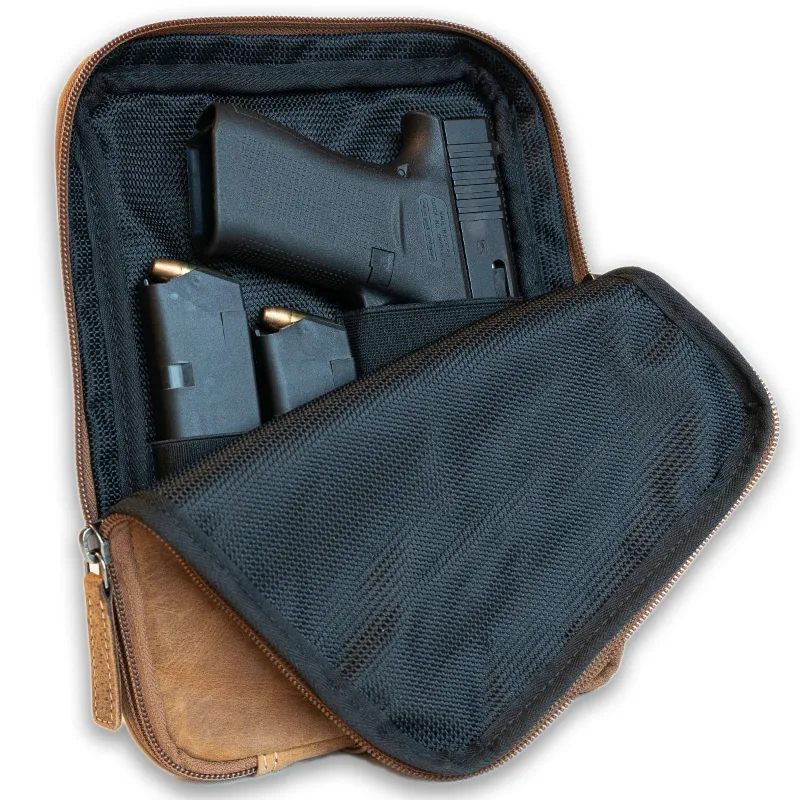
A leather gun case lasts decades if you store it in a cool, dry spot, clean it after use, and condition the leather a few times a year. Holsters need the same basic routine, plus a little extra attention to the inside where moisture and oil from your firearm collect. Below is the exact routine we use on our own range leather and carry gear.
Why Leather Gun Case Care Is Different From Other Bags
Leather is skin. It breathes, absorbs moisture, and dries out when the natural oils are gone. A nylon range bag can be tossed in a closet and forgotten; a leather gun case will crack, stiffen, or grow mold if you do that.
The main threats to your case and holsters are:
- Humidity – causes mold and mildew on the grain and lining
- Dry heat – pulls out the oils and leads to cracking
- Firearm residue and oil – stains and slowly degrades the finish
- Pressure and creasing – heavy items stacked on top deform the shape
- Direct sunlight – fades and dries the leather unevenly
None of this is hard to prevent. It is a routine, not a rescue mission.
How to Store a Leather Gun Case the Right Way
Storage is where most of the damage happens, usually while the case is doing nothing. Follow these rules:
- Empty and dry it first. Never store a case with a damp towel, spent brass, or a freshly cleaned (still wet) firearm inside. Let everything air dry for a few hours first.
- Choose the room, not the garage. Basements, garages, and attics swing between humid and bone dry. A closet in a climate-controlled room is ideal.
- Stuff it lightly. Fill the main compartment with acid-free tissue paper or a soft cotton cloth so the case holds its shape without stretching the seams.
- Use a breathable cover. Cotton or a fabric dust bag, never plastic. Plastic traps moisture and invites mildew.
- Keep it off the floor and out of the sun. A shelf away from a window and away from direct heat vents is perfect.
- Crack it open now and then. Open the case every few weeks so air can move through. A zipped-up case in a humid spell is a mold incubator.
If you carry daily, a dedicated concealed carry purse or a concealed carry bag deserves the same treatment overnight: unload, wipe out, and let it rest open on a shelf rather than slumped on a hook.
Cleaning Your Case and Holsters After the Range
Range sessions leave powder residue, lead dust, and gun oil on everything. A quick clean after each trip keeps buildup from setting in.
- Wipe the exterior with a barely damp microfiber cloth. No soaking.
- Use a soft brush (an old toothbrush works) around stitching, zippers, and holster molds.
- For the inside, brush out debris, then wipe with a cloth lightly dampened with water only. Skip soap unless you have a genuine stain, and if you use any cleaner, test it on a hidden spot first.
- Let everything air dry at room temperature. Never use a hair dryer, heater vent, or direct sun to speed it up. Fast heat is what turns supple leather into cardboard.
Conditioning: The Step Everyone Skips
Cleaning removes dirt, but conditioning replaces the oils that keep leather flexible. Do this every two to three months for gear in regular rotation, or twice a year for cases that mostly sit on a shelf.
Our routine:
- Make sure the leather is clean and completely dry.
- Apply a small amount of a quality leather conditioner with a soft cloth, working in thin circles. Thin coats beat one heavy glop every time.
- Let it absorb for the time the product recommends, then buff off the excess with a clean cloth.
- For holsters, condition the outside generously and the inside lightly. A soaked interior can soften the mold and change how your firearm fits, and heavy conditioner can transfer to the gun's finish.
Test any conditioner on a small hidden area first, especially on darker leather or anything with a coated finish.
Holster Storage and Shape Care
Holsters are molded to fit a specific firearm, and that shape is the whole point. To protect it:
- Store holsters with a shape holder inside. A wrapped dowel, a wooden spoon handle, or the actual (unloaded) firearm for a short stretch keeps the mold true. For long-term storage, use a form rather than a live gun sitting in leather.
- Never stack heavy gear on top of holsters. Pressure flattens the mouth and ruins retention.
- Keep holsters out of the car. A closed vehicle in summer heat bakes the oils out and can warp the mold; winter cold makes leather brittle. Bring your carry gear inside.
- Rotate your carry rotation. If you rotate between a lady conceal hailey crossbody with concealed carry and a leather crossbody purse, let each one rest a day between uses. Leather recovers better with a break.
Quick Comparison: Storage Do's and Don'ts
| Do | Don't |
|---|---|
| Store in a cool, dry closet | Leave it in a garage, attic, or car |
| Use a breathable cotton dust bag | Seal it in plastic |
| Stuff lightly with tissue to hold shape | Stack heavy gear on top |
| Condition every 2-3 months | Use silicone-heavy or petroleum products |
| Air dry at room temperature | Blow-dry or sun-dry wet leather |
How This Fits Your Everyday Carry Gear
The same habits that protect a range case protect everything else you carry. If you keep your essentials in one of our tested leather purses or prefer the slim profile of a money clip wallet, wiping them down and conditioning a few times a year keeps the grain healthy for the long haul. The same goes for crossbody purses for women, full grain leather wallets, and anything else in your daily rotation.
Full grain leather actually improves with this kind of care. It develops a patina instead of wearing out, which is why we keep recommending it over coated or bonded leather that just peels after a couple of seasons.
Where to Buy and Save on UC Leather Gear
Everything we mention here, from range leather to everyday carry pieces, comes from UC Leather Company, and their gear holds up to exactly the routine above. Before you order, check our UC Leather Company discount code page for the current 10% off offer on all orders. It stacks on whatever you buy, whether that is a single holster or a full carry setup, and it is the easiest way to grab the code before checkout.
The Bottom Line
Store your leather gun case empty, dry, stuffed lightly, and covered in breathable fabric in a climate-controlled room. Clean after every range trip, condition a few times a year, and never let heat or sunlight do the drying. Do that, and your case and holsters will outlast the firearms inside them.
Frequently asked questions
Can I store my leather gun case in a plastic bag?
Never. Plastic traps moisture against the leather and leads to mildew, especially in humid climates. Use a breathable cotton dust bag or a pillowcase instead, and open the case every few weeks to let air circulate.
How often should I condition my leather holsters?
Two to three times a year is the standard for gear in regular rotation, and once or twice a year for cases that mostly sit in storage. Always clean first, condition in thin coats, and test on a hidden spot.
What is the best way to store a leather gun case long term?
Keep it lightly stuffed with acid-free tissue paper to hold its shape, wrapped in a breathable cover, and stored on a shelf away from heat vents and direct sunlight. Avoid garages, attics, and cars.
My leather case got wet at the range. Can I dry it with a hair dryer?
Never apply direct heat. Wipe off excess moisture, blot with a dry cloth, and let it air dry at room temperature away from vents and sunlight. Heat drives out the natural oils and causes cracking.
Should I condition the inside of my holster?
No. A heavy coat of conditioner inside a molded holster can soften the mold, loosen retention, and transfer to your firearm's finish. Condition the outside generously and the interior only lightly.
Does a concealed carry purse need different care than a range case?
Yes. A daily carry bag needs more frequent wiping and conditioning because of body oils, friction, and weather exposure. Rotate bags when you can and let each one rest open on a shelf overnight.