
Boat Seat vs Boat Chair: Which Style Lasts Longer on a Fishing Boat?

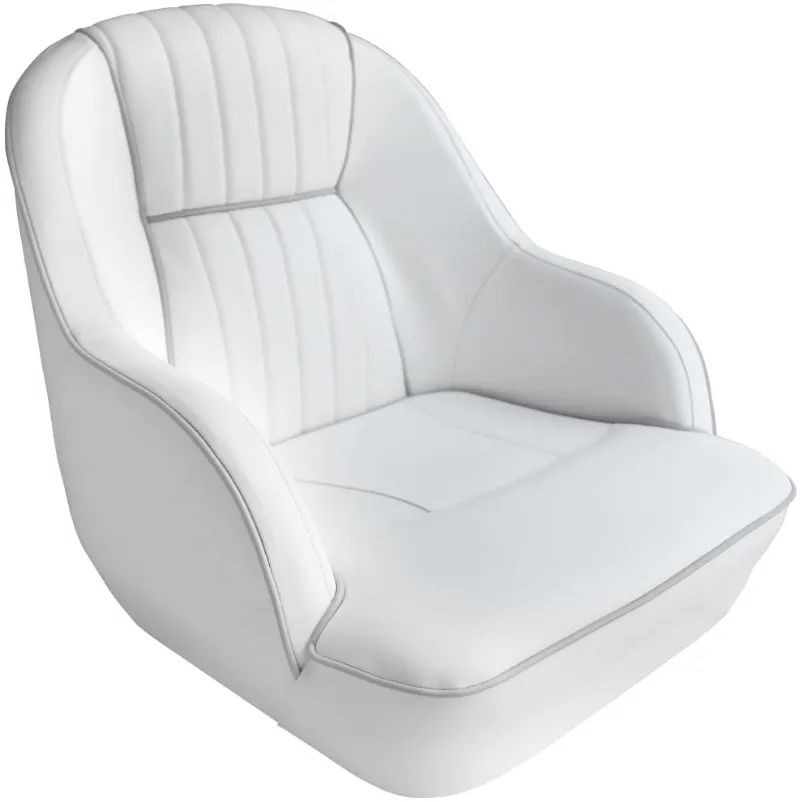
A low-back, fixed-mount boat seat generally outlasts a folding chair-style seat on a fishing boat, because it has fewer hinges to rust, a solid compression-molded base, and less fabric flexing at the seams. Folding boat chairs fail first at the folding frame and hinge points, especially in saltwater use. That said, the right choice depends on how your boat is set up and how often you fish. Here is how the two styles actually compare over years of hard use.
Why Longevity Depends on the Frame, Not Just the Fabric
Most buyers compare padding thickness and vinyl color, but what kills a seat early is almost always structural:
- Hinges and folding mechanisms. Every fold flexes the frame. Once a rivet or hinge pin loosens, water gets inside and corrosion spreads fast.
- Seat plate and mounting points. A seat mounted to a pedestal or a bench base takes impact from wakes. Thin seat plates crack at the screw holes.
- Seam stress. A fixed seat keeps foam and vinyl in one position, so seams do not open from repeated folding pressure.
- UV exposure. Both styles fade, but a folding chair left stowed on deck often sits in a different sun angle and degrades unevenly.
A quality fixed boat seat avoids most of these failure points. Brands like Wise built their reputation on rotocast and compression-molded plastic bases that never absorb water, which is a big part of why a fixed seat outlives a folding chair on the same boat. You can see the style of construction we mean over at wise seating, where the frame materials are explained in detail.
Boat Seat vs Boat Chair: Side-by-Side Comparison
| Feature | Fixed Boat Seat | Folding Boat Chair |
|---|---|---|
| Frame | Solid molded base, no hinges | Fold-flat frame with hinge points |
| Saltwater durability | Very good | Weaker at hinges and pins |
| Comfort for long trips | Better padding and back support | Thinner padding, more upright |
| Storage | Needs a permanent mount | Folds and stows away |
| Typical failure point | Vinyl wear and sun fading | Hinge rivets and frame flex |
If you fish weekly and store the boat in a slip, a fixed seat wins on longevity. If you need to clear the deck between trips or haul the boat on a trailer with limited space, a folding chair is a fair trade as long as you rinse and dry it.
Which Style Suits Your Fishing Boat
Matching the seat style to your boat setup matters more than brand. Here is the quick guide:
- V-hull or center console with a pedestal: Go fixed. A boat seat bolted to a pedestal is the standard for offshore and lake fishing, and pedestals let you set seat height for casting. There are good background reads on seat mounting options, like this one on a movable seat base.
- Jon boats and small skiffs: A bench setup is common. Dedicated [boat seats bench](#) style mounts bolt straight to the bench across the stern, and fixed bench seats hold up well because nothing folds.
- Inflatable or kayak-style rigs: Folding is the practical choice since you cannot mount a pedestal. Just accept the shorter lifespan and store it indoors.
- Bow rider or deck boat: Fixed helm seats plus one or two folding seats for passengers is the usual mix.
If you are doing a full refresh, a [boat seat replacement](#) job is also the moment to add cushioned steering wheel covers car style grips at the helm, since the wheel wears out right alongside the seats.
Materials That Actually Last
Whatever style you choose, the material spec matters more than the sticker:
- Compression-molded or rotocast plastic base. Never absorbs water, unlike plywood-backed budget seats.
- Marine-grade vinyl with UV inhibitors. Cheap vinyl cracks in two seasons of full sun; marine-grade holds color far longer.
- Stainless or plated mounting hardware. Stock screws are usually the first thing to rust. Swap them out on day one.
- High-density foam. Low-density foam flattens in one season and makes even a new seat feel old.
Protecting Your Investment
A seat lasting five years instead of three usually comes down to habits:
- Rinse with fresh water after every saltwater trip. Salt in the hinges is the number one chair killer.
- Cover or stow seats when not in use. We use the same covers philosophy across everything we own, from truck cover and camper cover products to a simple boat seat cover. If you also protect your tow vehicle with seat covers for trucks or shield an RV with rv covers, you already know covered gear lasts dramatically longer.
- Check mounting hardware each season. A loose pedestal bolt will crack a seat plate fast.
- Condition vinyl a couple of times a year. A marine vinyl protectant keeps it supple and slows cracking.
Sizing and Fit Before You Buy
Before ordering, measure three things:
- Bolt pattern. Most fixed seats use a standard pattern, but a [boat seats with pedestal](#) purchase needs matching spacing. Measure hole to hole.
- Pedestal height. Sit at your helm position and measure from floor to the top of your thigh. The pedestal plus seat cushion should put your knees slightly below your hips.
- Deck clearance. A tall fixed seat needs headroom under a console or t-top. Folding seats flex on this because they drop flat for storage.
Our pick for most fishing boats is a mid-back fixed seat on a height-adjustable pedestal. It gives the support that matters during a long day of trolling and avoids the hinge failure that shortens a folding chair's life. Leader Accessories' boat seats are a solid value in this category, and you can check the latest price or grab the code on our coupon page before you order. The store runs a 10% off sitewide offer, which stacks nicely if you are buying two seats and pedestals at once.
Where to Buy and What We Recommend
We test seats on a 17-foot center console through a full season of lake fishing before we recommend anything. The short version: pick a fixed boat seat if your boat can take a pedestal, buy marine-grade materials even if it costs a bit more, and cover the seats between trips. Browse the boat category at Boat Seats < Marine to compare styles side by side, then use our discount code at checkout. A little planning up front is what separates a seat that lasts a decade from one you replace every other season.
Frequently asked questions
Is a fixed boat seat really more durable than a folding boat chair?
For weekly fishing, yes. A fixed seat has no folding hinges to rust or rivets to loosen, so it holds up far longer in saltwater and sun. Folding chairs make sense only when you need to stow the seat or cannot mount a pedestal.
What should I look for when buying a boat seat replacement?
Start with a compression-molded or rotocast plastic base, marine-grade vinyl with UV protection, and stainless mounting hardware. Avoid plywood-backed seats, since the wood absorbs water and delaminates.
Can I mount a boat seat with a pedestal on a jon boat?
Check that your deck can take a pedestal mount, confirm the bolt pattern matches the seat, and make sure there is enough headroom under any console or top. Measure from the floor to the top of your thigh at the helm to pick pedestal height.
How do I make my boat seats last longer?
Rinse with fresh water after every saltwater trip, keep them covered or stowed out of direct sun, and apply a marine vinyl protectant a few times a year. Salt in hinges and UV damage to vinyl are the two biggest lifespan killers.
Do all boat seats fit the same pedestal?
Fixed seats usually have a standard mounting pattern that works with most pedestals, but you should measure hole to hole before ordering. If you are buying both the seat and pedestal together, matching sets remove the guesswork.
Are folding boat chairs fine for inflatable boats and kayaks?
Folding seats on inflatables are often mounted with track or strap systems instead of pedestals, so check that the chair you buy supports your mounting style. Keep in mind that folding mechanisms will wear faster than a fixed mount.