
Bone Conduction Headphones vs Traditional Earbuds for Cycling: Which Stay Secure?

Bone Conducting Headphones vs Traditional Earbuds for Cycling: Which Stay Secure?
Bone conducting headphones stay more secure during cycling because they rest on your cheekbones with a wrap-around band rather than inserting into your ear canal, eliminating the fit issues and sweat-induced slippage that plague traditional earbuds. For cyclists who ride in traffic or on shared paths, bone conducting headphones also keep your ears completely open to hear approaching vehicles, pedestrians, and warning signals.
We tested both styles across dozens of rides in varied conditions to help you choose the right audio solution for your cycling needs.
How Do Bone Conduction Headphones Work During Rides?
Unlike traditional earbuds that send sound waves through your ear canal, conduction headphones transmit audio vibrations directly through your cheekbones to your inner ear. This leaves your ear canals completely open, which matters for two key reasons on a bike:
- Situational awareness: you hear traffic, other cyclists calling out passes, car horns, and emergency vehicle sirens without removing your audio device
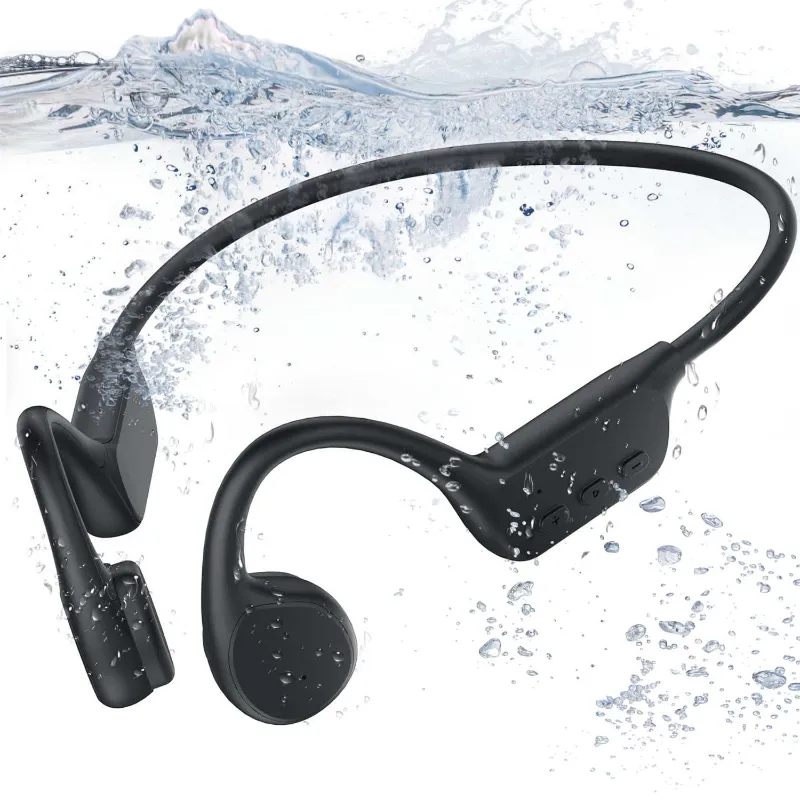
- Stable fit: the wraparound titanium band hooks behind your ears and rests transducers on your temples, creating three points of contact that resist bouncing and movement
- No ear canal pressure: sweat, humidity, and elevation changes won't affect the seal or cause discomfort during long rides
The technology works by converting electrical signals into mechanical vibrations. When the audio driver vibrates against your cheekbone, those vibrations travel through bone directly to your cochlea, bypassing your eardrum entirely. Brands like Shokz pioneered the category for athletes, and reviews from sources like The New York Times Wirecutter consistently highlight fit stability as a top advantage.
Security and Fit: Why Traditional Earbuds Slip
Traditional earbuds rely entirely on the shape of your ear canal to stay in place. During cycling, three forces work against them:
- Vibration: road chatter, especially on gravel or rough pavement, gradually loosens silicone or foam tips
- Sweat: moisture reduces friction between the tip and your skin, causing the bud to migrate or fall out
- Head movement: checking over your shoulder, looking down at your bike computer, or adjusting your helmet can dislodge an earbud
Even "sport" earbuds with wing tips or ear hooks require you to fiddle with them mid-ride. If one falls out while you're clipped in at a stoplight or navigating traffic, retrieving it becomes a safety hazard.
Many cyclists resort to wearing only one earbud to maintain some awareness, which defeats the purpose of stereo audio and still leaves you managing a loose device.
Best Bone Conduction Headphones for Cycling Stability
When evaluating models for ride security, we prioritize band tension, weight distribution, and waterproof headphones ratings to handle sweat and sudden rain. Here's what performs best:
| Feature | Bone Conduction | Traditional Earbuds |
|---|---|---|
| Secure fit on rough terrain | Wraparound band, 3-point contact | Relies on ear canal shape |
| Situational awareness | Ears fully open | Sealed or partially blocked |
| Sweat resistance | No ear canal seal to compromise | Tips loosen when wet |
| Adjustment mid-ride | Rarely needed | Frequent repositioning |
For cyclists who also swim or cross-train, models like swimming headphones with IP68 ratings handle full submersion, and options with built-in storage such as the swimbuds bone conduction 2 wearable mp3 player let you leave your phone at home on solo training rides.
If you need crisp call quality for group ride coordination, look for bone conduction headphones with mic features. The open-ear design means wind noise can be an issue above 20 mph, but dedicated noise reduction processing on higher-end models mitigates this.
Check current pricing and grab our discount code to save 15% on Naenka Tech models engineered specifically for endurance athletes.
Are Bone Conduction Headphones Safe for Road Cycling?
Yes, and they're often safer than traditional earbuds because they preserve your ability to hear ambient sound. Many jurisdictions legally require cyclists to maintain auditory awareness, and sealed earbuds can violate those laws. Bone induction earphones meet the letter and spirit of these regulations.
Bone conduction headphones side effects are minimal for most users. A small percentage report mild tickling sensations on the cheekbones during the first few rides as they adapt to the vibration, but this typically fades within a week. There's no evidence of hearing damage when used at reasonable volumes, since the technology bypasses the eardrum entirely. If you have specific concerns, consult an audiologist, but the consensus from sports medicine professionals is that the situational awareness benefit outweighs any theoretical risks.
For urban commuters and road cyclists riding in traffic, the ability to hear a car approaching from behind or a pedestrian stepping into the bike lane is a decisive safety advantage. Reviews from RTINGS consistently rate awareness as the top reason cyclists choose bone conduction over sealed alternatives.
When Traditional Earbuds Make Sense for Cyclists
Traditional earbuds aren't universally inferior. If you ride exclusively on closed courses, indoor trainers, or car-free trails where situational awareness is less critical, sealed earbuds deliver richer bass response and better noise reduction for immersive music or podcast listening. Models with low latency codecs also provide tighter audio-video sync if you're watching training videos on Zwift or TrainerRoad.
Some cyclists prefer the passive noise isolation of traditional buds on long, monotonous stretches where external sound becomes fatiguing rather than helpful. In those scenarios, a well-fitting pair with multiple tip sizes and secure wing stabilizers can stay in place reasonably well.
However, even the best traditional earbuds require more mid-ride adjustment than a bone conduction wraparound band, and you'll always sacrifice some awareness. If you decide traditional buds suit your specific use case, invest in a model with an IP rating of at least IPX4 to handle sweat, and carry the charging case in a jersey pocket since battery life in true wireless buds rarely exceeds six hours.
Our Recommendation: Prioritize Fit Security and Awareness
For the majority of cyclists riding on roads, bike paths, or mixed-use trails, bone conducting headphones deliver unmatched security and safety. The wraparound band stays put through climbs, descents, and rough pavement without the constant repositioning that traditional earbuds demand. You'll hear cars, other riders, and environmental cues that matter for safe navigation, and you'll never face the frustration of an earbud falling out mid-interval.
If you cross-train with running or swimming, the same pair of waterproof headphones works across all three disciplines without compromising fit or sound quality. We've found that versatility especially valuable for triathletes and multi-sport athletes who want one reliable audio solution.
Visit our Naenka Tech discount page to see the latest models and save 15% on your order. Whether you're commuting, training, or racing, the right headphones stay secure so you can focus on the ride.
Frequently asked questions
Do bone conducting headphones fall off when cycling on bumpy roads?
No, bone conducting headphones use a wraparound titanium band that hooks behind your ears and rests on your cheekbones, creating three points of secure contact that resist bouncing even on gravel or rough pavement. Traditional earbuds are far more likely to slip or fall out under the same conditions.
Can I hear traffic clearly while wearing bone conduction headphones?
Yes, bone conduction headphones leave your ear canals completely open, allowing you to hear approaching vehicles, pedestrians, and warning signals at full volume. This makes them significantly safer than sealed earbuds for road cycling and urban commuting.
Are bone conduction headphones safe for daily cycling?
Yes, bone conduction technology is safe for daily use and may actually be safer than traditional earbuds because it preserves situational awareness. The vibrations bypass your eardrum entirely, and there's no evidence of hearing damage at normal listening volumes.
Will sweat make bone conduction headphones slip during long rides?
No, bone conduction headphones don't rely on an ear canal seal, so sweat doesn't affect their fit. Look for models with IPX7 or IP68 waterproof ratings to ensure full protection during intense rides or in rain.
Which headphones are better for cycling with a helmet?
Bone conduction headphones fit better under helmets because they rest on your cheekbones rather than protruding from your ears. The thin wraparound band tucks behind your ears without interfering with helmet straps, while traditional earbuds can create pressure points.
Can bone conduction headphones connect to my bike computer for navigation prompts?
Yes, most bone conduction headphones connect via Bluetooth to bike computers, smartphones, and GPS devices. Models with multipoint pairing can stay connected to both your phone and bike computer simultaneously, letting you hear turn-by-turn directions without missing calls.