
Can You Take Your iPhone Underwater? What You Need to Know Before Your Next Swim

# Can You Take Your iPhone Underwater? What You Need to Know Before Your Next Swim
Short answer: not with the iPhone alone — but with the right gear, absolutely. Apple rates recent iPhones (iPhone 7 and later) as IP68 water resistant, which sounds impressive but comes with big asterisks. Water *resistance* is not the same as being *waterproof*, and the distinction matters a lot the moment you start swimming, snorkeling, or diving with your phone.
In this guide, we'll break down what your iPhone can and can't handle in the water, what Apple's rating actually covers, and how to safely capture underwater photos and videos using a dedicated case underwater iphone setup.
What Does Apple's Water Resistance Rating Actually Mean?
Modern iPhones carry an IP68 rating, which means they can theoretically survive submersion in fresh water up to a certain depth for a limited time — roughly 6 meters for 30 minutes for the newest models. But there are critical caveats:
- It's tested in a lab, not in real life. Apple's tests use still, room-temperature fresh water. Ocean salt water, chlorine, sunscreen, and moving water all push your phone beyond its tested limits.
- Water resistance degrades over time. Seals wear down as your phone ages. A two-year-old iPhone is not as protected as a brand-new one.
- Apple's warranty doesn't cover water damage. If your phone floods, you're likely paying out of pocket for a repair or replacement.
The bottom line: your iPhone can probably survive an accidental splash or a quick dunk. It is *not* designed to be taken swimming, snorkeling, or diving — even in shallow water.
Why Touchscreens Stop Working Underwater
Even if your phone survived the water, there's another problem: capacitive touchscreens don't respond to wet fingers or underwater pressure. You can't tap, swipe, or launch the camera once you're submerged. That means without a case, you can't even open the camera app before you go under.
This is exactly why dedicated underwater cases exist. A purpose-built case underwater iphone solution gives you physical buttons or mechanical controls that work even when the touchscreen gives up.
What About Ocean and Pool Water Specifically?
Salt water is the worst offender. It's corrosive, it conducts electricity, and it seeps into ports and speaker grilles far more easily than fresh water. Even if your phone survives a swim in the sea, lingering salt residue can cause long-term damage.
Chlorinated pool water is less corrosive but still an issue — chlorine degrades rubber seals over time and can find its way into any gap.
If your phone ever does take an unplunched plunge, rinse it gently with fresh water, dry it thoroughly, and power it off. Don't charge it until it's completely dry.
The Safe Way to Take Your iPhone Underwater
If you want to shoot underwater — at the pool, the beach, or while snorkeling — you need a case that's actually rated for it. Here's what to look for:
1. A Certified Waterproof Phone Case
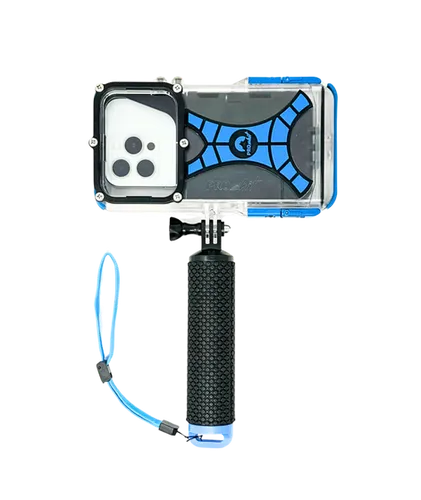
A proper best waterproof phone case is rated for specific depths (usually 15 meters or more) and sealed against salt water, chlorine, and sand. This is the single most important piece of kit for underwater photography. For everyday swimmers and vacationers, a quality iphone waterproof case turns your phone into a legitimate underwater camera.
2. A Case Designed Specifically for Underwater iPhone Use
Look for a purpose-built case underwater iphone model with physical camera controls, secure locking mechanisms, and a transparent back so your photos stay sharp. The best underwater phone cases also float or pair with a float strap, because a phone that sinks in 6 feet of water is gone for good.
3. Going Deeper? Consider a Scuba Case
For snorkeling and shallow diving, a standard case is fine. But if you want to go past recreational depths, housings like a scuba phone case extend your range considerably. Serious underwater photographers often graduate to full mechanical housings — see what the experts recommend in this DIVEVOLK Underwater Housing, iPhone Diving Case ... and this roundup of the Best Smartphone & iPhone Underwater Housings of 2025. For a broader comparison across brands and budgets, The best underwater housings for cameras and phones is a solid reference.
Android users aren't left out either — a scuba case case pixel 9 pro offers the same protection for Pixel owners.
4. Don't Forget Your Eyes
If you're swimming and shooting at the same time, clear vision matters. A pair of anti fog swimming goggles keeps your view crystal clear during pool laps, while anti mist swimming goggles are equally effective for open-water swims. For snorkeling trips, a non fogging snorkel mask means you can actually see what you're filming.
Where to Take Your Underwater Camera Setup
Once you're geared up, put it to work. Some of the best places to swim with turtles offer calm, shallow, gin-clear water — ideal conditions for first-time underwater photographers. Want a head start? Our guide to picking a snorkeling spot covers how to find locations with calm conditions, good visibility, and plenty of marine life.
Quick Tips for Underwater iPhone Photography
- Lock your exposure and focus before you submerge — you can't adjust once you're under.
- Shoot video, not just photos. Water movement makes stills blurry; you can grab frames from 4K video later.
- Get close. Water absorbs light and color fast — within 3 feet, reds disappear. Get near your subject and let your case's flat lens port do the work.
- Shoot with the sun behind you. Backlit underwater shots turn into silhouettes.
- Test the case first. Before every trip, do a quick tissue test in the sink — no case, however good, should go on a dive untested.
And When You're Out of the Water...
ProShotCase doesn't just make great swim gear for your phone — proshot pickleball gear keeps the fun going on dry land too.
Pro tip: before you order, grab the current deal at our ProShotCase discount code page — 20% OFF All Orders is live right now.
The Verdict
You *can* take your iPhone underwater — just never bare. Apple's water resistance is a safety net for accidents, not a feature to rely on. With a quality waterproof case, you can swim, snorkel, and shoot with total confidence, and your phone comes home as dry as it left. Gear up, test your case, and get out there.
Frequently asked questions
Can I take my iPhone 15 or 16 swimming with a waterproof case?
Yes, if the case is rated for your planned depth and properly sealed. A dedicated case underwater iphone setup with physical buttons and a secure lock is essential, since your touchscreen won't work underwater.
Is it safe to take an iPhone in the ocean without a case?
Yes. Salt water is corrosive and not covered by Apple's warranty. Always use a waterproof case rated for salt water, and rinse your gear with fresh water afterward.
How deep can a waterproof iPhone case go?
Cases rated 15 meters or more are ideal for snorkeling and pool use. For deeper diving, look at a scuba phone case or full mechanical housing.
How do I take good underwater photos with my iPhone?
Lock focus and exposure before submerging, shoot close to your subject, keep the sun behind you, and favor video — you can pull sharp stills from 4K footage afterward.
What's the difference between water resistant and waterproof?
Water resistance means the phone can survive splashes or brief submersion in a lab setting. Waterproof means it's sealed for sustained submersion — that requires a dedicated case.