
Can You Use a Kayak Paddle on a Stand Up Paddle Board?

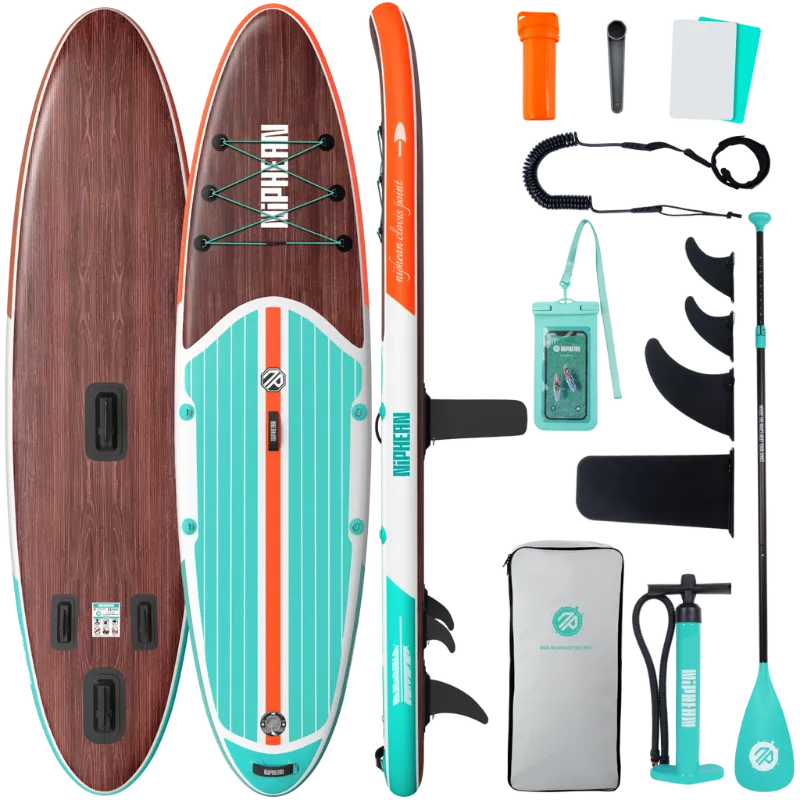
You can technically use a kayak paddle on a beginner stand up paddle board, but the short shaft and dual-blade design make it inefficient and exhausting for SUP technique. A kayak paddle forces you into an awkward bent posture that defeats the core engagement and leverage a proper SUP paddle provides, especially when you're learning to balance and stroke correctly.
We tested this question firsthand after a reader grabbed a kayak paddle for their niphean inflatable paddle board and struggled through a short paddle. The experience highlighted exactly why paddle design matters, particularly for beginners who need every advantage to build confidence on the water.
Why Kayak Paddles Fall Short for Stand Up Paddling
Kayak paddles are built for a seated, low-angle stroke where you pull water from both sides without changing hand position. That dual-blade design adds weight and wind resistance when you're standing upright, and the typical 220 to 240 cm length leaves you hunched over to reach the water.
Stand up paddle boards demand a single-blade paddle with a longer shaft so you can stand tall, engage your core, and transfer power through your torso rather than just your arms. The blade angle and shape also differ: SUP paddles feature a forward-offset blade that catches water efficiently during the vertical pull phase, while kayak blades are symmetrical and optimized for horizontal strokes.
When we see beginners using a kayak paddle, they compensate by bending their knees and leaning forward, which destroys balance and turns every stroke into an arm workout. Within minutes, fatigue sets in and the session ends early.
Key Differences Between Kayak and SUP Paddles
Understanding the design distinctions helps clarify why a kayak paddle undermines your progress on a beginner stand up paddle board:
- Shaft length: Kayak paddles run 220 to 240 cm total; SUP paddles measure 170 to 220 cm from handle to blade tip, sized so the grip sits at or slightly above your wrist when you raise your arm overhead.
- Blade count: Kayak paddles have two blades at opposite angles; SUP paddles have one blade with a forward cant of 7 to 12 degrees.
- Weight distribution: A dual-blade kayak paddle weighs more and creates drag in the air on your recovery stroke, slowing cadence and tiring your shoulders.
- Grip style: SUP paddles use a T-grip or palm grip for one-hand control at the top; kayak paddles use a straight shaft gripped with both hands spaced wide.
If you're shopping for the best beginner stand up paddle board, pairing it with the correct paddle is just as critical as the board itself. REI's guide to SUP basics walks through proper paddle sizing and stroke mechanics.
What Happens When You Use the Wrong Paddle
We borrowed a kayak paddle for a test session on a 10 6 sup board to document the real-world impact. Within the first fifty strokes, three problems emerged:
- Posture collapse: The short shaft forced a forward lean that shifted weight onto the toes, destabilizing the board and making every ripple feel amplified.
- Inefficient power transfer: Without the ability to plant the blade vertically and pull past the ankle, each stroke pushed water sideways rather than driving the board forward.
- Rapid fatigue: The second blade swinging through the air on every recovery stroke added rotational torque that strained the lower back and shoulders.
Beginners already face a learning curve with balance and stroke timing. A kayak paddle compounds those challenges and can discourage new paddlers before they experience the flow state that makes SUP addictive.
Choosing the Right Paddle for Your Beginner Stand Up Paddle Board
The best inflatable paddle boards for beginners deserve a paddle that matches their performance. Here's what to prioritize:
| Feature | Recommendation | Why It Matters |
|---|---|---|
| Material | Fiberglass or carbon shaft with nylon/fiberglass blade | Balances durability, weight, and flex for learning |
| Length | 8 to 10 inches taller than your height | Allows proper reach without hunching |
| Blade size | 85 to 95 square inches | Easier to pull through water for building endurance |
| Adjustability | 3-piece or telescoping | Lets you dial in fit as technique improves |
A dedicated SUP paddle like the pelican paddle board paddle gives you the shaft length and blade geometry to learn correct form from session one. Pair it with a niphean inflatable paddle board and grab the current discount to stay within budget while getting the right gear.
For deeper comparisons, SUP Board Guide's roundup of beginner boards and Inflatable Boarder's tested beginner iSUPs both emphasize paddle compatibility alongside board selection.
When a Kayak Paddle Might Work in a Pinch
There are narrow scenarios where a kayak paddle becomes a temporary solution rather than a dealbreaker:
- Seated paddling: If you add a paddle board seat or inflatable paddle board seat and paddle from a sitting position, a kayak paddle's dual blades and shorter length actually suit that low posture. We tested this setup on calm lakes and found it manageable for casual exploration, though you sacrifice speed and maneuverability.
- Absolute emergency: If your SUP paddle breaks mid-trip and a kayak paddle is the only backup, you can limp back to shore by kneeling and using short, alternating strokes. It's slow and awkward, but safer than hand-paddling in current or wind.
These exceptions prove the rule: standing technique on a beginner inflatable paddle board requires the leverage and blade design a proper SUP paddle provides. Anything else is a compromise that limits your progress and enjoyment.
Getting Started with the Right Setup
Once you match your beginner stand up paddle board with a correctly sized SUP paddle, the learning curve flattens dramatically. Your strokes feel more efficient, balance comes faster, and you spend less energy fighting the equipment.
We recommend inflating your board with an inflatable paddle board electric pump to save energy for the water, then practicing your first few sessions in calm conditions where you can focus on paddle entry, pull, and exit without worrying about waves or wind. As your confidence grows, the correct paddle becomes an extension of your body rather than a tool you're wrestling.
Check the latest pricing and our exclusive code to get started with quality gear that won't hold you back. The right paddle transforms your experience from frustrating to fluid, and that difference matters most when you're building skills and deciding whether SUP becomes a long-term passion.
Frequently asked questions
Can you use a kayak paddle on a beginner stand up paddle board?
You can, but it's highly inefficient. The short shaft forces you to hunch over, the dual blades add unnecessary weight and drag, and the symmetrical blade shape doesn't catch water effectively for the vertical SUP stroke. A proper SUP paddle makes learning easier and more enjoyable.
What length paddle do I need for a stand up paddle board?
Your SUP paddle should measure 8 to 10 inches taller than your height. When standing the paddle upright, the grip should sit at or slightly above your wrist when you raise your arm overhead. Adjustable paddles let you fine-tune length as your technique improves.
Can I use a kayak paddle if I sit on my SUP with a seat?
Yes, a kayak paddle works reasonably well when you're seated on a paddle board seat because your lower posture matches the kayak paddle's design. The dual blades and shorter length suit side-to-side strokes from a sitting position, though you'll still sacrifice some speed compared to standing.
What makes a SUP paddle different from a kayak paddle?
SUP paddles have a single blade with a forward angle, a longer shaft for standing posture, and a T-grip for one-handed control at the top. Kayak paddles have two symmetrical blades at opposite angles, a shorter overall length, and require both hands spaced along the shaft.
Do beginners need an expensive SUP paddle?
No, but you need one designed for SUP rather than kayaking. A mid-range fiberglass or aluminum paddle with the correct length and blade angle will serve beginners far better than an expensive kayak paddle. Focus on proper fit and blade design over premium materials when starting out.