
Computer Chess vs a Physical Chessnut Chess Set: Which Setup Is Better for Practice?

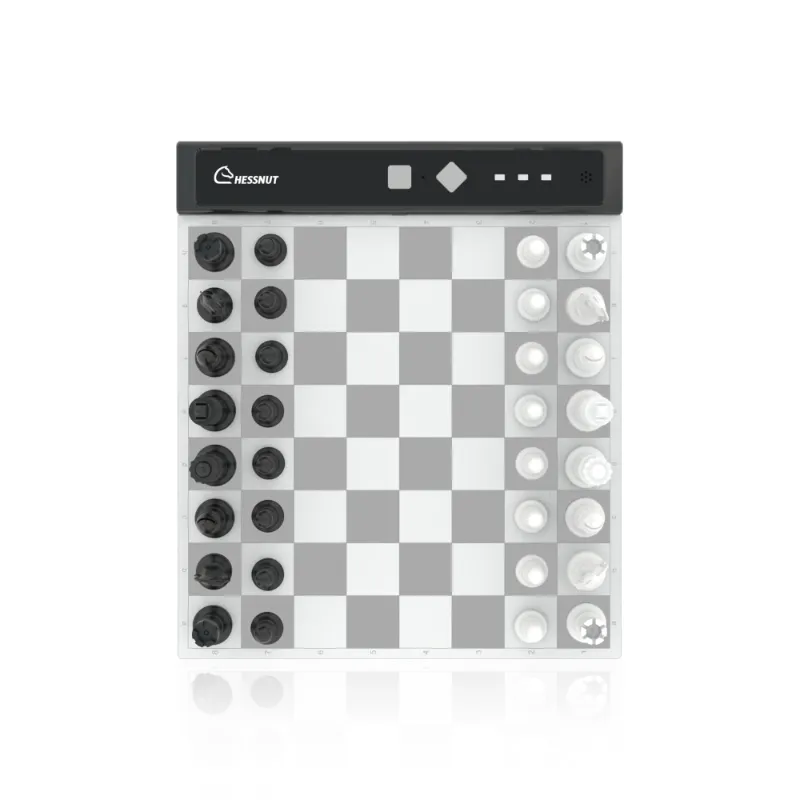
Chessnut chess is the better practice setup if you want online convenience, engine feedback, and the memory benefits of moving real pieces, while computer-only chess is better for the fastest analysis and lowest-friction tactics work. For most improving players, we would not treat this as either-or: use a screen for quick reps, then use a Chessnut board when you want practice to feel closer to tournament chess. The most relevant picks are the Chessnut chess set for a connected physical setup and Chessnut stockfish-style analysis for checking your games afterward.
Chessnut chess vs computer chess: the quick verdict
If your goal is to improve calculation, board vision, and game habits, a physical smart chess board has a real edge. You see the same geometry you would see over the board, you touch the chess pieces, and you reduce the tendency to click moves without fully committing.
Computer chess still wins in speed. It is the easiest way to run a drill, jump into a blitz game, test a line with Stockfish, or review a position in seconds. A laptop or phone is also simpler if you are traveling light or only have ten minutes.
Here is the practical split:
| Practice need | Better setup | Why |
|---|---|---|
| Fast tactics reps | Computer chess | Instant puzzles, no setup time |
| Over-the-board preparation | Physical Chessnut setup | Real board vision and hand movement |
| Deep engine review | Computer first, board second | Fast analysis, then replay key lines physically |
| Online games with real pieces | Smart Chessnut board | Combines digital pairing with physical play |
We would choose a smart board if practice quality matters more than pure speed. We would choose computer-only if you mostly want volume, short sessions, or engine-heavy study.
Where computer chess is still hard to beat
Computer chess is efficient because everything is one click away. You can load a game, turn on a stockfish chess engine, try candidate moves, and switch between openings without resetting a board.
It is strongest for:
- Tactics training: puzzle platforms are built for repetition and immediate feedback.
- Engine analysis: Stockfish can test lines, flag tactical misses, and compare candidate moves quickly.
- Opening files: digital boards make it easy to jump between move orders.
- Bullet and blitz volume: if your aim is pattern exposure, the screen is faster.
- Travel practice: a phone or tablet is easier than carrying a board.
The weakness is that screen chess can become shallow. It is easy to hover, premove, drag pieces casually, or stare at the engine number instead of explaining the position. If you only play online, your board vision may not transfer cleanly to a tournament chess board.
A good compromise is to use computer chess for discovery, then replay the most instructive positions on a real chess board. That second pass slows you down in a useful way.
Why a smart chess board changes practice
A smart chess board gives you physical movement plus digital connection. That matters because practice is not only about finding the move. It is also about seeing the board accurately, touching the piece, and building confidence in the same format you will use in club or tournament games.
The chessnut air-plus is the kind of product that makes sense for players who want connected play without turning every session into a desk full of gear. If you want a larger, more premium board feel, the chessnut pro is the step-up option to compare.
A connected board can help with:
- Online games that feel physical: you make the move on the board, not just on a screen.
- Better visualization: you train on ranks, files, and diagonals in real space.
- Game review: replay missed tactics by physically moving the pieces.
- Reduced impulsive clicking: lifting a piece encourages a little more commitment.
- Family or club use: physical chess sets are easier to share around a table.
There is also a motivation factor. Many players study longer when the setup feels satisfying. A screen can feel like work; a wooden chess board or smart board can feel like a dedicated practice space.
Chessnut stockfish and engine work: use it without outsourcing your thinking
Engine analysis is one of the biggest reasons people stay on a computer, and that is fair. Stockfish chess tools are extremely useful for checking tactics, testing endgames, and finding hidden defensive resources. The mistake is using the engine too early.
A better review routine looks like this:
- Play the game without engine help.
- Write down where you felt unsure.
- Replay the critical moments on the board.
- Choose your candidate moves first.
- Then use Chessnut stockfish or your preferred engine workflow to verify.
That order keeps the computer in the role of coach, not driver. It also makes engine feedback easier to remember because you have already wrestled with the position.
For background on the self-moving board experience, this Chessnut Move review on Chess.com is useful reading if you are comparing standard smart boards with more automated ideas like chessnut move.
Choosing between Chessnut Air, Air Plus, Pro, Move, Evo, and Go
Chessnut has several names shoppers compare: chessnut air, chessnut air-plus, chessnut pro, chessnut move, chessnut evo, and chessnut go. We would start by deciding how you actually practice, not by chasing the most advanced feature list.
| Product direction | Best fit | What to check before buying |
|---|---|---|
| Portable smart board | Players who store or move the board often | Board size, app workflow, pieces, desk space |
| Premium board feel | Home study, serious review, club-style setup | Square size, build, board footprint |
| Self-moving interest | Tech-focused players who want automation | Current availability, compatibility, setup needs |
| Travel-first setup | Casual practice away from home | Portability, power, durability |
If you are looking up chessnut move price, chessnut chess board price, or a Chessnut chess board self moving option, do not rely on stale numbers from reviews or social posts. Models, bundles, and promotions can change, so use the store page to check the latest price before deciding.
For many players, the decision is simpler:
- Choose a portable smart board if you want daily online games with real pieces.
- Choose a larger board if you care most about over-the-board realism.
- Choose a move chess board concept if automation is the feature you specifically want.
- Choose computer-only if you mainly solve tactics and analyze quickly.
Materials, pieces, and board feel matter more than people think
The board and pieces affect how often you use the setup. A cheap-feeling set may be technically functional, but if you dislike handling it, you will study less. That is why the feel of the chess pieces, board surface, and piece recognition all matter.
When comparing chess sets, look at:
- Square visibility: can you read diagonals and knight jumps cleanly?
- Piece stability: do the pieces sit well during fast play?
- Tactile feedback: do moves feel deliberate and smooth?
- Storage: can you keep pieces organized and protected?
- Board footprint: does it fit your real desk, not just your ideal desk?
If you already have a traditional set, a wooden chess board may still be useful for unplugged calculation, endgame drills, or teaching. If you want the digital bridge, a smart chess board is the more relevant category because it supports connected practice.
The rook chess piece is also a small but good test of set quality. Rooks get handled constantly in castling, rook endings, and tactical drills. If the rook, knights, and pawns feel clear and stable, the full set is more likely to be pleasant for long sessions.
A practice routine that uses both setups well
The best improvement plan uses the strengths of each format. We like this weekly rhythm because it avoids the two common traps: mindless online games and engine-only study.
- Daily tactics on a screen: 10 to 20 focused puzzles, no guessing.
- One slow online game on the board: use a connected Chessnut setup when you want serious practice.
- Post-game notes before engine use: write down two or three turning points.
- Engine check afterward: confirm tactics and missed defenses.
- Physical replay: put the critical positions back on the board and play the best line by hand.
- Endgame repetition: king and pawn, rook endings, and basic mates are ideal on a real board.
If you are ready to buy, compare the board you want and grab the code before checkout. The current store offer we have listed is 12% off all orders, but always confirm the live terms on the coupon page because offers can change.
Who should choose each setup?
Choose computer-only if you:
- Mainly solve tactics and review openings.
- Play mostly blitz or bullet.
- Want the cheapest and quickest setup.
- Prefer instant engine access over physical realism.
- Study during short breaks or while traveling.
Choose a physical Chessnut setup if you:
- Want online games to feel closer to real chess.
- Are preparing for club, school, or tournament play.
- Learn better by touching and replaying moves.
- Want a dedicated practice station at home.
- Find screen-only study too easy to rush.
Our honest recommendation is to use both, but give the physical board your serious-game time. Computer chess is the lab. The board is where you turn those findings into habits you can actually use when the pieces are in front of you.
Frequently asked questions
Is Chessnut chess better than playing on a computer?
Chessnut chess is worth considering if you want online play, analysis, and physical board habits in one setup. If you only solve tactics or play quick blitz, computer-only practice may be enough.
Does a smart chess board help you improve?
A smart board can improve over-the-board practice because you train board vision, piece handling, and move commitment. It will not replace calculation work, but it can make your study feel closer to real games.
When should I use Chessnut stockfish in my review?
Use Stockfish after you have reviewed the game yourself. Try to identify critical moments first, then use the engine to check tactics, missed defenses, and better candidate moves.
Should I buy chessnut air-plus or chessnut pro?
Choose chessnut air-plus if you want a more portable connected setup, and compare chessnut pro if you want a larger, more premium board experience. Check the current product pages before buying because bundles and availability can change.
Do I need a Chessnut Move style self-moving board?
A self-moving board is mainly for players who value automation and the novelty of pieces moving on their own. Most improvement-focused players can get excellent practice from a regular smart chess board without needing that feature.
Where can I check the current Chessnut chess board price?
Check the live store page or coupon page instead of relying on old review figures. Prices and promotions can change, especially around product launches and seasonal sales.