
How to Choose the Right Tattoo Needles for Lining vs Shading

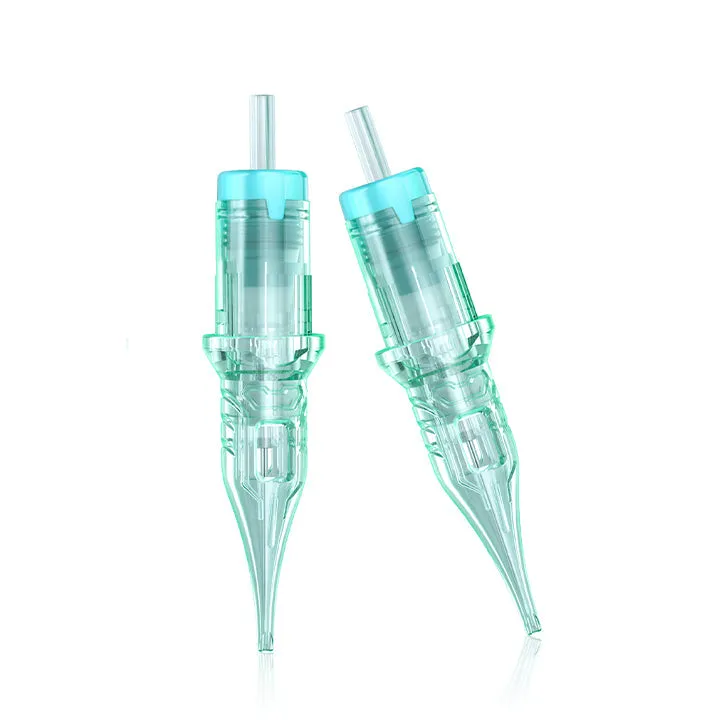
Understanding Round Liner Tattoo Needles and Shader Configurations
Round liner tattoo needles are precision tools designed for crisp outlines, while shader configurations deliver smooth fills and gradients. Choosing the right needle setup transforms your line work and color packing, whether you're using a tattoo pen for permanent makeup or a full-sized tattoo machine for body art. The configuration, grouping, and taper determine ink flow, trauma, and the final look of every mark you make.
We've tested dozens of cartridge and coil setups across lining, shading, and cosmetic applications. This guide walks you through needle anatomy, practical sizing rules, and exactly when to reach for liners versus shaders so you can match the tool to the technique.
What Makes Round Liner Tattoo Needles Different
Liner needles bundle individual pins in a tight circular formation, concentrating ink into a narrow point. A 5 round liner tattoo needles configuration, for example, groups five needles into a small circle that punches clean, controlled lines with minimal skin disruption. Tighter groupings (3RL to 7RL) excel at fine details, while looser rounds (9RL and up) lay down bolder outlines.
Shader needles, by contrast, arrange pins in flat rows (flats), stacked curves (magnums), or looser rounds. These wider profiles deposit more ink per pass, making them ideal for:
- Flat shaders (FS) – solid color packing and geometric fills
- Magnum shaders (M1, M2) – smooth gradients and soft shading
- Round shaders (RS) – stipple shading and blending in tight spaces
Liner needles push pigment deep and narrow; shaders spread it wide and even. Mixing the two mid-tattoo wrecks consistency, so plan your needle changes around design sections.
Tattoo Cartridge Needle Sizes and Uses for Lining
Modern liner tattoo needles cartridge systems simplify needle changes and maintain sterile barriers. Cartridge sizes follow a universal code: the first number counts the pins, the letters specify the configuration (RL for round liner, RM for round magnum), and sometimes a taper length appears at the end.
| Size | Best For | Typical Use |
|---|---|---|
| 3RL / 5RL | Fine lines, scripts, micro details | Permanent eyeliner, brow outlines, intricate line work |
| 7RL / 9RL | Medium outlines, lettering | General body tattoos, bold cosmetic borders |
| 11RL / 14RL | Heavy outlines, tribal work | Large-scale designs, thick contours |
A professional tattoo machines cartridge slot accepts standard 3.5 mm or 4.0 mm cartridges without adapters. Stroke length and machine speed also matter: longer strokes (3.5–4.0 mm) suit liners because they give the needle time to retract fully, reducing drag and blowout.
For permanent makeup and cosmetic applications, 3RL and 5RL cartridges pair perfectly with a permanent makeup cosmetic tattoo pen running at lower voltages. The smaller grouping minimizes trauma on delicate facial skin while still delivering crisp hair strokes or eyeliner wings.
Check current pricing and grab our exclusive code to save on cartridge bundles.
When to Switch from Liners to Shaders
Switching needle types mid-session depends on your design's structure, not personal preference. Use this decision tree:
- Outlines and contours – round liner tattoo needles (3RL to 14RL) for controlled ink placement
- Solid fills and color packing – flat shaders (7F to 15F) for even saturation
- Gradients and soft transitions – magnum shaders (7M1 to 15M2) for feathered blends
- Tight-space shading – round shaders (5RS to 9RS) for stipple and subtle tones
Never use a liner needle to pack color. The tight grouping creates patchy fills and forces multiple painful passes. Conversely, shader needles wander on outlines, producing wobbly edges and inconsistent line weight. Keep both configurations sterile and ready so you can swap at natural breakpoints (after all outlines, before shading begins).
For permanent eyeliner work, you'll typically finish the entire procedure with a 3RL or 5RL cartridge because the design is pure line work. Body tattoos, however, demand at least two needle changes: liners first, then shaders after wiping and inspecting the stencil coverage.
Round Liner Tattoo Needles Sizes for Specific Techniques
Matching needle size to technique prevents common mistakes like blowouts, scarring, and patchy heals. Here's how we pair sizes with real-world applications:
Fine-line and script work 3RL and 5RL deliver the thinnest, sharpest lines. Run your tattoo pen at 7–8 volts with a 2.5–3.0 mm stroke. The small grouping requires a steady hand but rewards you with intricate details that stay crisp through healing.
Standard outlines and lettering 7RL and 9RL handle most body tattoo outlines. Bump voltage to 8–9 and extend stroke length to 3.5 mm. These sizes forgive minor hand speed variations while still producing clean, consistent lines.
Bold tribal and heavy contours 11RL and 14RL lay down thick, saturated outlines in a single pass. Pair them with a tatto gun running 9–10 volts and a 4.0 mm stroke. The larger grouping moves more ink but demands confident, fluid motions to avoid blowback.
Permanent makeup and cosmetic tattoos Stick with 3RL or 5RL on a permanent makeup cosmetic tattoo machine. Lower voltage (6–7.5 V) and shallow needle depth (1.0–1.5 mm) keep pigment in the dermal layer without bruising or migration.
Needle Compatibility with Your Tattoo Machine
Not every needle fits every machine, and mismatched setups cause inconsistent depth and poor ink flow. Coil machines accept traditional needle bars with rubber grommets, while rotary and pen-style machines use cartridge systems.
Cartridge machines (tattoo pen, professional tattoo machines) Universal cartridge slots take any standard brand. Check the machine's stroke length spec: 2.5–3.5 mm suits liners, 3.5–4.2 mm works for shaders. Adjust your needle protrusion (how far the tip extends from the cartridge) to 1.5–2.0 mm for liners, 2.0–2.5 mm for shaders.
Coil machines (tatto gun) Pre-made needle bars come with the configuration soldered and looped. Match the loop size to your machine's armature bar hole, and secure it with the grommet and tube grip. Coil setups require more frequent tuning but offer tactile feedback that rotary machines lack.
If you're building a starter kit, grab a tattoo machine that accepts cartridges. The convenience and sterility advantages outweigh the slightly higher per-needle cost, and you'll spend less time troubleshooting depth issues.
Save on complete needle assortments when you use our discount code at checkout.
Stencil Prep and Needle Selection
Your stencil determines which needle you reach for first. A tattoo stencil printer or manual tracing on tattoo stencil paper locks in your design outline, and that outline dictates liner size.
- Thin stencil lines (script, fine details) – 3RL or 5RL
- Medium stencil lines (standard outlines) – 7RL or 9RL
- Thick stencil lines (bold tribal, heavy borders) – 11RL or 14RL
Match your needle width to the stencil line width so you cover the guide in one pass. Oversized needles blow past the stencil, while undersized needles force multiple passes that scar the skin and muddy the line.
After outlining, wipe the stencil residue and switch to your shader configuration. The clean skin lets you see exactly where shading begins and prevents accidental color overlap onto fresh line work.
Maintenance and Safe Needle Handling
Single-use, pre-sterilized cartridges and bars are the only safe option. Never reuse needles between clients or even between sessions on the same client. Cross-contamination risks blood-borne pathogens, and dull needles tear skin instead of piercing cleanly.
Store unopened needle packages in a cool, dry space away from direct sunlight. Check expiration dates on the sterile packaging and discard any that have passed. During a session, keep your workspace organized: liners on the left, shaders on the right, sharps container within arm's reach.
After each needle change, run a test line on practice skin or a paper towel to confirm ink flow and depth before touching your client. Cartridge systems make this process faster, but the safety check remains non-negotiable.
Choosing the Right Setup for Your Next Project
Start every design by mapping outlines to liner sizes and fills to shader types. For cosmetic work (permanent eyeliner, brows, lips), a single round liner tattoo needles cartridge in 3RL or 5RL often covers the entire procedure. Body tattoos demand a multi-needle approach: liners first, then flats or magnums for shading.
Invest in a variety pack that includes 3RL, 5RL, 7RL, 9RL, plus a few magnum and flat options. Pair them with a reliable tattoo machine that holds consistent speed and depth, and keep your tattoo stencil paper and transfer solution stocked so you never compromise on prep quality.
The difference between clean, healed work and a blown-out mess often comes down to needle choice. Match the configuration to the technique, respect the skin's trauma threshold, and your lines and shading will speak for themselves.
Frequently asked questions
What is the difference between round liner and round shader needles?
Round liner tattoo needles group pins tightly in a small circle for precise outlines and fine details, while round shader needles arrange pins in a looser formation to deposit more ink for soft shading and blending in tight areas.
Can I use the same needle for lining and shading?
No. Liner needles create patchy, uneven fills because their tight grouping doesn't spread ink evenly, and shader needles produce wobbly, inconsistent outlines. Always switch needle types between outlining and shading.
What size round liner is best for permanent eyeliner?
A 3RL or 5RL cartridge works best for permanent eyeliner because the small grouping delivers crisp lines with minimal trauma on delicate facial skin. Run your machine at 6 to 7.5 volts for controlled, shallow penetration.
Do all tattoo machines accept cartridge needles?
No. Rotary and pen-style machines use universal cartridge slots, while traditional coil machines require needle bars with rubber grommets. Check your machine's specs before purchasing needles.
How do I know which liner size matches my stencil?
Match your needle width to the stencil line width. Use 3RL or 5RL for thin script lines, 7RL or 9RL for standard outlines, and 11RL or 14RL for bold tribal or thick borders.
Can I reuse tattoo needles if I sterilize them?
No. Always use single-use, pre-sterilized needles and discard them immediately after each session. Reusing needles risks cross-contamination and produces dull tips that tear skin instead of piercing cleanly.