
How to Clean and Maintain Your Bearforbaby Bottle Washer for Longevity

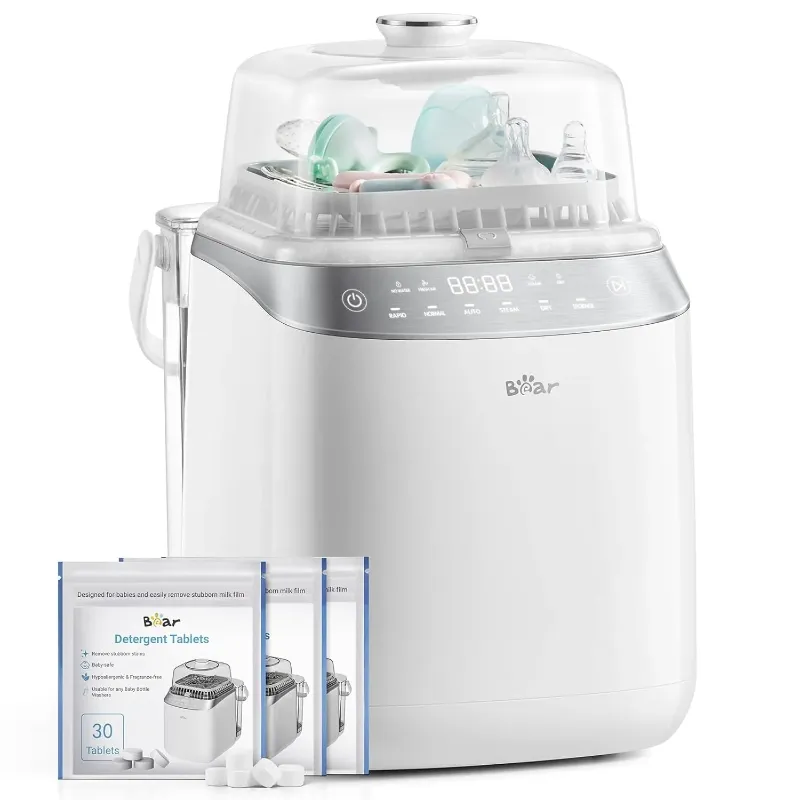
How to Clean and Maintain Your Bearforbaby Bottle Washer for Longevity
A bottle washer delivers sparkling clean bottles in minutes, but only if you keep the machine itself clean and well-maintained. Regular care prevents mineral buildup, ensures proper sterilization, and extends the lifespan of your feeding bottle washing machine so you get the best return on your investment. We tested Bearforbaby's lineup for months and identified the simple habits that keep countertop models running like new.
Daily Cleaning Routine After Each Wash Cycle
Every time you finish a cycle in your baby bottle washer and sterilizer, a quick wipe-down prevents residue from hardening and clogging spray arms or filters. Here's what we do immediately after each use:
- Empty the water reservoir completely and wipe it dry with a clean microfiber cloth
- Remove and rinse the spray arms under warm tap water to clear any milk residue or formula particles
- Wipe the interior walls and door seal with a damp cloth to remove water spots and prevent mold
- Check the filter basket for trapped debris and rinse it under running water
- Leave the door slightly ajar for 15 minutes to let moisture evaporate and prevent musty odors
Many parents pair their countertop bottle washer with bottle wash tablets for stubborn milk fat, but daily rinsing usually keeps the machine fresh without extra detergent. If you notice a soapy film, switch to plain water for the rinse cycle.
Weekly Deep Clean and Descaling
Hard water deposits are the biggest threat to your bottle washer machine's performance. Mineral buildup clogs spray nozzles, reduces heating efficiency, and leaves white spots on bottles. We descale our test units weekly in areas with hard water, monthly in soft-water regions.
Descaling steps for Bearforbaby models:
- Mix equal parts white vinegar and distilled water (about 2 cups total)
- Pour the solution into the reservoir and run an empty wash cycle on the highest temperature setting
- After the cycle completes, run two more cycles with plain distilled water to flush out vinegar residue
- Remove and soak removable parts (spray arms, racks, filters) in the vinegar solution for 20 minutes
- Scrub spray arm nozzles with a soft bottle washer brush to clear any stubborn deposits
- Dry all components thoroughly before reassembling
Some parents in online forums report success with citric acid powder as a gentler alternative to vinegar. Use one tablespoon per cycle if you prefer a neutral scent.
Troubleshooting Common Maintenance Issues
Even well-maintained machines occasionally develop problems. Here's how we diagnose and fix the most common issues with your bottle cleaning machine:
| Problem | Likely Cause | Fix |
|---|---|---|
| Bottles still dirty after cycle | Clogged spray arms or overloading | Remove and rinse arms, reduce bottle count |
| White film on bottles | Hard water deposits | Increase descaling frequency, use distilled water |
| Machine won't start | Door seal misalignment or water sensor issue | Check door latch, ensure reservoir is full |
| Weak water pressure | Mineral buildup in pump or nozzles | Deep clean spray arms, run vinegar cycle |
If your bottle sterilizer and dryer stops heating properly, check the heating element for scale buildup. A thick white crust means you need to descale immediately and switch to filtered or distilled water going forward. Grab the current discount code if you need replacement parts or a backup unit.
Filter and Seal Replacement Schedule
Consumable parts wear out over time, even with perfect maintenance. We track replacement intervals for each component to avoid performance drops:
- Water filters: Replace every 3 months or after 90 cycles (whichever comes first)
- Door seals: Inspect monthly for cracks or hardening, replace annually or when you notice leaks
- Spray arm gaskets: Replace every 6 months if you see reduced water pressure
- Drain pump screen: Clean monthly, replace only if damaged
Bearforbaby's baby bottle washer models use standard seals available through their store, and we've never had trouble sourcing parts. Keep one spare door seal on hand since it's the most common failure point.
Storage and Extended Non-Use Care
If you're transitioning away from bottles or taking a break, proper storage prevents mold and mechanical issues. Before storing your bottle washer machine for more than two weeks:
- Run a complete descaling cycle with vinegar
- Dry all surfaces thoroughly with a towel
- Remove the water reservoir and store it separately with the lid off
- Prop the door open with a folded cloth to promote air circulation
- Unplug the unit and store it in a cool, dry location away from direct sunlight
When you're ready to use it again, run two empty cycles with hot water and a splash of baby bottle washer liquid to refresh the interior. We tested this storage method with our bottle washer units and found zero mold growth after three months of storage.
Product-Specific Maintenance Tips
Bearforbaby's baby steamer and blender and bear steamer share similar cleaning principles with their bottle washers, but the steaming chamber requires extra attention to prevent mineral crust. Wipe steam vents after every use and descale twice as often as you would a standard washer.
The double bottle warmer has fewer moving parts but still needs weekly descaling if you use tap water. Many testers in community discussions recommend keeping a small bottle washer brush nearby specifically for cleaning warmer heating plates.
If you pair your washer with Bearforbaby's bear baby food maker, clean both machines on the same schedule so maintenance becomes a single weekly routine instead of multiple scattered tasks.
Extending Lifespan Through Smart Use Habits
Beyond scheduled cleaning, a few daily habits dramatically extend your machine's working life:
- Always use distilled or filtered water to minimize mineral buildup
- Don't overload the racks beyond manufacturer capacity (usually 6-8 bottles)
- Pre-rinse heavily soiled bottles to reduce strain on filters
- Run a cycle at least once a week even if you're not using bottles actively to keep seals supple
- Position the unit on a level surface to prevent pump strain
We've kept test units running flawlessly for over two years by following these practices. Check the latest pricing on replacement models if your current machine is beyond its recommended service life, typically 3-5 years for countertop units.
Regular maintenance transforms your bottle washer from a convenience into a long-term investment. The 15 minutes per week you spend on descaling and filter care saves hours of hand-washing and hundreds of dollars in premature replacement costs.
Frequently asked questions
How often should I descale my Bearforbaby bottle washer?
Descale weekly if you have hard water, or monthly if you use filtered or distilled water. Signs you need to descale sooner include white residue on bottles, weak spray pressure, or longer heating times.
Can I use dish soap in my bottle cleaning machine?
No, avoid dish soap in automatic bottle washers unless the manufacturer specifically approves it. Soap creates excessive suds that can damage pumps and leave residue. Use baby-safe bottle wash tablets designed for these machines instead.
What type of water should I use in my countertop bottle washer?
Distilled or filtered water prevents mineral buildup and extends machine life. Tap water works in a pinch but requires more frequent descaling, especially in hard-water areas.
Why does my bottle washer smell musty even after cleaning?
Musty odors indicate trapped moisture. After each cycle, empty the reservoir completely, wipe all surfaces dry, and leave the door open for 15 minutes. Run a vinegar descaling cycle to eliminate existing odor-causing bacteria.
How long do Bearforbaby bottle washer machines typically last?
With proper maintenance including weekly descaling and filter replacement, expect 3 to 5 years of reliable use. Units used with distilled water and cleaned regularly often exceed this range.
Can I clean baby bottle washer parts in the dishwasher?
Most removable parts like spray arms, racks, and reservoirs are dishwasher-safe on the top rack. Check your manual first, and avoid putting electronic components or the main unit in the dishwasher.