
The Complete Guide to Choosing the Right Plyometric Box Height for Box Jumps

Why Box Height Matters More Than You Think
The right boxes for box jumps can transform your plyometric training from a risky ego-driven exercise into a powerful tool for explosive strength. We see too many athletes start with boxes that are too high, sacrificing form and joint health for bragging rights. The ideal plyo box height depends on your training age, hip mobility, injury history, and whether you're chasing maximum vertical jump or building conditioning.
Most beginners should start at 12 to 16 inches, intermediate athletes can work with 20 to 24 inches, and advanced trainees may use 30 inches or higher. But these numbers tell only part of the story. Your landing mechanics, the box material, and your training frequency all influence which height keeps you progressing without breaking down.
How to Pick Your Starting Box Height
Your first plyometric jump box should challenge your power output without forcing you into dangerous positions. Here's how we assess the right starting point:
- Beginner athletes (under 6 months of jump training): Start with 12 to 16 inches. Focus on landing softly with hips above knees.
- Intermediate athletes (6 to 24 months): Progress to 20 to 24 inches once you can land quietly and maintain an upright torso.
- Advanced athletes (2+ years): A plyometric jump box set with 20, 24, and 30-inch options lets you cycle intensity across training blocks.
- Mobility-limited athletes: If you can't achieve a full squat with heels down, drop 4 to 6 inches below the recommendations above.
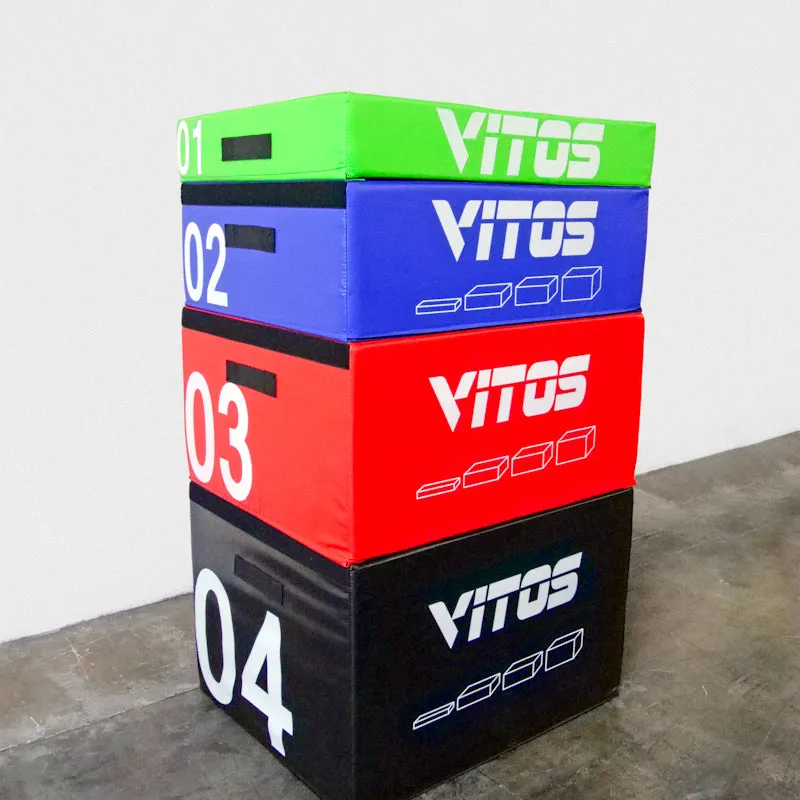
We prefer adjustable or stackable plyometric boxes for box jumps because they let you micro-progress in 2 to 4-inch increments. Many commercial sets include three heights that nest together for storage.
Foam vs Wood vs Steel: Which Plyo Box Material to Choose
The best plyometric jump box material depends on where you train and how often you miss. We've tested all three categories across home gyms and commercial facilities:
| Material | Pros | Cons |
|---|---|---|
| Foam-covered | Forgiving on missed jumps, quiet, shin-friendly | Can compress over time, may slide on smooth floors |
| Wood | Stable, durable, authentic feel | Painful misses, splinters, heavier to move |
| Steel frame | Ultra-stable, supports heavy athletes | Sharp edges, loud, expensive |
Foam plyo boxes dominate home gyms because a missed rep means a bruise instead of a hospital visit. Wood boxes remain the standard in CrossFit boxes and strength facilities where durability and stability outweigh comfort. Steel frames work best in commercial settings with rubber flooring.
If you train solo or you're still dialing in your technique, we recommend foam-topped boxes for box jumps. The performance difference is negligible, and the injury prevention is worth the slight premium.
The Step-Down Technique That Saves Your Knees
Jumping down from boxes for box jumps destroys more knees than the actual jump. We see athletes nail the ascent, then carelessly hop off and absorb 3 to 5 times their body weight through tired joints. The step-down method eliminates this eccentric overload:
- Complete your box jump and stand fully upright at the top.
- Step one foot down to the floor, lowering yourself under control.
- Bring the second foot down gently, resetting your stance.
- Pause and breathe before the next rep to maintain quality.
This approach lets you train box jumps multiple times per week without accumulating the pounding that comes from repeated landings. Your knees will thank you after 500 reps.
Some coaches program true depth jumps where you drop from the box to generate a stretch reflex. That's an advanced plyometric drill with specific intent, not a lazy dismount. For general strength and conditioning, step down every single time.
Adjusting Box Height for Different Training Goals
Your programming should drive your plyo box selection, not the other way around. Here's how we adjust height based on training intent:
Power development: Use a height where you can generate maximum velocity without sacrificing landing position. This is typically 18 to 24 inches for most athletes. You're training your nervous system to fire fast, not testing your maximum tuck height. Check the latest price on multi-height sets that let you rotate between sessions.
Conditioning and MetCons: Drop 4 to 8 inches below your max height. When fatigue sets in during round five, you need a margin for error. We use 16 to 20-inch boxes for high-rep conditioning work.
Rehab and return-to-sport: Start with 6 to 12-inch platforms or even a half balance ball to rebuild landing mechanics and confidence. The unstable surface of a bosu ball for balance adds a stability challenge that reinforces ankle and knee control before progressing to rigid plyometric boxes for box jumps.
Max height testing: This has limited training value, but if you must test, warm up thoroughly and use a soft-top box. One rep at your true max, then move on.
Common Box Jump Mistakes That Stall Progress
We've coached hundreds of athletes through box jump progressions, and these errors appear again and again:
- Excessive hip flexion: If your knees travel past your toes or your chest drops forward at the top, the box is too high. You're compensating with range of motion instead of generating true power.
- Loud landings: A thud means you're absorbing force instead of producing it. Land like a cat, not a refrigerator.
- Inconsistent rest intervals: Box jumps train your phosphagen system. Rest 30 to 60 seconds between reps or you're just doing cardio with a side of knee stress.
- Ignoring the descent: As covered earlier, jumping down defeats the purpose and accelerates wear.
If you're stuck at a plateau, film yourself from the side. Most athletes discover they're tucking their knees excessively instead of driving their hips. The solution is often a shorter box and better coaching, not more volume.
Integrating Balance Tools for Box Jump Prep
Before we send athletes to boxes for box jumps, we screen their single-leg stability and landing mechanics. A half yoga ball or bosu balance ball reveals compensation patterns that rigid boxes hide. Try these progressions on a physical therapy balance ball:
- Single-leg stands for 30 seconds per side
- Small hops landing on the dome with both feet
- Step-ups with a 2-second hold at the top
These drills build the ankle and hip stability that transfers directly to safer, more powerful box jumps. We also place a tpe yoga mat at the base of the plyo box during early sessions to mark the landing zone and reduce impact noise.
Once an athlete demonstrates quiet landings and consistent form on a half fit ball, they're ready to progress to a 16-inch rigid box. This screening process prevents the shin splints and patellar tendonitis we see in athletes who skip foundational work.
Where to Buy and How to Save
Quality plyometric jump boxes range from budget-friendly foam models to premium wood sets that last decades. We recommend starting with a three-height set if your budget allows, since you'll outgrow a single height within months.
For the best deal on boxes for box jumps and complementary balance tools like the half swiss ball or balance ball half, grab the code for 10% off sitewide. Vitos carries both rigid plyo boxes and balance trainers that support every phase of your jump training progression.
Look for boxes with non-slip surfaces, reinforced corners, and weight ratings above 350 pounds. Cheaper boxes wobble or compress under load, which introduces instability you don't need during explosive movements. Investing in a stable platform now prevents the cost of a rolled ankle or blown knee later.
Building Your Long-Term Box Jump Program
Sustainable progress with boxes for box jumps comes from cycling volume and intensity across training blocks. We use this general framework:
- Weeks 1-3: Lower box (16-20 inches), focus on landing mechanics, 3-5 sets of 3-5 reps, twice per week.
- Weeks 4-6: Progress height by 2-4 inches, maintain volume, monitor soreness.
- Week 7: Deload with 50% volume or switch to balance work on a half of exercise ball.
- Weeks 8-10: Peak block with your working height, potentially adding a weighted vest.
This wave progression respects your joints while steadily increasing power output. Athletes who chase max height every session burn out or get hurt within months. Those who plan progressions stay healthy and see consistent gains for years.
Whether you're setting up a garage gym or dialing in your vertical jump for sports, the right approach to boxes for box jumps centers on intelligent height selection, pristine landing mechanics, and patience with progression. Film your jumps, listen to your body, and treat box height as a training variable rather than a measure of self-worth.
Frequently asked questions
What height box should a beginner use for box jumps?
Beginners should start with a 12 to 16-inch plyo box to master landing mechanics and build confidence. You can progress to 20 inches once you consistently land softly with your hips above your knees and maintain an upright torso.
Are foam or wood plyo boxes better for home gyms?
Foam-covered boxes for box jumps are better for home gyms because they're quieter, safer on missed jumps, and won't damage your shins. Wood boxes are more durable but painful when you miss a rep.
Should I jump down from the box after each rep?
No, always step down instead of jumping down. Jumping off the box creates excessive impact on your knees and accumulates fatigue that can lead to injury over time. Step one foot down at a time to reset safely.
How do I know if my plyo box is too high?
Your box is too high if your knees travel far past your toes at landing, your chest drops forward excessively, or you land with a loud thud. These signs mean you're compensating with range of motion instead of generating real power.
Can I use a half balance ball to improve my box jumps?
Yes, training on a half balance ball or bosu ball builds the ankle and hip stability needed for safer, more controlled box jump landings. Use it for single-leg balance drills and small hops before progressing to rigid boxes.
What is a good plyometric jump box set for different heights?
A three-height set with 20, 24, and 30-inch options works well for most athletes. It allows you to adjust intensity across training phases and progress in manageable increments as your power and confidence improve.