
How to Use a Half Balance Ball for Core Strength and Stability Training

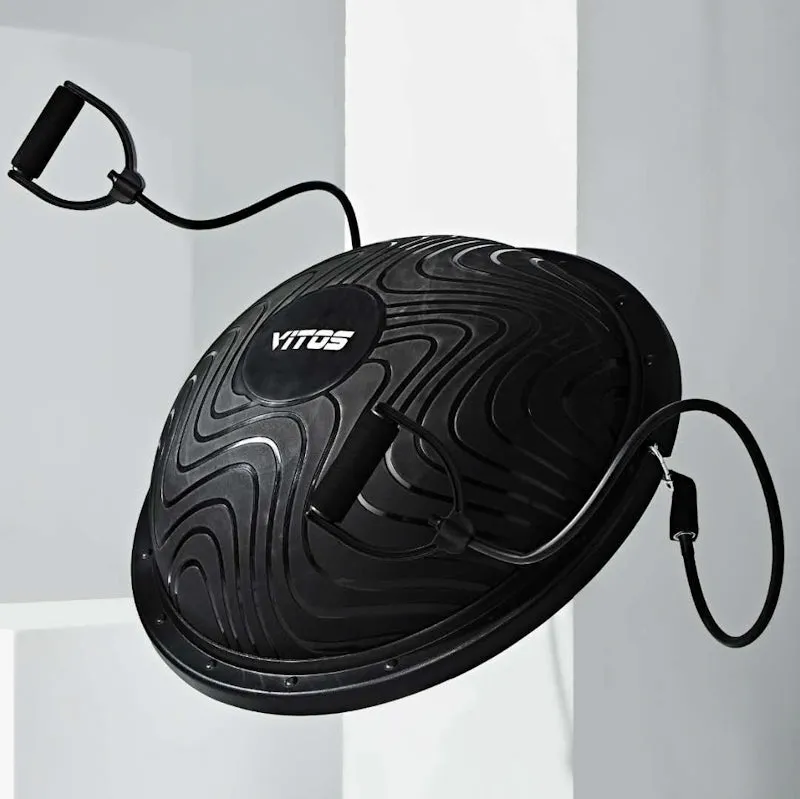
What Is a Half Balance Ball and How Does It Work
A half balance ball is an inflated dome mounted on a rigid platform that creates an unstable surface to challenge your core and stabilizers during any exercise. Also called a balance trainer, this piece of equipment forces your body to recruit additional muscle fibers to maintain control, turning simple movements like squats or planks into full-body stability workouts. We tested multiple models including the half yoga ball and bosu ball for balance to find which designs deliver the best results for home and gym use.
The dome side up configuration works for standing exercises, while flipping it platform-side up creates an even more challenging base for push-ups and planks. Either way, you engage muscles that stay dormant on solid ground.
Half Balance Ball Benefits for Core and Stability
We see three major advantages when clients add a half balance ball to their routine:
- Core activation on every rep – Your abs, obliques, and lower back fire constantly to stabilize your body on the moving surface, even during upper-body or leg exercises
- Improved proprioception – Training on an unstable base sharpens your body's spatial awareness and joint position sense, which translates to better balance in daily life and sports
- Injury prevention and rehab – Physical therapists use a physical therapy balance ball to rebuild ankle, knee, and hip stability after injury because the controlled instability strengthens stabilizer muscles without high impact
- Workout variety – You can modify nearly any bodyweight exercise by adding the dome, breaking through plateaus without adding weight
According to MD Anderson Cancer Center, balance training equipment like this challenges multiple muscle groups simultaneously, making workouts more efficient.
Check current pricing and grab our Vitos code to save 10% on your first order.
Half Balance Ball Exercises for Beginners
Start with these foundational moves to build confidence and control on the dome:
Two-Foot Balance Hold Stand on the dome with feet hip-width apart, knees slightly bent. Hold for 30-60 seconds while maintaining an upright posture. This baseline drill teaches you to find your center before adding movement.
Squats Position the half fit ball dome-side up and perform slow, controlled squats. The instability forces your glutes and core to work harder than they would on flat ground. Keep your weight in your heels and chest lifted.
Plank with Hands on Dome Place both hands on the dome and hold a plank position. Your core works overtime to counteract the wobble. Start with 20-second holds and build from there.
Single-Leg Stand Progress from the two-foot hold by lifting one foot slightly off the dome. Alternate legs every 15-20 seconds. This move directly improves ankle stability and hip strength.
Healthline's exercise guide offers video demonstrations of eleven movements you can layer in as you advance.
Advanced Half Balance Ball Ab Workout and Progressions
Once you master basic balance, these exercises deliver serious core burn:
Mountain Climbers Hands on the dome, drive your knees toward your chest in rapid alternation. The unstable surface magnifies the ab engagement compared to floor mountain climbers.
Russian Twists Sit on the dome with feet elevated, lean back slightly, and rotate a weight or medicine ball side to side. A balance ball half design with a wider platform offers extra stability for rotational work.
Burpees Jump feet back into a plank on the dome, perform a push-up, jump feet forward, then explode up. This full-body move spikes your heart rate while challenging every stabilizer.
Side Plank Place one forearm on the dome and stack your feet. Hold for 20-30 seconds per side. The lateral instability hammers your obliques and shoulders.
For a structured progression, GymBeam's balance exercise collection walks through ten moves ranked by difficulty.
Pair your balance trainer with a tpe yoga mats underneath to prevent slipping on hard floors and protect your equipment.
Choosing the Right Balance Trainer for Your Goals
Not all balance trainers are built the same. Here's what we prioritize when testing models:
| Feature | What to Look For | Why It Matters |
|---|---|---|
| Dome diameter | 55-65 cm for adults | Larger domes accommodate wider stances and taller users |
| Platform material | Non-slip rubber or textured plastic | Prevents sliding during platform-side-up exercises |
| Weight capacity | 300+ lbs | Ensures safety during dynamic jumps and heavy users |
| Pump included | Yes | Lets you adjust firmness for easier or harder workouts |
A half swiss ball with adjustable inflation gives you control over difficulty. Less air creates a softer, more forgiving surface for beginners, while a fully inflated dome demands maximum stability.
We also tested the bosu balance ball and half bosu ball variations. Both performed well for home use, though the BOSU-branded models typically include better instructional materials.
Safety Tips and Common Mistakes to Avoid
Balance training carries minimal risk when you follow these guidelines:
- Start on a stable surface nearby – Keep a wall, chair, or railing within arm's reach when you first step onto the dome
- Wear proper footwear – Flat-soled shoes or bare feet provide better proprioceptive feedback than thick running shoes
- Inflate correctly – Over-inflation makes the dome rock unpredictably; under-inflation reduces the stability challenge
- Progress gradually – Master static holds before adding movement, and add movement before adding weight or speed
- Place on non-slip flooring – A half of exercise ball can shift on tile or polished concrete; use a mat underneath
The most common mistake we see is rushing into advanced exercises. If you cannot hold a two-foot balance for 60 seconds without wobbling excessively, you are not ready for single-leg plyometrics.
Visit our Vitos promo page to see the latest offers on balance trainers and accessories before you buy.
How to Integrate Balance Training Into Your Routine
We recommend two or three dedicated balance sessions per week, or you can substitute the dome into your existing program:
Option 1: Standalone 20-Minute Session Warm up with two-foot holds, progress through squats and lunges, finish with plank variations and core twists. This focused approach builds skill quickly.
Option 2: Exercise Substitution Swap one set of your regular squats, push-ups, or planks for the balance trainer version. You will reduce total reps but increase muscle activation.
Option 3: Finisher Circuit After your main strength workout, perform three rounds of 30-second dome holds, 10 mountain climbers, and 10 Russian twists. This adds a metabolic and stability boost without extending your session significantly.
A half exercise ball fits easily in most home gyms and stores flat against a wall, making it practical for small spaces.
Balance training complements strength work rather than replacing it. You still need traditional resistance exercises for maximum muscle growth, but the stability component fills gaps that barbells and machines miss.
Frequently asked questions
Can beginners safely use a half balance ball?
Yes, beginners can start with basic two-foot balance holds near a wall or sturdy surface for support. Master static balance before progressing to squats or dynamic movements, and keep the dome slightly under-inflated for a more forgiving surface.
How inflated should a balance trainer be?
Inflate the dome until it feels firm but still compresses slightly under your weight. Beginners benefit from less air for added stability, while advanced users can fully inflate for maximum instability and core challenge.
What is the difference between a BOSU ball and a half balance ball?
BOSU is a brand name for a specific balance trainer design, while half balance ball is the generic term for any dome-on-platform stability equipment. Functionality is nearly identical across quality models.
How often should I train with a balance ball for results?
Two to three sessions per week, or substitute balance exercises into your existing routine, will improve stability and core strength within four to six weeks. Consistency matters more than session length.
Can I do cardio on a half balance ball?
Yes, moves like mountain climbers, burpees, and high knees on the dome elevate your heart rate while adding a stability challenge. Start slowly to avoid losing balance, then increase speed as your control improves.
Do I need a mat under my balance trainer?
A yoga mat underneath prevents slipping on hard or polished floors and protects both your flooring and the equipment. It is especially important for platform-side-up exercises where the dome contacts the ground.