
Dog Nail Clipper vs Trimmer vs Grinder: What's the Difference?

Understanding Dog Nail Care Tools
A 2 in 1 nail clipper for dog combines clipping and grinding in one tool, while standalone clippers cut quickly, trimmers handle delicate work, and grinders smooth edges gradually. Each tool suits different nail types, dog temperaments, and owner confidence levels, so knowing the differences helps you pick the right option for your canine's paws.
We tested dozens of nail care tools to understand what works for nervous dogs, thick nails, and rushed grooming sessions. This guide breaks down clippers, trimmers, and grinders so you can match the tool to your dog's needs and your comfort level.
What Clippers, Trimmers, and Grinders Actually Do
Clippers use scissor or guillotine blades to slice through the nail in one motion. They work fast on thick nails but require steady hands to avoid cutting the quick. Guillotine-style clippers position the nail in a circular opening, while scissor types work like heavy-duty pruning shears.
Trimmers refer to smaller, precision clippers designed for puppies, toy breeds, or touch-up work around the quick. The term often overlaps with clippers, but a trimmer for dog nails typically features finer blades and lighter spring tension for controlled, incremental cuts.
Grinders use a rotating abrasive head to file the nail gradually. They eliminate the risk of cutting too deep, smooth sharp edges left by clippers, and work well for dogs that flinch at the snap sound of blades. Electric grinders plug in or run on rechargeable batteries, with variable speed settings for different nail hardness.
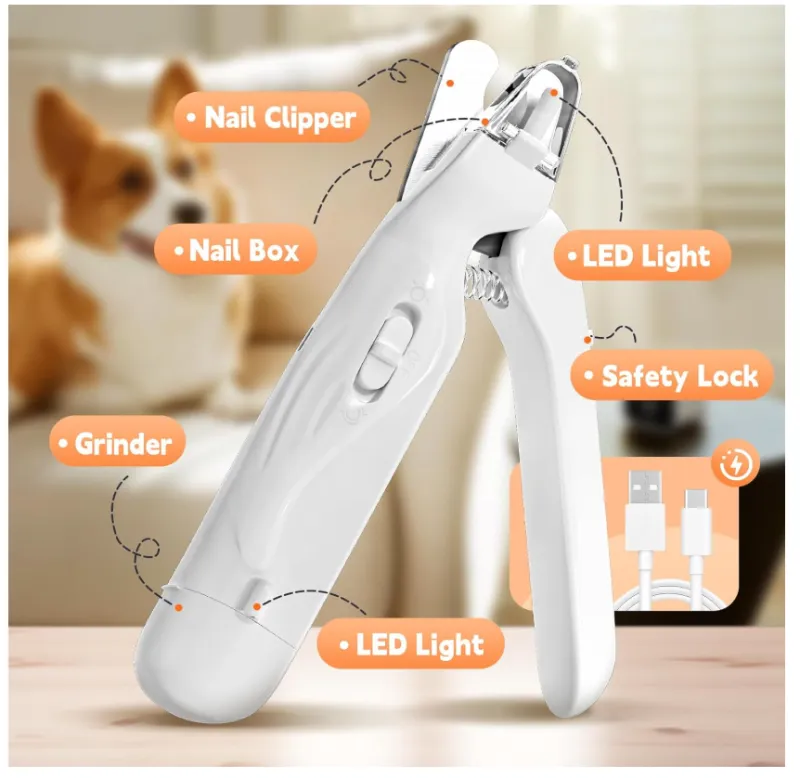
A 2 in 1 nail clipper for dog merges clipping and grinding, letting you cut the bulk of the nail then smooth the edge without switching tools. This hybrid approach suits owners who want speed and finish in one device.
Comparing Speed, Safety, and Finish
| Tool Type | Speed | Safety for Quick | Edge Finish |
|---|---|---|---|
| Clippers | Very fast | Requires precision | Sharp, needs filing |
| Trimmers | Moderate | High control | Sharp, needs filing |
| Grinders | Slow | Very safe | Smooth, rounded |
| 2 in 1 | Fast + smooth | Clip risks, grind safety | Smooth after grinding |
Clippers win on speed but leave sharp edges that can snag fabric or scratch skin. Grinders deliver the smoothest finish but take longer and generate heat and vibration that some dogs dislike. A dog nail trimmer offers precision for small adjustments, especially around dewclaws or between paw pads.
We found that 2 in 1 designs cut grooming time nearly in half compared to using separate tools, and they reduce the drawer clutter of multiple gadgets.
Choosing by Dog Size, Nail Thickness, and Temperament
Large breeds with thick nails need heavy-duty clippers or powerful grinders. Standard scissor clippers often struggle with Rottweiler or Mastiff nails, while a robust 2 in 1 tool handles the bulk cutting and finishing without strain.
Small and toy breeds do well with trimmers or low-speed grinders. Their nails are thin and translucent, making it easier to see the quick, so precision matters more than cutting power.
Nervous or noise-sensitive dogs tolerate grinders better when introduced gradually, but the vibration can startle them. Clippers make a sharp snap that some dogs hate. A 2 in 1 tool lets you start with grinding for fearful dogs, then switch to clipping as they gain confidence.
Puppies benefit from early positive associations. We recommend starting with a trimmer for dog nails or a grinder on low speed, pairing sessions with treats to build tolerance before moving to faster clippers.
For current pricing on any of these tools, check our Dogs Harness Australia discount code for 10% off.
How to Use Each Tool Safely
Clipper technique: Hold the paw firmly but gently, position the blade perpendicular to the nail, and cut in small increments from the tip inward. Stop when you see a pale oval or black dot in the center (the quick's outer edge). Never squeeze the clipper handles in one fast motion.
Trimmer technique: Use the same approach as clippers but take smaller bites. Trimmers excel at shaping nails after the bulk is removed or trimming the hair between pads without risking skin nicks.
Grinder technique: Touch the spinning head to the nail tip for 2 to 3 seconds, then lift and repeat. Work in short bursts to prevent heat buildup. Hold long fur back with your fingers to avoid tangling in the grinder head.
2 in 1 technique: Clip the nail to within 2 mm of the quick, then switch to the grinder attachment to round the edge and remove any splinters. This method combines the speed of clipping with the polish of grinding.
The Spruce Pets guide to dog nail clippers recommends having styptic powder on hand for any tool type, in case you nick the quick.
Maintenance, Battery Life, and Longevity
Clippers need blade sharpening or replacement every 6 to 12 months, depending on use frequency and nail hardness. Stainless steel blades last longer than coated carbon steel. Wipe blades with rubbing alcohol after each session to prevent rust and bacterial buildup.
Grinders require sanding band or drum replacements every 4 to 8 weeks for regular users. Rechargeable models offer 2 to 3 hours of runtime per charge, while corded versions eliminate battery anxiety. Check that replacement bands are widely available before buying a grinder.
2 in 1 tools combine both maintenance needs. You'll sharpen or replace clipper blades and swap grinding attachments, but the convenience of one device often outweighs the dual upkeep. Look for models with user-replaceable parts rather than sealed units.
Store all tools in a dry place, and lubricate clipper pivot points with a drop of mineral oil monthly to keep action smooth.
Where to Buy and What to Pair With Nail Care
We stock a range of grooming tools at Dogs Harness Australia, from dog nail trimmers for precision work to full 2 in 1 systems. Pairing nail care with a quality body leash for dogs helps restrain nervous dogs during grooming without stressing their neck.
PetSmart's nail clipper and grinder section offers additional comparisons if you want to see the full spectrum of designs, but grab our code to save on the tools we've tested and trust.
For outdoor dogs that naturally wear down their nails on pavement, you may only need touch-ups every few weeks. Indoor dogs and those that walk on grass need more frequent trimming, making a 2 in 1 nail clipper for dog a smart investment for regular maintenance.
Our Take on Clippers vs Trimmers vs Grinders
Clippers suit confident owners who want speed and don't mind filing sharp edges afterward. Grinders work best for patient groomers and dogs with thick, dark nails where the quick is hard to see. Trimmers fill the niche for small breeds and detail work. A 2 in 1 tool delivers the best of clipping and grinding in one package, saving time and delivering a smooth finish without juggling multiple devices.
Choose based on your dog's nail type and your own comfort level. If you're new to nail care, start with a grinder or 2 in 1 to minimize quick-cutting risks, then graduate to clippers as your confidence grows.
Frequently asked questions
Can I use a 2 in 1 nail clipper for dog on puppies?
Yes, but start with the grinder function on low speed to help puppies get used to the sensation. Once they're comfortable, you can use the clipper side for faster maintenance as they grow.
Do grinders hurt dogs or cause heat buildup?
Grinders don't hurt when used correctly, but holding the spinning head against the nail for too long generates friction heat. Work in short 2 to 3 second bursts, lifting between passes to let the nail cool.
How often should I replace clipper blades?
Replace or sharpen blades every 6 to 12 months, or sooner if you notice them crushing rather than cutting the nail cleanly. Dull blades increase the risk of splitting and discomfort.
Which tool is safest for black nails where I can't see the quick?
Grinders are safest for dark nails because you file gradually and can stop as soon as you see a gray or chalky center. Clippers require very small cuts and careful observation to avoid bleeding.
Are trimmer and clipper the same thing?
Trimmers usually refer to smaller, precision clippers designed for fine work on small breeds or touch-ups. The terms overlap, but trimmers have lighter spring tension and narrower blades than standard clippers.
Do I still need to file nails after using a 2 in 1 tool?
No, the grinder function on a 2 in 1 tool smooths the nail edge after clipping, eliminating the need for a separate file. That's the main advantage of the hybrid design.