
Dual Motor Fat Tire Ebike vs Single Motor: Is the Upgrade Worth It?

# Dual Motor Fat Tire Ebike vs Single Motor: Is the Upgrade Worth It?
If you've been shopping for a dual motor fat tire ebike lately, you've probably noticed how loud the hype has gotten. Dual motor builds promise blistering acceleration, monster hill-climbing torque, and all-terrain confidence — but they also cost more, weigh more, and drain batteries faster. So the big question is simple: is the dual motor upgrade actually worth it?
In this guide, we'll break down dual motor vs single motor fat tire ebikes across power, range, handling, cost, and real-world riding scenarios, so you can decide which setup fits your riding style (and budget).
What Is a Dual Motor Fat Tire Ebike?
A dual motor fat tire ebike is exactly what it sounds like: an electric bike fitted with two hub motors — usually one in the front wheel and one in the rear — running in tandem. Instead of a single motor pushing or pulling the bike, both wheels share the workload.
Typical configurations you'll see on the market include:
- Fat tire electric bike 2000w — dual 1000W motors, a common "entry" dual motor setup
- Fat tire electric bike 5000w — dual 2500W motors, serious off-road territory
- 5000w dual motor electric bike and 6000w dual motor electric bike builds — built for speed, sand, snow, and steep climbs
A well-known example in this class is the gtx 1, a dual motor performance machine designed for riders who want both top-end speed and aggressive torque. If you're chasing a true electric bicycle 40 mph experience, dual motors are usually the path to getting there.
How Single Motor Fat Tire Ebikes Work
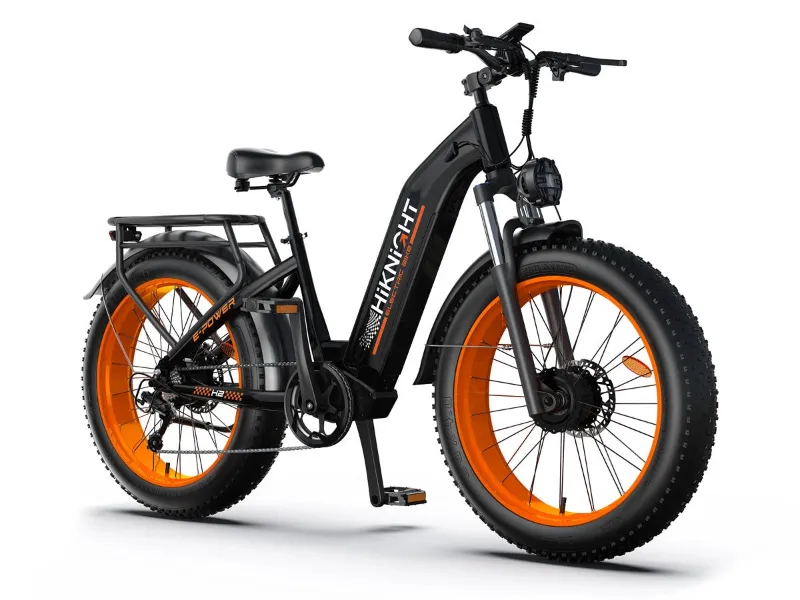
Single motor fat tire ebikes use one motor (typically 500W–1500W) mounted in either the front hub, rear hub, or as a mid-drive unit. This is the configuration on most commuter and recreational fat bikes, including many models from HiKNiGHT.
A quality single motor setup — like a hiknight ebike — still delivers plenty of punch for most riders, especially when paired with fat tires for grip and a solid battery. For everyday riding, a single motor is often all you need.
Dual Motor vs Single Motor: Head-to-Head Comparison
1. Power and Acceleration
This is where dual motor builds dominate. With power distributed across two wheels, you get:
- Faster launches — both wheels grip instead of one slipping
- Higher top speeds — a 40 mph e bike is realistic with dual motors, not just a marketing claim
- Shared load — each motor runs cooler under stress, which can extend motor life
A single motor, even a 1500W unit, will feel noticeably slower off the line and will top out lower on steep grades.
2. Hill Climbing and Torque
If you live somewhere hilly, ride trails, or carry heavy loads, this category matters most. A dual motor fat tire ebike essentially doubles your climbing torque, letting you tackle 20%+ grades that would stall a single motor bike. A 5000w dual motor electric bike can climb loose gravel and sand inclines that simply aren't possible with one motor.
Winner: Dual motor, easily.
3. Range and Battery Drain
Here's the catch: two motors consume more energy. Under full throttle, a dual motor setup can drain a battery 20–40% faster than a single motor. This is why battery capacity matters so much on dual builds — and why upgrading to a high-capacity pack like a hikeep ebike battery is one of the smartest investments for dual motor riders.
The good news? Most dual motor ebikes let you run on one motor only for efficiency, then kick in the second motor when you need the burst. Used smartly, dual motor bikes can match single motor range.
4. Weight and Handling
Dual motor fat tire ebikes are heavier — often 75–100+ lbs vs 55–75 lbs for single motor builds. That extra weight:
- Makes the bike harder to pedal unassisted or lift onto a rack
- Improves stability at high speed and on rough terrain
- Requires better brakes (look for hydraulic discs, always)
Fat tires help offset the weight with a huge contact patch, but if you're a smaller rider or need to carry your bike upstairs, a single motor build is friendlier.
5. Cost
Expect dual motor builds to cost $300–$1500 more than comparable single motor bikes. Add in potential upgrades — a spare battery, protective ebike gloves for harder-falling terrain riding, or a backup electric bike key and e bike keys set for a high-value build — and the total investment climbs further.
💡 Tip: Before you buy, grab the current $100 OFF All Orders deal on the HiKNiGHT discount code page — it applies to all orders and can take a real chunk out of a dual motor upgrade.
Who Should Choose a Dual Motor Fat Tire Ebike?
A dual motor upgrade is worth it if you:
- ✅ Ride steep hills, deep sand, snow, or loose trails regularly
- ✅ Want a true electric bicycle 40 mph machine
- ✅ Carry cargo or ride with heavy gear
- ✅ Are a bigger rider (200+ lbs) who needs the torque
- ✅ Ride off-road where traction loss is common
Check out the gtx 1 if this sounds like you — it's built precisely for this kind of demanding riding.
Who Should Stick With a Single Motor?
Stay single motor if you:
- ✅ Mostly ride flat roads, boardwalks, or moderate trails
- ✅ Commute and prioritize range over speed
- ✅ Need to lift or transport your bike often
- ✅ Want to spend under ~$1,500
A hiknight ebike with a single motor covers all of these use cases comfortably, and pairing it with comfortable electric bike gloves or e bike gloves makes long rides far more enjoyable.
Safety Notes for High-Power Dual Motor Riding
If you do go dual motor, take safety seriously. Bikes producing 2000W–6000W are *fast* — a proper electric dirt bike for teenager or adult dual motor build demands respect:
- Always wear gloves — quality ebike gloves protect your palms in a slide
- Hydraulic brakes are non-negotiable at 40 mph speeds
- Check local e-bike laws — many regions cap legal e-bikes at 750W / 20–28 mph; anything beyond that may require registration as a moped or off-road vehicle
- Keep a spare key set — replacements like electric bike key sets are cheap insurance
For younger riders, a hiknight electric dirt bike offers a more appropriately sized and controlled off-road experience than a full-power adult dual motor machine.
Our Verdict: Is the Upgrade Worth It?
For most casual riders: no. A good single motor fat tire ebike handles 90% of real-world riding at a lower price, lighter weight, and better range.
For power riders: absolutely yes. If hills, sand, snow, speed, or heavy loads are part of your riding life, a dual motor fat tire ebike isn't a luxury — it's a transformation. The confidence of knowing you have torque in reserve is genuinely addictive.
Before you decide, do one thing: check the HiKNiGHT discount code page. With $100 OFF All Orders currently running, the price gap between single and dual motor narrows enough that the upgrade becomes much easier to justify.
Frequently Asked Questions
The post's FAQ section appears above in the structured data below the article. Here are the most common questions readers ask:
Is a dual motor ebike faster than a single motor? Yes, generally. Dual motor fat tire ebikes combine the output of two motors, delivering faster acceleration and higher top speeds — a 40 mph e bike is achievable with dual motors, while most single motor builds top out at 20–32 mph.
Do dual motor ebikes use more battery? At full power, yes — expect 20–40% faster drain. However, most dual motor ebikes let you ride on one motor for efficiency and engage the second only when needed, which preserves range.
Can a dual motor ebike handle sand and snow? Far better than single motor. Power to both wheels with fat tire grip means both wheels pull, dramatically reducing the bogging and spinning that plagues single motor bikes in soft terrain.
What wattage should I look for in a dual motor fat tire ebike? 2000W (dual 1000W) is the practical entry point. A fat tire electric bike 5000w or a 6000w dual motor electric bike is for serious off-road use where legal.
Are dual motor ebikes street legal? It depends on your location. Many jurisdictions limit legal e-bikes to 750W and 20–28 mph. Higher-powered dual motor builds may need registration or may be restricted to private/off-road use. Always check your local regulations.
Frequently asked questions
Is a dual motor ebike faster than a single motor?
Yes, generally. Dual motor fat tire ebikes combine the output of two motors, delivering faster acceleration and higher top speeds — a 40 mph e bike is achievable with dual motors, while most single motor builds top out at 20–32 mph.
Do dual motor ebikes use more battery?
At full power, yes — expect 20–40% faster drain. However, most dual motor ebikes let you ride on one motor for efficiency and engage the second only when needed, which preserves range.
Can a dual motor ebike handle sand and snow?
Far better than single motor. Power to both wheels with fat tire grip means both wheels pull, dramatically reducing the bogging and spinning that plagues single motor bikes in soft terrain.
What wattage should I look for in a dual motor fat tire ebike?
2000W (dual 1000W) is the practical entry point. A fat tire electric bike 5000w or a 6000w dual motor electric bike is for serious off-road use where legal.
Are dual motor ebikes street legal?
It depends on your location. Many jurisdictions limit legal e-bikes to 750W and 20–28 mph. Higher-powered dual motor builds may need registration or may be restricted to private/off-road use. Always check your local regulations.