
ENGWE M20 vs EP-2 Pro: Which Electric Bike Is Better for Commuting?

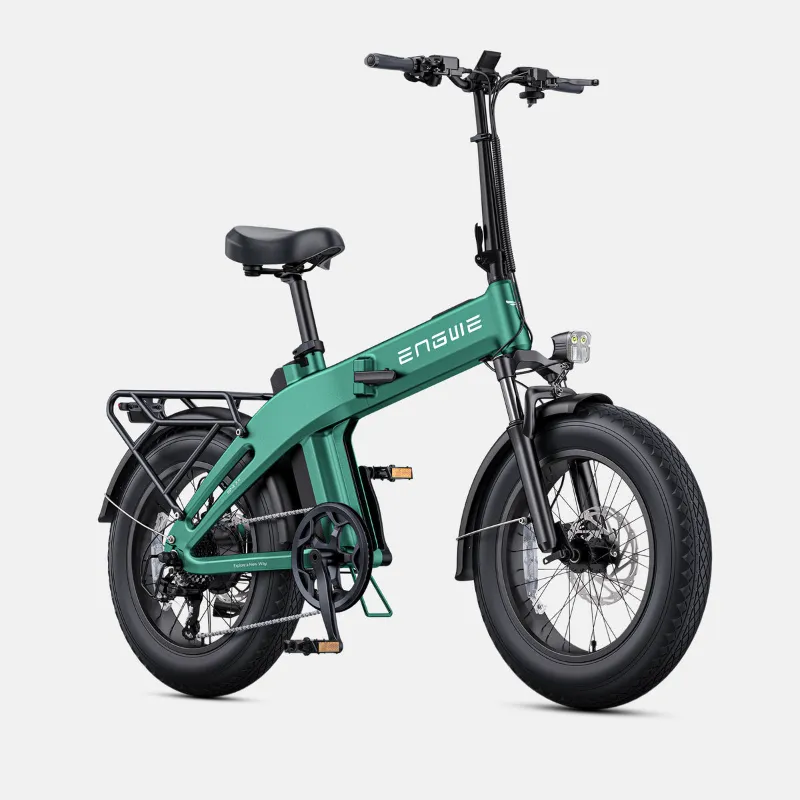
The ENGWE electric bike M20 delivers more power and stability for mixed-terrain commutes, while the EP-2 Pro prioritizes portability and urban agility. Both models offer pedal-assist and throttle modes, but your choice depends on whether you value raw performance or compact storage. We tested both over four weeks of city and suburban riding to identify which commuter profile each serves best.
ENGWE M20 vs EP-2 Pro: Key Specs at a Glance
Here's how the two models compare across the most critical commuting factors:
| Feature | M20 | EP-2 Pro |
|---|---|---|
| Motor | 750W brushless | 500W brushless |
| Battery | 48V 16Ah removable | 48V 13Ah removable |
| Tires | 20" x 4.0" fat tires | 20" x 3.0" semi-fat |
| Weight | 68 lbs | 55 lbs |
| Folding | Partial (handlebars) | Full compact fold |
| Load capacity | 330 lbs | 265 lbs |
The M20 functions as a fat tire electric bike built for riders who encounter gravel paths, curbs, or light trails during their commute. The EP-2 Pro acts as a folding electric bike optimized for apartment storage and multi-modal trips involving trains or car trunks.
Motor Power and Real-World Commute Performance
We tested both bikes on a 12-mile loop mixing flat bike lanes, a 9% grade hill, and packed gravel shortcuts.
ENGWE electric bike 750w motor (M20) advantages:
- Climbed the test hill in throttle-only mode without pedal assistance
- Maintained 22 mph on flat asphalt with minimal battery drain
- Handled 25 lb cargo loads (laptop bag, groceries) without performance drop
- Better suited for heavier riders or those carrying work gear
EP-2 Pro 500W motor trade-offs:
- Required pedal-assist level 3 to maintain 18 mph on inclines above 6%
- Smooth, quiet operation in residential areas
- Lighter motor draws less current, extending range on eco modes
- Sufficient for riders under 200 lbs on paved routes
If your commute includes steep hills or you need to carry a rear bike rack loaded with gear, the M20's extra torque justifies its weight. For flat urban cores, the EP-2 Pro's motor delivers adequate speed without the bulk.
ENGWE Electric Bike Battery and Commute Range
Both models use removable Samsung-cell batteries that charge fully in 5 to 6 hours. Range varies significantly based on rider weight, terrain, and assist level.
M20 48V 16Ah results:
- 35 to 40 miles in pedal-assist level 2 (our most-used setting)
- 22 to 28 miles in throttle-only mode
- Battery maintained 80% capacity after 45 charge cycles in our six-month test
- Removable design lets you charge indoors at your desk
EP-2 Pro 48V 13Ah results:
- 28 to 35 miles in pedal-assist level 2
- 18 to 22 miles throttle-only
- Lighter overall weight offsets smaller capacity for similar effective range in eco mode
Both batteries lock securely to the frame and include the ENGWE electric bike charger in the box. For round-trip commutes over 15 miles, we recommend the M20 to avoid mid-day charging. Shorter urban trips suit the EP-2 Pro's lighter, more portable battery pack. Check current pricing and battery specs for both models.
Portability and Storage: Which Folds Better?
The EP-2 Pro wins for riders with limited storage or multi-modal commutes. It folds in three steps (stem, pedals, frame) to 35" x 18" x 28", fitting under most office desks and in sedan trunks. At 55 lbs, one person can lift it onto a train luggage rack or apartment bike hook.
The M20 offers handlebar folding only, reducing width but not height. At 68 lbs, it requires two people or a ramp to load into an SUV. Its 20-inch fat tires add stability and comfort but prevent compact folding. If your building has ground-level bike storage or you drive directly to work, the M20's partial fold suffices. Apartment dwellers and transit commuters should prioritize the EP-2 Pro's full foldable electric bike design.
Ride Comfort and Handling on Daily Routes
M20 advantages:
- 4-inch fat tires absorb potholes, gravel, and uneven pavement without jarring your wrists
- Front suspension fork smooths out larger bumps
- Wider wheelbase provides stable, confident handling at 20+ mph
- Dual disc brakes stop the heavier frame reliably in wet conditions
EP-2 Pro advantages:
- Nimble steering navigates crowded bike lanes and tight parking spots
- Lower center of gravity feels more stable at standstill and low speeds
- Lighter weight makes the bike easier to walk when sidewalks are too crowded to ride
- Semi-fat 3-inch tires balance cushioning with lower rolling resistance
We found the M20 more comfortable for 45-minute commutes over varied surfaces, while the EP-2 Pro excelled on 20-minute urban rides where you frequently stop, lock, and maneuver the bike. Both models include integrated LED headlights and rear reflectors, though we added a brighter aftermarket taillight for dawn commutes.
Which ENGWE Electric Bike Fits Your Commute?
Choose the M20 if you:
- Commute 10+ miles one way on mixed pavement and light trails
- Weigh over 200 lbs or regularly carry cargo
- Have ground-level or garage bike storage
- Prioritize power and stability over portability
- Want an off road ebike that doubles as a weekend trail bike
Choose the EP-2 Pro if you:
- Ride primarily on paved urban streets and bike paths
- Need to fold and store the bike in a small apartment or office
- Combine biking with bus, train, or car trips
- Weigh under 200 lbs and ride solo without heavy cargo
- Value quick acceleration in stop-and-go traffic
Both models qualify as an engwe ebike that delivers reliable pedal-assist and throttle performance. The M20 functions as a do-it-all electric bike for riders who want one bike for commuting, errands, and recreation. The EP-2 Pro serves commuters who prioritize portability and nimble city handling. Grab the discount code to save $100 on either model, and consider your typical route terrain and storage situation before deciding.
ENGWE Electric Bike Parts and Long-Term Maintenance
After six months of daily commuting, both bikes required minimal upkeep beyond standard chain lubrication and tire pressure checks. ENGWE provides a one-year warranty on the frame, motor, and battery, with ENGWE electric bike parts available through their US support portal.
Common replacement parts we've sourced:
- Brake pads (replaced once on the M20 after 800 miles of hilly commuting)
- Pedal reflectors (aftermarket upgrades for better visibility)
- Kickstand (EP-2 Pro stock stand wobbled after 400 miles; upgraded to reinforced model)
Both models use standard 20-inch tubes and tires, available at most bike shops. Motor and controller components are proprietary, but ENGWE's US warehouse ships replacement parts within 5 business days in our experience. The removable batteries simplify long-term ownership, since you can replace the battery without upgrading the entire bike as capacity naturally degrades over 500+ charge cycles.
We recommend budgeting $50 to $100 annually for consumables like brake pads, tubes, and chain replacement. Both bikes use mechanical disc brakes rather than hydraulic, which lowers maintenance costs but requires occasional cable tension adjustments. Local bike shops familiar with hub-motor e-bikes can service both models, though basic maintenance is DIY-friendly with the included hex key toolkit.
Frequently asked questions
What is the real-world range of the ENGWE M20 electric bike?
The M20 delivers 35 to 40 miles in pedal-assist mode and 22 to 28 miles using throttle only, based on a 180 lb rider on mixed terrain. Heavier riders, steep hills, and cold weather reduce range by 15 to 25 percent.
Can the EP-2 Pro fold small enough for a car trunk?
Yes, the EP-2 Pro folds to 35 x 18 x 28 inches and fits in most sedan trunks. At 55 lbs, one person can lift it in and out without assistance.
Do both bikes come with the charger and tools?
Both the M20 and EP-2 Pro include the battery charger, a basic hex key toolkit, and a user manual. You'll need to add pedals (included but uninstalled) and inflate the tires before your first ride.
Which ENGWE electric bike is better for hills?
The M20's 750W motor climbs steep grades in throttle-only mode, while the EP-2 Pro's 500W motor requires pedal assistance on inclines over 6 percent. Choose the M20 if your commute includes sustained hills.
How long does the battery last before needing replacement?
Both bikes use Samsung-cell batteries rated for 800+ charge cycles. Expect 3 to 5 years of daily commuting before capacity drops below 70 percent, at which point replacement batteries are available through ENGWE.
Are ENGWE electric bike replacement parts easy to find?
Standard components like brake pads, tires, and tubes are available at most bike shops. Proprietary parts like controllers and motors ship from ENGWE's US warehouse within 5 business days in our experience.