
How to Finally Beat Motion Sickness on Road Trips

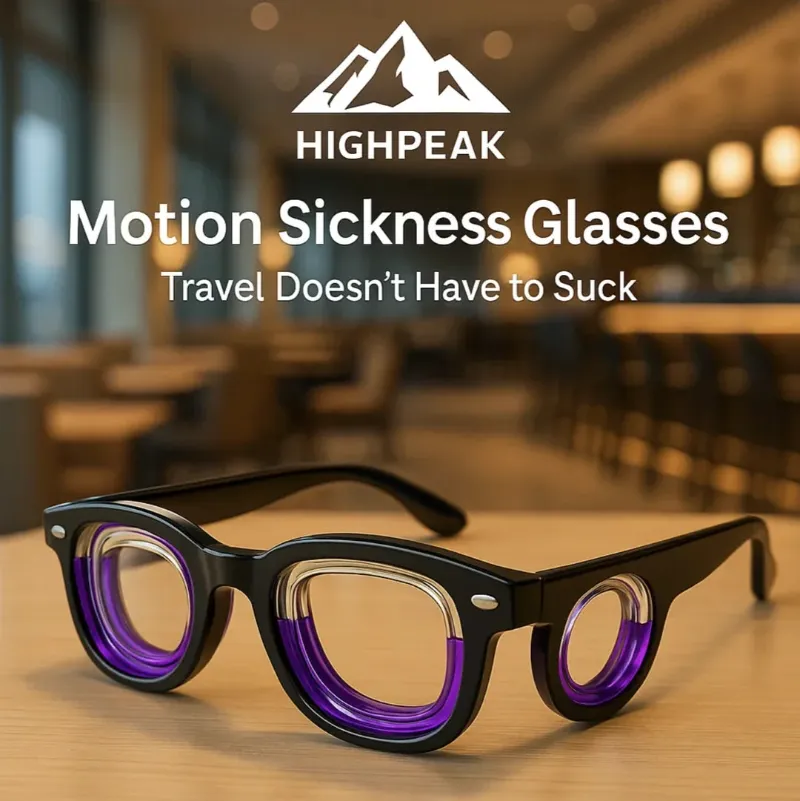
Motion sickness glasses are the simplest fix we have found for queasy passengers on long road trips, and they work without pills, patches, or pulling over every hour. They look odd, they cost less than a tank of gas, and they let you read, scroll, or watch a screen in the car again. Here is how they work, how to use them properly, and how we build a full anti-nausea routine around them.
How Do Motion Sickness Glasses Work?
Motion sickness happens because of a sensory mismatch: your inner ear feels the car moving, but your eyes, staring at a phone or the seat back, tell your brain you are sitting still. Your brain reads that conflict as a possible poisoning, which is why nausea shows up.
These glasses attack the mismatch directly. They have no lenses, just frames fitted with liquid-filled channels around the eyes and along the sides. As the vehicle moves, the liquid sloshes and creates an artificial horizon that moves with the car. Your eyes register that rolling motion, your inner ear agrees, and the conflict that triggers nausea mostly disappears. Most people feel the effect within 10 to 15 minutes of putting them on.
If you want a deeper explainer with independent testing, this review of how motion sickness glasses work covers the science well, and Denver7 tested anti-motion sickness smart glasses with real riders to see if they hold up.
Which Motion Sickness Glasses Should You Buy?
Not all pairs are equal. Some are cheap fashion props with sealed tubes that do nothing; real ones have open liquid channels sized for adults. We tested a few and our pick is the motion sickness glasses from HighPeak, which check the boxes that matter:
- Open liquid channels on both rims that respond to real vehicle motion, not just head movement
- Fits over or in place of glasses so adult prescription wearers can use them
- Foldable frame that drops into a glovebox or bag without cracking
- Usable by drivers and passengers (more on why passengers benefit most below)
For current pricing and whether our discount code applies, check the latest price before you order. If you are comparing options after seeing listings for motion sickness glasses on Amazon or at Walgreens, judge them on the liquid channel design, not the price alone.
How to Use Motion Sickness Glasses on a Road Trip
Technique matters more than people expect. Here is the routine we use:
- Put them on before symptoms start. Once you are already queasy, it takes much longer to recover. Passengers should put them on in the first 10 minutes of the drive.
- Wear them for 10 to 15 minutes at a time. You do not need them the whole trip. Wear a round, take them off, and repeat if the nausea creeps back.
- Drivers use them on breaks, not while driving. The liquid distorts the horizon slightly, so keep them for passengers in motion, or for the driver while parked and recovering.
- Pair them with seat position. Sit front, look at the horizon when not using screens, and avoid the third row, which amplifies sway.
One thing they will not do: fix nausea you bring into the car. A greasy breakfast or a hangover will beat any pair of glasses, so start with a light meal and water.
Build the Rest of Your Anti-Nausea Road Trip Kit
Glasses handle the sensory mismatch, but a well-packed car handles the rest. Here is what actually earns its space:
- A way to keep snacks and essentials within reach. Reaching into a packed trunk or back seat while moving makes things worse. We keep a fanny pack peak on the passenger seat so the queasy rider never has to twist around for gum, ginger chews, or wipes.
- Entertainment that does not fight the glasses. Audio is the safest bet for bad stretches of road. When the roads smooth out, a flix stick turns the car's screen into a movie system, and the glasses let screen-time-avoiders finally join in.
- Fresh air control. Stuffy air is a hidden trigger. Crack a window or run fresh-air mode, not recirculation.
- A clean, calm cabin. Odd smells make nausea worse. Before a long trip, a quick pass with a car cleaner jet wash clears out fast-food funk and spilled drinks far better than a hanging air freshener.
Everything above packs in minutes, and if you order the glasses as part of a bigger trip-prep haul, grab the code for 5% off all orders.
Motion Sickness Glasses Reviews: What Real Users Say
The pattern across reviews, Reddit threads, and reporter tests is consistent, and it is worth knowing before you buy:
- Passengers get the most benefit. Reading and phone use in the car go from impossible to fine for most testers.
- Results vary by person. Severe vestibular conditions may see less effect, and no reviewer claims glasses work for everyone.
- The looks are the tradeoff. People will ask about them at gas stops. Every wearer gets used to it fast once they realize the alternative is a plastic bag on their lap.
- Kids can use them. Adult sizing works for older kids, though younger children may need help keeping them positioned.
HuffPost's hands-on test of motion sickness glasses for car sickness matches what we saw: skeptical first impression, surprised second impression.
Who Motion Sickness Glasses Suit Best (and Who Should Skip Them)
Great fit:
- Passengers who want to read, scroll, or work in the car
- Parents tired of mid-trip vomit stops with kids
- Anyone who reacts badly to motion sickness pills (drowsiness, dry mouth)
- RV and boat travelers who face long stretches of motion
Skip or supplement them if:
- You get migraines with visual triggers, since the moving liquid can bother some people
- You expect the driver to wear them on the move
- Your nausea is tied to smells or anxiety rather than motion, in which case fix the cabin and the seating first
For most queasy passengers, though, the math is simple: one cheap, reusable, drug-free pair versus years of dreading road trips. We keep a pair in every glovebox we control.
Quick Care Tips So Your Glasses Last
- Rinse the liquid channels with fresh water if they get sandy or dusty, and dry the frames with a soft cloth
- Store them folded in their case, not loose in a door pocket where heat and pressure can crack the seals
- Keep them out of a hot parked car for long stretches; extreme heat can stress the liquid chambers
- Wipe nose pads weekly with a damp cloth, especially if several family members share a pair
Treat them like sunglasses and they will outlast the road trips you planned them for.
Frequently asked questions
How do motion sickness glasses work?
The frames contain liquid channels that slosh in sync with the vehicle, creating a moving artificial horizon. That syncs what your eyes see with what your inner ear feels, which removes the sensory conflict that triggers nausea.
Are motion sickness glasses for adults usable over prescription glasses?
Yes for most adult wearers, including over prescription glasses, though fit varies by frame size. Check the product's fit details before ordering if you wear wide prescription frames.
Where can I find motion sickness glasses near me?
They are sold in pharmacies, big-box stores, and online, but selection and quality vary a lot. We recommend buying from a retailer like HighPeak where you can verify the liquid channel design and use our discount code.
Can the driver wear motion sickness glasses while driving?
No, the liquid slightly distorts the horizon view, so drivers should use them only while parked or recovering. They are designed for passengers in motion.
How fast do motion sickness glasses work?
Most people feel relief within 10 to 15 minutes of putting them on. Results vary by person, so do a short test drive before a long trip.
Can kids use HighPeak motion sickness glasses?
Yes, if they fit comfortably on older kids. Younger children may need help keeping them positioned, and parents should supervise the first few uses.