
The Ultimate Guide to Effortless Car Cleaning at Home

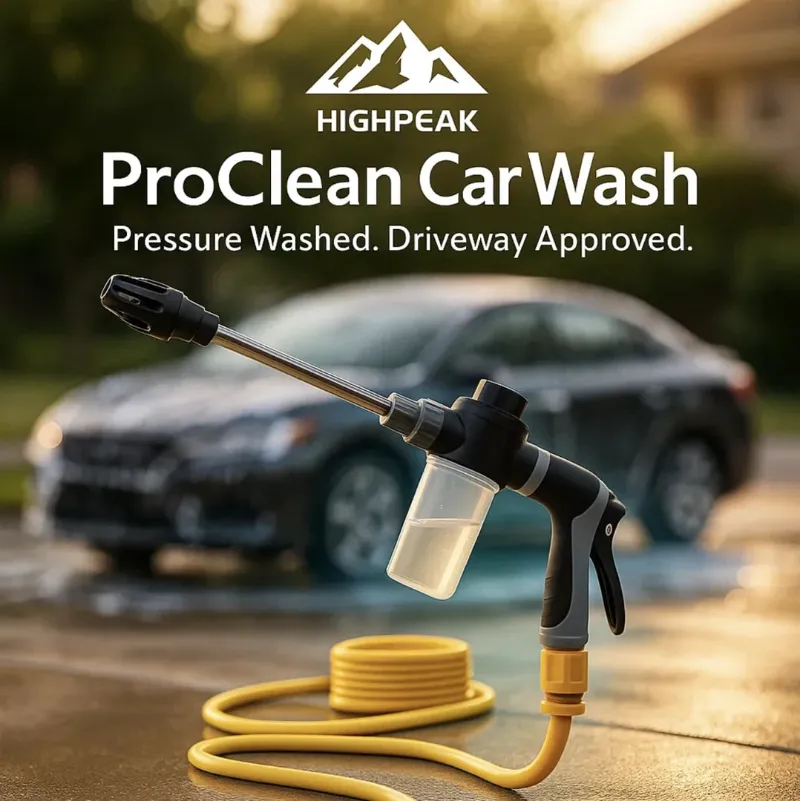
A car cleaner jet wash is the fastest way to get a genuinely spotless, swirl-free car at home, because it combines pressurised water, foam and targeted rinsing in one tool instead of the old bucket-and-hose slog. Below we break down how the car cleaner jet wash works, how to set it up, which cleaning products actually matter, and the mistakes that cause swirl marks, so you can wash your car properly in under half an hour.
What a Car Cleaner Jet Wash Actually Is
A car cleaner jet wash is a compact car pressure washer setup built specifically for vehicle care. Unlike a heavy-duty pressure washer meant for patios and driveways, it runs at a lower, paint-safe pressure and usually pairs with attachments designed for cars: a foam cannon, a fan-spray rinse nozzle and sometimes a rotating brush head.
The core parts of a typical auto detailing pressure washer setup are:
- The jet wash unit itself, which connects to your garden tap and boosts water pressure to a level that lifts grime without damaging paint
- A foam cannon or soap bottle attachment that covers the car in clinging foam to loosen dirt before you touch the paint
- Interchangeable nozzles for wide rinsing, focused jetting and gentle wheel cleaning
- A hose and quick-connect fittings so setup takes about a minute
If you want to see the exact kit we recommend, check out the car cleaner jet wash on the HighPeak store, or grab the code to knock 5% off your order.
Why a Jet Wash Beats the Two-Bucket Method
We still respect the two-bucket method, but the reality is that most home washes fail at the same step: pre-rinse. A garden hose simply cannot blast away the grit sitting on your paint. When your wash mitt drags that grit across the panel, you get swirl marks.
A car wash pressure washer attachment solves this by:
- Pre-rinsing with force - loose dirt, dust and road film come off before the mitt ever touches the paint
- Foaming the whole car - the foam sits and softens stubborn bugs, bird droppings and traffic film
- Cutting rinse time dramatically - a full rinse takes minutes instead of ten
- Reaching wheel arches, grilles and badge gaps where a hose dribbles and a sponge cannot reach
Independent testers back this up. Our favourite full breakdown of what to look for is The Best Pressure Washers for Cars, Tested and Reviewed over at Bob Vila, and CAR magazine also put the leading car pressure washer models through real-world vehicle testing. Both conclude the same thing we do: pressure alone is not the point - controlled, paint-safe pressure plus foam is what gets results.
How to Wash Your Car With a Jet Wash: Step by Step
- Park in the shade and cool the panels. Hot paint dries soap too fast and leaves water spots.
- Do a full dry pre-rinse. Work top to bottom with a fan nozzle, blasting dirt out of the lower sills and wheel arches last.
- Foam the entire car. Cover every panel and let it dwell for three to five minutes. Do not let it dry on.
- Rinse the foam off completely. Same top-to-bottom pattern.
- Hand wash with a clean mitt and proper car shampoo. Yes, we still do this step. Foam softens grime, but a gentle mitt pass finishes the job. Use straight-line motions, not circles.
- Final rinse, then dry immediately. Use a large microfiber drying towel or a blower. Air-drying is what causes mineral spots.
- Finish the details. Wheels, tyres, door shuts and glass last, using separate cloths so brake dust never touches your paint.
Whole process, start to finish: about 25 to 30 minutes once you have done it a couple of times.
Choosing the Right Jet Wash for Your Car
Not every car pressure washer is suitable for paint. Here is what to check before buying:
| Feature | Why It Matters | What to Avoid |
|---|---|---|
| Pressure range | Paint-safe cleaning needs moderate pressure, not maximum | Industrial units with no low-pressure setting |
| Flow rate | Higher flow rinses foam faster | Very low-flow units that take forever to rinse |
| Foam cannon included | Foam is the single biggest upgrade for scratch-free washing | Kits where foam must be bought separately |
| Weight and hose length | You will be walking around the car constantly | Short cords and hoses that limit your reach |
The rule most detailers use: if the kit is marketed for cars specifically, the pressure and nozzles are already tuned for it. That is exactly why we point people to the car cleaner jet wash rather than a general-purpose pressure washer repurposed for cars. For current pricing and bundle options, check the latest price on our coupon page.
Common Mistakes That Ruin the Results
- Using washing-up liquid. It strips wax and dries out trim. Buy a pH-neutral car shampoo.
- Skipping the pre-rinse. The jet wash's whole job is removing grit before contact, so use it.
- Letting foam dry on the car. Dwell time is three to five minutes in shade, not fifteen.
- Washing wheels last with the same mitt. Always do wheels first with a dedicated brush and cloth.
- Using a zero-degree jet on paint or glass. Keep to wide fan settings on anything painted.
One small but genuinely useful tip from our own testing: unbox and prep everything the night before your first wash. If the packaging is stubborn, a tool like the cardboard cutter makes quick work of the box and cable ties without scratching anything you are about to bolt onto your car. And if you keep your jet wash, nozzles and microfibers in the boot, a fanny pack peak is a surprisingly good way to carry clips, cloths and small fittings around the car without putting them down in the dirt.
Care and Maintenance of Your Jet Wash
A car cleaner jet wash will last years with basic care:
- Drain and coil the hose after every use so it does not kink or crack
- Flush the foam cannon with clean water - dried soap clogs the mesh screen
- Store nozzles in their case so the orifices do not get damaged
- Never leave the unit pressurised; release the trigger and disconnect after each session
- Bring it indoors in winter - frozen residual water splits pumps and hoses
Who Should Buy One
If you wash your car more than once a month, own a dark-coloured car, or care about paint condition long term, a car cleaner jet wash pays for itself quickly compared to paid washes, and the paint stays healthier than with either bucket-only washing or cheap automatic brushes. If you have a small flat with no outdoor tap access, or you genuinely wash the car twice a year, it will mostly gather dust and a hose kit is the better call. For everyone else, it is one of the highest-value upgrades in home car care - and the current 5% off code on our coupon page makes the starting price friendlier too.
Frequently asked questions
Is a car cleaner jet wash safe for my car's paint?
Yes, provided it is a unit designed for vehicle use with moderate, paint-safe pressure and fan-pattern nozzles. Avoid industrial high-pressure machines and never hold a narrow jet close to paint, glass or trim seals.
Can I use washing-up liquid instead of car shampoo?
No. Washing-up liquid strips wax and can dull trim over time. Use a pH-neutral car shampoo designed for automotive paint, either through the foam cannon or in a bucket.
How long does a proper jet wash take at home?
Once you have done it a couple of times, a full wash takes roughly 25 to 30 minutes, including foam dwell time and drying. A garden-hose bucket wash typically runs much longer and with worse results.
What is the difference between a jet wash and a pressure washer for cars?
An auto detailing pressure washer setup adds a foam cannon, paint-safe pressure settings and vehicle-specific nozzles to a standard pressure washer base. The foam stage is the biggest difference, as it lifts grit before you touch the paint.
How do I maintain my jet wash after each use?
Flush the foam cannon, drain the hoses and pump, release any remaining pressure and store it indoors out of frost. This keeps the pump seals and hose intact for years.
Do I still need a wash mitt if I use a foam cannon?
Do a full dry pre-rinse first, foam the whole car, rinse again, then hand wash with a clean microfiber mitt and pH-neutral shampoo before the final rinse and towel dry. The jet wash handles the dirt removal; the mitt handles the finish.