
Which Bug Zapper Is Best for Your Patio? Solar vs. Electric

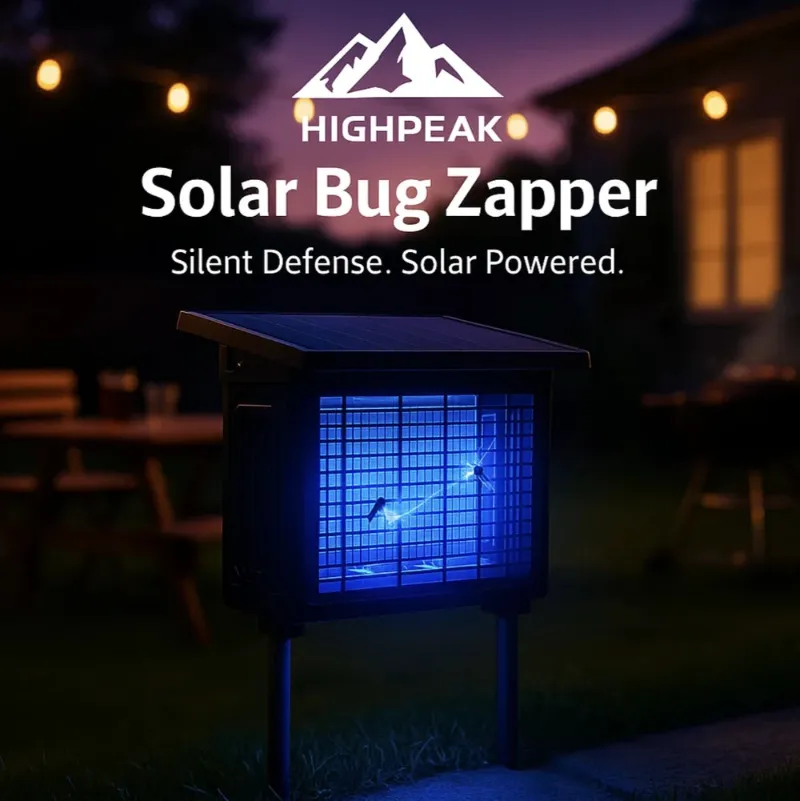
For most patios, a solar bug zapper wins on convenience and cost to run, while a corded electric zapper wins on raw killing power and all-night reliability. If your patio sits close to the house with an outlet nearby, electric is the stronger performer. If your patio is a deck, a poolside slab, or anywhere running extension cords feels like a trip hazard, a solar bug zapper is the smarter pick, and the HighPeak solar bug zapper is the one we keep on our own test deck.
Here's how the two stack up, and how to decide which one belongs on your patio this season.
Solar vs. Electric Bug Zappers: The Real Differences
Both types work the same way at the core: a UV light lures flying insects, then an electrified grid or a sticky trap finishes the job. The differences show up in power, placement, and upkeep.
| Feature | Solar Bug Zapper | Electric (Corded) Bug Zapper |
|---|---|---|
| Placement | Anywhere with sun; no outlet needed | Must sit near an outlet or extension cord |
| Running cost | Essentially zero | Small but ongoing |
| Runtime | Depends on daily charge | All night, every night |
| Best for | Decks, poolside, camping, patios far from power | Large yards, covered patios near outlets |
| Setup | Stake, hang, or place and forget | Mount and route power |
If you want a deeper dive on real-world performance, this community thread on whether solar-powered bug zappers are worth it for backyard use matches what we've seen in our own testing.
Why a Solar Bug Zapper Makes Sense for Patios
The honest answer to "are these worth it?" is that it depends on your patio, but solar units win in more situations than people expect:
- No cords across walkways. This is the biggest one. An electric zapper on a pool patio usually means an extension cord snaking across wet concrete, which is both ugly and a genuine safety issue around water.
- Zero running cost. A solar unit charges from sunlight and switches on at dusk. There is nothing to plug in and nothing on your power bill.
- Flexible placement. You can stake it in a planter, hang it from a pergola, or move it from the patio to a campsite. Electric units live wherever the outlet is.
- Lantern-style designs do double duty. Many solar units double as ambient lighting, so you get a solar bug zapper lantern that handles bugs and mood lighting in one footprint.
The tradeoff is honest too: solar output depends on how much sun the panel got that day, and onboard batteries usually cover an evening rather than a full 24-hour cycle. In heavy rain seasons, look for a solar bug zapper outdoor waterproof rating so the unit survives being left out.
When an Electric Zapper Is the Better Choice
We're not here to pretend solar always wins. Go corded electric if:
- Your patio is covered and wired, so power is already within reach.
- You're fighting a serious mosquito or fly population over a large area. If you're covering a big lot, something in the solar bug zapper for 1 acre class with a larger grid and stronger UV output makes sense, and corded units tend to hold output all night.
- You want consistent performance regardless of weather. Three cloudy days in a row will dim a solar unit's runtime.
For most suburban patios, though, the cord-free convenience outweighs the extra raw power.
How We Test Zappers (and What to Look For)
We run units on an actual patio through full evenings, checking three things:
- Charge-to-runtime ratio. Does a normal day of sun actually get you through dinner and drinks, or does it die at 9pm?
- Weather resistance. A solar bug zapper outdoor waterproof build should shrug off sprinklers and a passing shower without issue.
- Coverage honesty. Manufacturers love big acreage claims. Measure performance in the space you actually use, not the whole property line.
Our current patio pick is the HighPeak solar bug zapper, which hits the sweet spot of decent UV output, weather-sealed housing, and a lantern mode that makes it welcome at the table. Solar bug zapper reviews tend to split on battery quality more than anything else, so that's where we focus our testing.
Where to Place a Solar Bug Zapper for Best Results
Placement matters more than the model you buy:
- Put it away from the seating, not next to it. Zappers lure bugs in, so placing one right beside the appetizers draws pests toward the food. Ten to twenty feet from where people sit works far better.
- Give the panel direct sun. Under a covered patio, the unit will run but the panel won't charge well. Hang it on a sunny rail and swivel or relocate it into sun during the day if needed.
- Eliminate standing water nearby. No zapper beats removing the breeding source. Empty plant saucers and kiddie pools after rain.
- Turn off competing white lights. Bugs navigate by light, so the less competing light nearby, the better your zapper works.
Setting Up a Full Patio Bug-Defense Setup
A zapper is one layer. For a patio that actually stays usable at dusk:
- Run the zapper from late afternoon onward so it's already working when bugs get active.
- Add a fan if your patio allows it. Mosquitoes are weak flyers, and moving air is underrated.
- Keep lighting warm and low. Amber bulbs attract fewer insects than cool white ones.
- If your patio includes a pool or spa zone, an inflatable bar for swimming pool keeps drinks and snacks in the middle of the action so guests aren't trekking in and out, propping doors open, and letting bugs in every five minutes.
Who Each Option Suits
- Choose a solar bug zapper if you rent, if your patio has no outlet nearby, if you hate extension cords, or if you also camp and want one unit that travels.
- Choose electric if your patio is wired, if you battle heavy insect pressure nightly, or if you need guaranteed all-night output regardless of cloud cover.
Whichever way you go, check the current price and grab the code on our HighPeak discount page before you buy, since the running offer is 5% off all orders and pricing on these units shifts with the season.
Our Bottom Line
For the majority of patios, we'd spend the money on a quality solar bug zapper and skip the cord juggling entirely. Pair it with good placement and basic mosquito-source control and you'll get most of the benefit of a corded unit with none of the setup hassle. If your patio happens to be wired and your insect problem is severe, electric still earns its outlet, but that's increasingly the exception rather than the rule. Want to see the unit we actually run? Here's the solar bug zapper we recommend, and the discount code page has the current 5% off offer.
Frequently asked questions
Is a solar bug zapper as effective as a plug-in electric model?
For most patios, yes. Solar units cost nothing to run, need no outlet, and can be placed away from seating. Corded electric units hold more consistent all-night output, so they win if your patio is wired and insect pressure is heavy.
How much area does a solar bug zapper cover?
Most units cover a patio or small yard of roughly a quarter acre in real-world conditions. Larger coverage claims assume open space with no competing light, so match the unit to the area you actually use.
Can I leave a solar bug zapper outside in the rain?
Most quality units have weather-sealed housings and can be left out in rain. Check the product's waterproof rating before buying, and bring it inside for extended storms or winter storage to protect the battery.
Where should I place my solar bug zapper on the patio?
Place it 10 to 20 feet from where people sit, in a spot that gets direct sun for charging. Keeping it away from competing white lights helps it attract more insects.
What should I look for in the best solar bug zapper?
Look for battery capacity, a genuine waterproof rating, and a lantern mode if you want it to double as patio lighting. Reviews consistently show battery quality separates good units from duds.
Can I use a solar bug zapper for camping as well as my patio?
Yes, many solar models are compact and cord-free by design, which makes them easy to move between the patio, campsite, and RV. Just make sure it gets a full day of sun before your first evening out.