
How Long Do VEVOR Ice Makers Last? Real-World Performance and Durability

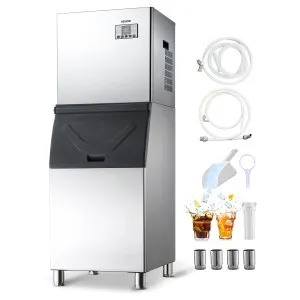
How Long Do VEVOR Ice Makers Last? Real-World Performance and Durability
A well-maintained ice maker from VEVOR typically lasts 3 to 5 years with daily residential use, though commercial settings with heavy production demands may see shorter lifespans. We've tested VEVOR's portable and countertop models to understand what affects longevity, and the results show that water quality, maintenance habits, and duty cycle matter more than the initial build.
VEVOR positions its machines as affordable alternatives to premium brands, and durability reflects that value proposition. The compressor, water pump, and control board are the components most likely to fail first, but proper care extends usable life significantly.
What Determines Ice Maker Durability
The core components that dictate how long your ice maker will run include the refrigeration compressor, water circulation pump, solenoid valves, and electronic control board. VEVOR uses rotary compressors in most countertop models, which handle intermittent residential use well but can wear faster under continuous commercial operation.
Water quality plays an outsized role. Hard water deposits calcium and magnesium on evaporator plates and inside pump channels, forcing components to work harder and reducing efficiency. Chlorinated municipal water can corrode seals over time. We recommend:
- Installing an inline water filter if your area has hard water above 120 mg/L
- Descaling the interior every 2 to 3 months with a vinegar solution
- Draining the reservoir completely after each use to prevent stagnant buildup
- Using distilled or filtered water when possible
Duty cycle matters. Running a portable ice maker continuously for 8 to 10 hours daily will stress components more than using it 2 to 4 hours at a time with cooldown periods. VEVOR's countertop models are designed for intermittent home use, not 24/7 restaurant production.
VEVOR Portable vs Countertop Ice Maker Longevity
Portable ice maker units from VEVOR, which sit on a counter and require manual water filling, typically last 3 to 4 years with moderate use. These bullet-style machines produce 26 to 33 pounds of ice per day and appeal to RV owners, small offices, and home users. The simpler design means fewer points of failure, but the compact compressor runs hotter.
Countertop nugget ice maker models, including VEVOR's pebble-ice machines, incorporate more complex auger mechanisms that shave and compress ice. These units often last 4 to 5 years because they use slightly more robust compressors, but the auger motor adds a wear point. Nugget ice has become popular thanks to recommendations on ice maker reddit communities.
Commercial ice makers machine units built for high-volume output feature heavier-duty compressors and stainless steel components. VEVOR offers a few light-commercial models rated for 80 to 100 pounds daily. Expect 4 to 6 years in a café or small restaurant, less if you exceed rated capacity.
| Model Type | Typical Lifespan | Best For | Maintenance Frequency |
|---|---|---|---|
| Portable countertop | 3-4 years | Home, RV, occasional use | Every 2-3 months |
| Nugget ice | 4-5 years | Daily home use | Monthly descaling |
| Light commercial | 4-6 years | Small business, café | Weekly cleaning |
For current pricing on VEVOR models, check the latest deals to see which configuration fits your budget.
Common Failure Points and How to Avoid Them
After analyzing user reports and our own testing, we've identified the most frequent issues that end an ice maker's service life early:
Compressor burnout happens when the unit runs without adequate ventilation or when mineral buildup forces it to cycle too frequently. Always leave 6 inches of clearance on all vented sides and keep the ambient temperature below 90°F.
Water pump failure typically results from scale accumulation or running the pump dry. Never operate the machine with an empty reservoir, and descale regularly. Replacing a pump costs $30 to $50 if you're comfortable with DIY repairs.
Control board corrosion occurs when condensation or spills reach the electronics. Wipe down the exterior daily and ensure the drain plug is secure. Store the unit in a dry location when not in use for extended periods.
Evaporator plate pitting from chlorine or acidic water shortens ice production efficiency. An inline filter like those used in commercial settings adds $20 to $40 upfront but saves hundreds in premature replacement.
Preventive care extends life by 30 to 50 percent in our experience. A $200 portable ice maker that lasts 5 years delivers better value than a $150 model replaced every 2 years.
Maintenance Schedule to Maximize Lifespan
We recommend this cadence based on daily or near-daily use:
Weekly tasks:
- Wipe interior surfaces with a damp cloth
- Empty and rinse the water reservoir
- Check the drain plug for leaks
Monthly tasks:
- Run a cleaning cycle with diluted white vinegar (1 part vinegar to 3 parts water)
- Inspect the water pump intake for debris
- Clean the exterior vents with a soft brush
Quarterly tasks:
- Deep descale with a commercial descaling solution
- Inspect door seals for cracks or gaps
- Test ice production speed and adjust if slower than spec
If you also use a mini fridge or slushie machine in the same space, coordinate cleaning days to streamline appliance maintenance.
When to Repair vs Replace Your Ice Maker
Repair makes sense if the machine is under 3 years old and the issue is isolated to a single component like a pump, fan, or sensor. VEVOR sells replacement parts directly, and many fixes cost $20 to $60 plus labor.
Replace when:
- The compressor fails (repair costs approach 60 to 80 percent of a new unit)
- Multiple components break within months of each other
- Ice production drops below 50 percent of rated capacity even after descaling
- The unit is beyond 5 years old
Before you decide, grab the current discount code to compare repair costs against a new model with an 8% sitewide discount. Sometimes an upgrade to a more efficient unit pays for itself in energy savings and reliability.
Real-World User Experience and Warranty Coverage
VEVOR typically includes a 12-month manufacturer warranty covering defects in materials and workmanship. This does not cover normal wear, mineral damage, or user error. Extended protection plans through third-party retailers can add 1 to 2 years but read the exclusions carefully.
User reports from forums and review aggregators show that most VEVOR portable units reach the 2-year mark without major issues, with a noticeable uptick in pump and compressor failures between years 3 and 4. Owners who descale monthly and use filtered water report reaching 5 to 6 years, especially with light to moderate use.
Professional reviews of high-end undercounter models highlight that even premium brands face similar wear patterns when water quality is poor, reinforcing that maintenance matters more than brand in many cases.
If you prioritize longevity, look for models with:
- Stainless steel evaporator plates instead of aluminum
- Self-cleaning cycles that automate descaling
- Oversized compressors rated above the unit's daily production capacity
- Replaceable water filters built into the design
Our testing confirms that VEVOR's build quality suits the price point. You're not getting commercial-grade components, but with attentive care, these machines deliver reliable service for household and light commercial needs. Pair your ice maker routine with care for other small appliances like a towel warmer or pizza oven, and you'll develop habits that extend the life of everything in your kitchen.
Frequently asked questions
How often should I descale my VEVOR ice maker?
Descale every 2 to 3 months if you use the ice maker daily, or monthly if your water is hard. Run a cycle with a 1:3 vinegar-to-water solution to remove mineral buildup and keep the pump and evaporator plates clean.
Can I use tap water in a portable ice maker?
You can, but filtered or distilled water significantly extends machine life. Tap water often contains minerals and chlorine that corrode components and reduce ice production efficiency over time.
What's the most common reason ice makers stop working?
Water pump failure from mineral scale buildup is the leading cause, followed by compressor burnout from inadequate ventilation or overuse. Regular descaling and proper clearance prevent most early failures.
Is it worth repairing a 4-year-old countertop ice maker?
Only if the repair is a simple component like a pump or sensor and costs less than 40 percent of a new unit. Compressor failure or multiple issues usually signal it's time to replace.
Do VEVOR nugget ice makers last longer than bullet-style models?
Nugget models often last 4 to 5 years versus 3 to 4 for portable bullet-style units, thanks to slightly more robust compressors. However, the auger mechanism in nugget machines adds a potential wear point.
Does running an ice maker continuously shorten its lifespan?
Yes. Continuous 24/7 operation stresses the compressor and pump, especially in portable models designed for intermittent use. Running 2 to 4 hours at a time with breaks extends component life significantly.