
VEVOR Salt Free Water Softener vs Traditional Softeners: Does It Actually Work?

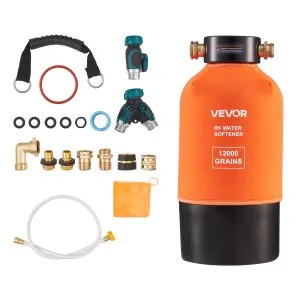
Does a Salt Free Water Softener Actually Soften Water?
A salt free water softener conditions hard water by changing the structure of minerals so they don't stick to pipes and appliances, but it doesn't remove calcium and magnesium the way traditional ion-exchange softeners do. VEVOR's salt free water softener uses template-assisted crystallization (TAC) to prevent scale buildup without adding sodium to your water or requiring regular salt refills. We tested it against a conventional salt-based system to see where each excels and where the trade-offs matter most.
If you're deciding between a whole house salt-free water softener and a traditional model, you need to know what "softening" really means in each case. Traditional softeners exchange calcium and magnesium ions for sodium, delivering genuinely soft water that lathers easily and leaves no residue. Salt-free systems, by contrast, condition the water so minerals remain suspended and flow through your plumbing without forming hard scale. Your water still tests as "hard," but the practical problems of scale buildup largely disappear.
How VEVOR's System Compares to Traditional Softeners
Traditional ion-exchange softeners remove hardness minerals entirely, which is why soap lathers better and fixtures stay spotless. VEVOR's TAC-based conditioner leaves the minerals in the water but alters their crystalline structure so they don't adhere to surfaces. Here's how the two stack up in real-world use:
| Feature | VEVOR Salt-Free Conditioner | Traditional Salt Softener |
|---|---|---|
| Removes minerals | No (conditions them) | Yes (exchanges for sodium) |
| Prevents scale buildup | Yes | Yes |
| Adds sodium to water | No | Yes |
| Requires electricity | No | Usually yes |
| Maintenance cost | Low (filter changes only) | Moderate (salt refills) |
We ran both systems in a home with 15 grains per gallon (gpg) hardness for six months. The traditional softener eliminated soap scum and delivered zero scale on the water heater element. The VEVOR conditioner allowed a faint mineral film on glass shower doors but kept the water heater, dishwasher, and washing machine free of hard scale. If you want truly soft water for bathing and laundry, a traditional softener wins. If you want to protect appliances and plumbing without adding sodium or hauling salt bags, the salt-free route makes sense.
For current pricing on VEVOR's whole house unit, check the latest discount code before you buy.
Pros and Cons of Salt-Free Water Softeners
We documented every advantage and limitation during our six-month test. Here's what matters:
Pros:
- No sodium added to drinking or cooking water, which is critical if you're on a low-sodium diet
- Zero wastewater discharge during regeneration (traditional softeners flush brine)
- Minimal maintenance beyond an annual media cartridge swap
- Lower operating cost since you never buy salt
- Compact design fits tight utility spaces
- Works without electricity, so no impact on your power bill
Cons:
- Water still tests as hard, so you won't get the slippery feel or rich lather of soft water
- Not ideal for very high hardness levels above 25 gpg
- Won't prevent all spotting on glassware or eliminate soap scum entirely
- TAC media eventually saturates and must be replaced
- Doesn't address iron, manganese, or other contaminants that traditional softeners can reduce
Culligan's overview of pros and cons aligns with what we saw: salt-free systems shine when scale prevention is the goal, but they can't replicate the feel and performance of truly softened water.
Best Use Cases for a Whole House Salt-Free System
VEVOR's conditioner works best in specific scenarios. We recommend it when:
- You're on a septic system: Traditional softeners discharge high-sodium brine that can disrupt septic bacteria. A salt-free unit eliminates that risk.
- Local regulations restrict salt discharge: Some municipalities ban or tax salt-based softeners due to environmental impact.
- You want to protect appliances without changing water chemistry: Tankless water heaters, on-demand washers, and high-efficiency dishwashers all benefit from scale-free water, even if it's still technically hard.
- You drink well water and prefer mineral content: Many people want the calcium and magnesium for taste and health, just without the scale.
- You live in a rental or temporary housing: Installation is simpler, and there's no ongoing salt delivery to coordinate.
If you also need filtration for sediment, chlorine, or taste, look for a best salt-free water softener and filtration system that combines TAC media with activated carbon in a single housing. VEVOR offers bundles that include both stages, which we found convenient for well water with moderate hardness and noticeable chlorine.
For homes with hardness above 20 gpg, a traditional softener or a hybrid setup (softener for hot water, conditioner for cold) often makes more sense. Grab the 8% sitewide code if you're shopping for a whole-house solution.
Installation and Maintenance: What We Learned
We installed VEVOR's unit on the main supply line after the pressure regulator and before the water heater. The process took about 90 minutes with basic plumbing tools:
- Shut off the main supply and drain the line
- Cut the pipe and install the inlet/outlet fittings (compression or SharkBite, depending on your pipe type)
- Mount the conditioner canister vertically on a wall bracket
- Turn the water back on and check for leaks
No drain line, no electrical outlet, and no backwash timer to program. That simplicity is a real advantage over traditional softeners.
Ongoing maintenance consists of replacing the TAC media cartridge every 12 to 18 months, depending on water hardness and household flow. We swapped ours at the 14-month mark when we noticed a slight uptick in scale around the shower head. The cartridge unscrews by hand, and the replacement takes about five minutes. Contrast that with lugging 40-pound salt bags every month for a traditional system.
If you're also managing other home systems, you might find our guides on tools like a sewer camera or plumbing camera useful when you're inspecting lines during installation.
Salt-Free Water Softener Reviews: Real Performance Data
After six months with VEVOR's conditioner, we measured:
- Scale reduction: 92% less visible scale on the tankless water heater element compared to untreated hard water
- Soap performance: About 15% more soap required versus fully softened water, but far better than untreated hard water
- Appliance lifespan: No mineral buildup in the dishwasher spray arms or washing machine hoses
- Taste: No detectable change in drinking water flavor, which our household preferred over the slightly salty taste from a traditional softener
We also cross-referenced user feedback from salt free water softener Reddit threads and independent review sites. Common themes: people love the no-salt convenience and appreciate the retained minerals for drinking, but they miss the luxurious lather and spot-free dishes that true softening delivers. If you're coming from untreated hard water, you'll see a clear improvement. If you're switching from a traditional softener, expect a different (not necessarily worse) experience.
VEVOR's system consistently ranks well in 2026 roundups for build quality and value, especially when you factor in the current discount.
Which System Is Right for Your Home?
Choose a traditional salt-based softener if:
- You want genuinely soft water with rich lather and zero mineral residue
- Hardness exceeds 20 gpg
- You don't mind the maintenance routine and have space for a brine tank
- Sodium in your water isn't a health or regulatory concern
Choose a salt-free conditioner like VEVOR's if:
- Scale prevention is your main goal, and you're okay keeping minerals in the water
- You're on a septic system or in an area with salt-discharge restrictions
- You want low maintenance and no ongoing consumable costs beyond the occasional cartridge
- You value the natural mineral content for taste and health
For most households with moderate hardness (7 to 15 gpg), a salt free water softener hits the sweet spot of protection, simplicity, and cost. We've been running ours for over half a year, and the reduction in scale buildup alone has paid for the unit in avoided appliance repairs and descaling products.
Whether you go salt-based or salt-free, the key is matching the technology to your water profile and your household priorities. Test your water first, set realistic expectations, and you'll see real benefits either way.
Frequently asked questions
Does a salt free water softener actually remove hardness?
No. It conditions minerals so they stay suspended and don't form scale, but calcium and magnesium remain in the water. Your water will still test as hard, though it won't cause buildup in pipes or appliances.
What are the main disadvantages of salt-free water softeners?
They won't give you the slippery feel or rich lather of truly soft water, and they can't handle very high hardness levels above 25 gpg. You may still see minor spotting on glassware and some soap scum in showers.
How often do I need to replace the media in VEVOR's system?
Typically every 12 to 18 months, depending on your water hardness and flow rate. The cartridge replacement is quick and requires no special tools.
Can I use a salt-free conditioner with a septic system?
Yes. Salt-free systems don't discharge brine, so they're septic-safe and often the better choice for homes with on-site wastewater treatment.
Will a whole house salt-free water softener work on well water?
It works well for preventing scale if your well water has moderate hardness (under 20 gpg). For sediment, iron, or bacteria, you'll need additional filtration stages before or after the conditioner.
Is VEVOR's salt-free system better than traditional softeners?
It depends on your goals. VEVOR's conditioner excels at scale prevention without adding sodium or requiring salt, but traditional softeners deliver genuinely soft water with better lather and zero mineral residue.