
Do IR Lasers Actually Improve Night Shooting Accuracy?

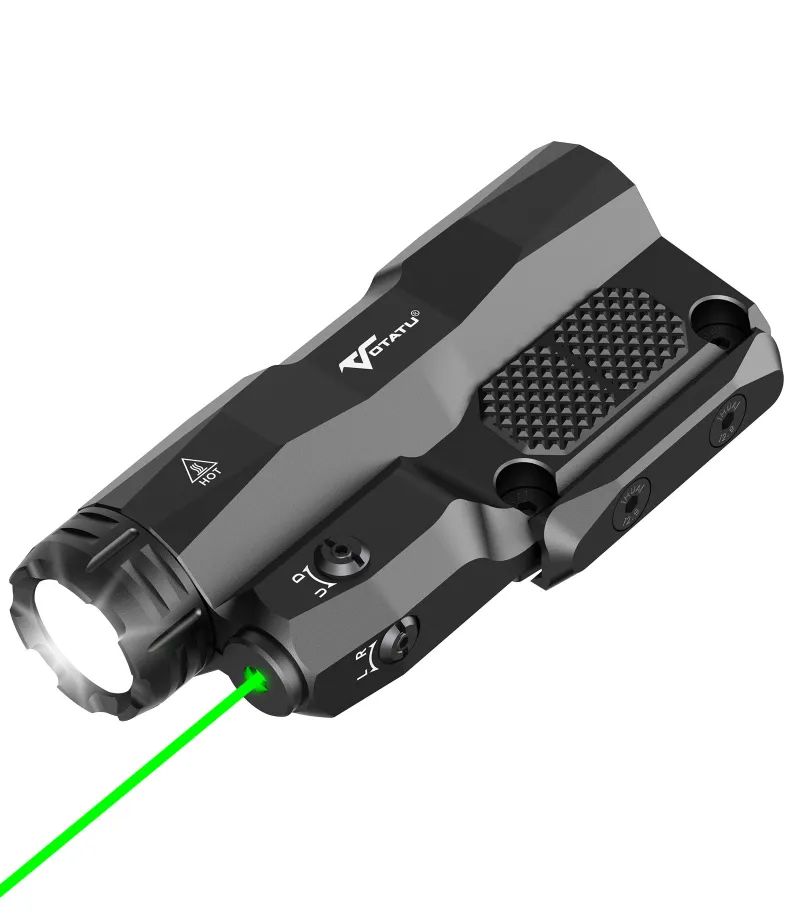
Yes, do IR lasers actually improve night shooting accuracy when paired with night vision devices, but the improvement depends on your optic setup, ambient light conditions, and how well you've trained with the system. We tested multiple configurations with an ir laser and laser light combo to see where infrared aiming delivers a real advantage over traditional red dots and white light.
How IR Lasers Work with Night Vision Optics
Infrared lasers emit a beam invisible to the naked eye but clearly visible through night vision goggles or digital night vision scopes. When you mount an ir laser on your rifle or pistol, you project a precise aiming point onto your target that only you and anyone else wearing night vision can see. This gives you a huge tactical advantage in low-light scenarios where white light would compromise your position.
The key benefit is heads-up shooting. Instead of pressing your face to a scope or looking through a red dot sight for pistol, you keep both eyes open, maintain situational awareness, and track the laser dot through your NODs. This matters most in close to mid-range engagements where speed and peripheral vision outweigh the precision of a magnified optic.
Perks and Quirks of Digital Night Vision with an IR Laser explains how digital systems handle infrared differently than analog tubes, and why laser alignment becomes critical when your device magnifies even small zero errors.
When Do IR Lasers Actually Improve Night Accuracy?
Infrared lasers shine in specific conditions but fall short in others. Here's where we saw measurable gains:
- Close-quarters engagements under 50 yards where target acquisition speed matters more than sub-MOA precision
- Moving targets in cluttered environments where maintaining a cheek weld slows you down
- Transitioning between multiple threats because you never lose sight of your surroundings
- Passive aiming from awkward positions like shooting around barricades or from vehicles
We did not see accuracy improvements at distance beyond 100 yards, especially when atmospheric conditions scattered the beam or when we had enough ambient moonlight to use a traditional optic. A quality red dot sight for pistol or low-power variable optic paired with an ar 15 light often delivered faster hits in suburban environments with streetlights or structure lighting.
Full Power IR Lasers: Are they worth it? covers the trade-offs between civilian-legal and full-power military units, including real-world range tests that confirm what we found: more power extends your effective aiming distance but doesn't magically fix poor fundamentals.
Choosing Between Visible Laser Light and IR-Only Systems
Most shooters benefit from a dual-capability setup. A laser light combo gives you visible and infrared lasers in one package, plus a white light for positive ID. We compared three common configurations:
| Setup Type | Best For | Limitation |
|---|---|---|
| IR laser only | Dedicated night vision use, covert ops | Useless without NODs |
| Visible laser + white light | Home defense, range training | Gives away your position at night |
| Dual IR/visible combo | All-purpose tactical use | Heavier, requires more zeroing |
If you run night vision regularly, an ir laser dedicated unit often holds zero better than combo devices because it has fewer moving parts and simpler electronics. But if you need one tool that works day and night, with or without goggles, the laser light combo makes more sense for most shooters.
For carbines, pairing an ar 15 light with a separate IR laser gives you modular control and independent zeroing. Check the latest price to see current bundles that include both.
Do IR Lasers Actually Improve Night Performance for Pistols?
Handguns present unique challenges. Pistol-mounted IR lasers work best when you already shoot with a visible laser or red dot and understand the parallax limitations. We tested a compact IR unit on a duty-size pistol with night vision and found:
- Accuracy improved at 7 to 15 yards where we could keep both eyes open and track multiple threats
- Performance dropped beyond 25 yards because slight wrist cant or grip shift moves the dot more than it would on a rifle
- Transitions were faster than trying to align iron sights through night vision, but slower than a red dot sight for pistol under the same conditions
If you carry a pistol as your primary night vision platform, train extensively with the laser to build muscle memory for holdovers at distance. The dot shows you where the barrel points, not where the bullet impacts, so you need to confirm zero at multiple ranges.
Grab the code to save on a votatu laser or complete pistol setup with a compatible mounting solution.
Practical Limitations and Training Requirements
Even the best IR laser won't improve your accuracy if you ignore these realities:
- Zero drift matters more at night because you can't see your sights to double-check alignment
- Battery life becomes critical since most IR units drain faster than visible lasers, and you'll need a beam charger or spare cells for extended missions
- Atmospheric scatter reduces effective range in fog, rain, or heavy dust where the beam blooms and loses definition
- Over-reliance on the laser can degrade your fundamentals, making you slower when the unit fails or the battery dies
We recommend at least 500 rounds of dedicated IR laser training before you trust it in a defensive scenario. Practice dry fire, zeroing at multiple distances, and shooting with the laser off to ensure you can still perform under pressure. Own the Night: Night Vision Devices and IR Lasers | RECOIL offers a solid training progression for integrating lasers with night vision gear.
Who Benefits Most from an IR Laser Setup
Infrared lasers deliver the biggest accuracy and speed gains for:
- Active night vision users who already own NODs and train regularly in low light
- Law enforcement and security professionals who need fast target acquisition in structures or vehicles
- Hunters using thermal or digital night vision where a traditional scope isn't practical for fast shots on hogs or predators
- Competition shooters in night stages where rules allow night vision and IR aiming devices
If you only shoot at an indoor range or rarely train after dark, an IR laser won't improve your accuracy. Stick with a quality red dot sight for pistol or laser light with a visible beam that you can use without additional gear. But if night vision is part of your regular kit, the right ir laser setup absolutely delivers measurable performance gains once you put in the training time.
For current pricing on complete systems and to see which bundles include a bean charger for your specific platform, check our discount page before you buy.
Frequently asked questions
Do IR lasers work without night vision goggles?
No, infrared lasers emit a beam invisible to the naked eye, so you need night vision goggles, a digital night vision scope, or a thermal optic to see where the laser is pointing.
Can I zero an IR laser during the day?
Yes, but you'll need a night vision device or an IR detection card to see the beam. Most shooters zero IR lasers at dusk or indoors with NODs to confirm point of impact at multiple distances.
How far out does an IR laser stay accurate?
Most civilian IR lasers remain effective to 100 yards in clear conditions. Beyond that, atmospheric scatter, beam divergence, and magnification through night vision make precise aiming difficult compared to a traditional optic.
Will an IR laser replace my red dot sight?
No, an IR laser is a specialized tool for night vision use. A red dot sight works in all lighting conditions without additional gear and remains faster for most shooters during daytime or well-lit scenarios.
Do I need a full-power IR laser or is civilian legal enough?
Civilian-legal IR lasers work well to 75 yards for most shooters. Full-power units extend range and visibility in challenging conditions but require special licensing and offer diminishing returns unless you regularly engage past 100 yards at night.
What is the biggest mistake people make with IR lasers?
Over-relying on the laser without learning proper fundamentals. If your battery dies or the unit fails, you need to shoot accurately with irons or a red dot, so train both methods equally.