
Votatu Laser vs Traditional Flashlight: Which AR-15 Setup Works Best?

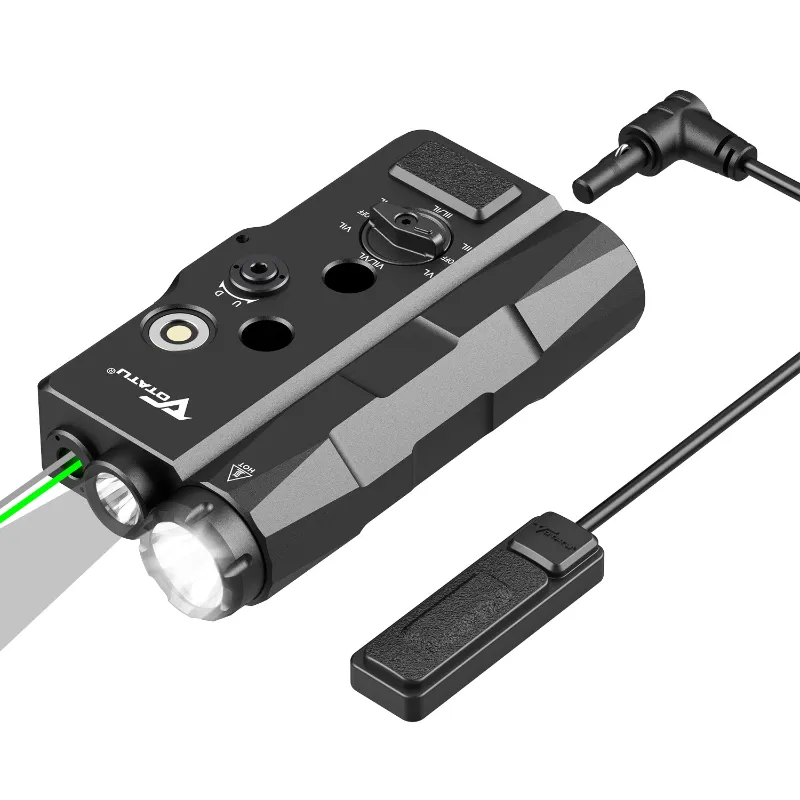
A votatu laser delivers faster target acquisition and pinpoint accuracy for AR-15 setups, while a traditional flashlight provides superior illumination and versatility in low-light scenarios. Both have earned their place in modern rifle configurations, but the right choice depends on your shooting discipline, environment, and whether you prioritize speed or visibility.
We've tested both laser and flashlight setups across home defense, tactical training, and competitive shooting to help you decide which system works best for your AR-15 platform.
Why Shooters Choose a Votatu Laser for AR-15 Builds
Laser aiming systems have become a staple on AR platforms because they enable rapid target engagement without relying on iron sights or optics. A votatu laser projects a visible or infrared beam directly onto your target, giving you an instant point of reference even in awkward shooting positions.
Key advantages of laser systems:
- Instant sight picture from any stance, including prone or barricaded positions
- Works independently of optic height and eye relief
- Visible lasers perform well in close-quarters scenarios where speed matters
- IR lasers pair with night vision for covert operations
- Maintains zero across temperature changes and recoil cycles
Many shooters pair a visible laser with a red dot or holographic sight for redundancy. If your primary optic fails or you need to shoot from an unconventional angle, the laser keeps you on target. A laser light combo integrates both illumination and aiming into one unit, which saves rail space and reduces weight on your handguard.
For dedicated night vision users, an ir laser becomes essential. It's invisible to the naked eye but projects a clear aiming point through NVGs, allowing you to engage targets without giving away your position with visible light.
Traditional Flashlight: Illumination and Target Identification
A weapon-mounted flashlight solves a different problem: identifying what you're aiming at before you pull the trigger. In home defense or law enforcement contexts, positive target identification is non-negotiable, and no laser will light up a dark hallway the way a high-output flashlight does.
Why flashlights remain critical:
- Illuminates the entire threat area, not just a single point
- Disorienting strobe modes can buy you time in close encounters
- Allows you to clear rooms and scan corners safely
- No parallax or zero concerns across different distances
- Works as a standalone tool for navigation and signaling
A quality ar 15 light mounts to your Picatinny or M-LOK rail and offers momentary-on, constant-on, and strobe modes via a tail switch or remote pressure pad. Output typically ranges from 600 to 1,200 lumens, with candela (throw distance) mattering more than raw lumens for outdoor engagements.
Flashlights also double as impact tools and can serve as a non-lethal deterrent. If you're building a home defense AR, a weapon light is almost always the first accessory we recommend adding.
Performance Comparison: Speed vs Situational Awareness
The table below breaks down how lasers and flashlights perform across the scenarios we encounter most often.
| Feature | Votatu Laser | Traditional Flashlight |
|---|---|---|
| Target acquisition speed | Instant point-of-aim | Requires sight alignment |
| Low-light identification | Poor (no illumination) | Excellent |
| Unconventional shooting positions | Excellent | Limited by optic height |
| Night vision compatibility | Yes (IR models) | No (visible light blinds NVGs) |
| Battery life | 2-4 hours continuous | 1-3 hours on high |
Lasers win on pure speed. In competitive shooting or dynamic CQB, the ability to put a dot on target and press the trigger without finding your optic saves fractions of a second that add up across multiple transitions. A laser light combines both, but you're still choosing which mode to activate in the moment.
Flashlights win on awareness. If you can't see what you're shooting at, speed is irrelevant. We've run countless force-on-force drills where the shooter with only a laser engaged a no-shoot target because they couldn't distinguish friend from threat in the dark.
For most real-world applications, the answer is both. A votatu laser light combo delivers aiming precision and illumination in one package, and you can grab the code to save on combo units that integrate both functions.
Which Setup Matches Your Shooting Style
Your ideal configuration depends on how you use your AR-15 and the environments you train in.
Choose a laser-primary setup if you:
- Run night vision and need an IR aiming solution
- Compete in speed shooting or 3-gun where fractions matter
- Shoot from vehicles, barricades, or other cover regularly
- Already have a helmet-mounted light for illumination
- Want aiming redundancy alongside a red dot or LPVO
Choose a flashlight-primary setup if you:
- Prioritize home defense and need to identify threats
- Operate in close quarters where illumination is critical
- Don't own night vision equipment
- Train primarily in indoor or low-light ranges
- Need a tool that works independently of optics
Choose a combo unit if you:
- Want both capabilities without cluttering your rail
- Appreciate the weight savings of a single device
- Prefer integrated controls for simpler manipulation under stress
A red dot sight for pistol often pairs with a laser on AR pistol builds, where compact rail space makes combo units especially attractive. Check current pricing and our discount code to see which models fit your budget.
Power and Maintenance: Keeping Your System Running
Lasers and flashlights both depend on battery performance, but they stress power sources differently. Lasers typically draw less current and can run for 2 to 4 hours on a single CR123A or rechargeable 18650 cell. Flashlights on high output drain batteries faster, often requiring replacement after 60 to 90 minutes of continuous use.
Battery tips for weapon lights and lasers:
- Use lithium primaries (CR123A) for long shelf life in defensive guns
- Switch to rechargeable 18650 cells for training rifles where you cycle batteries often
- A beam charger keeps rechargeable cells ready without cluttering your gear bag
- Mark batteries with installation dates using a paint pen
- Test your laser zero and light output monthly
Both systems require occasional re-zeroing. Lasers drift slightly over hundreds of rounds due to recoil vibration, so we re-check zero every 500 rounds or after hard impacts. Flashlight mounts can shift if the screws aren't torqued to spec, so use a thread-locking compound and verify tightness before range sessions.
Clean the laser emitter and flashlight lens with a microfiber cloth and isopropyl alcohol. Carbon buildup from muzzle blast degrades both laser visibility and flashlight throw, especially on short-barreled rifles.
Our Recommendation: Build for the Mission
We run both a votatu laser and an ar 15 light on our go-to carbines because the missions we train for demand both speed and awareness. If you're forced to choose one, start with a weapon light for home defense or general-purpose shooting, then add a laser as your skill set and budget grow.
Combo units make sense for most shooters who want both capabilities without the rail clutter, and brands like Votatu have refined these systems to the point where you're not sacrificing performance for convenience. Visit our Votatu discount code page to see current offers on laser, light, and combo units before you buy.
Frequently asked questions
Can I use a votatu laser with night vision goggles?
Yes, but you need an IR laser model designed for night vision use. Visible lasers will bloom and ruin your image, while IR lasers remain invisible to the naked eye and project a clear aiming point through NVGs.
How often should I re-zero my laser on an AR-15?
Re-check zero every 500 rounds or after any hard impact like a drop. Recoil vibration causes lasers to drift slightly over time, and verifying your point of impact ensures the laser still matches your optic or iron sights.
Do I need both a laser and a flashlight on my home defense rifle?
A flashlight is more critical for home defense because you need to identify your target before shooting. A laser adds speed but won't help you distinguish between a threat and a family member in the dark.
What battery type works best for weapon-mounted lasers?
CR123A lithium primaries offer the longest shelf life for defensive guns that sit ready but rarely get used. For training rifles, rechargeable 18650 cells save money and perform just as well across hundreds of charge cycles.
Will a laser light combo add too much weight to my AR-15 handguard?
Most combo units weigh 4 to 6 ounces, which is less than running separate laser and light modules. The weight sits close to the receiver, so it has minimal impact on barrel harmonics or handling balance.